
HN
@heloix_news
Launch
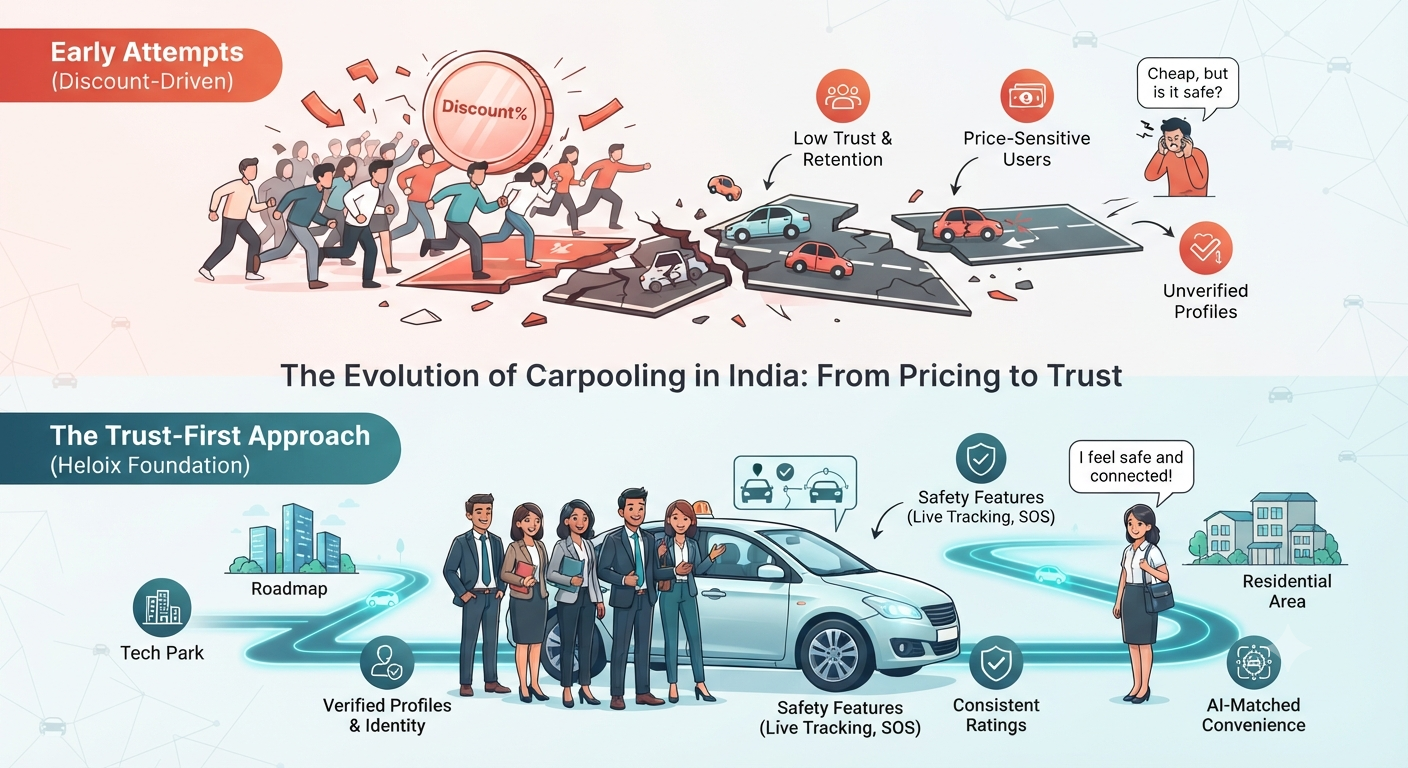
Carpooling Apps Are Making a Real Comeback in India, This Time Built Around Trust Signals, Not Just Discounts
#apps#carpooling
Comment
595
Shamita
The global commercial real estate and office market has undergone a dramatic transformation. Driven by hybrid work policies, digital nomadism, independent freelancing, and corporate downsizing, organizations and workers no longer want to sign rigid 5-to-10-year commercial office leases. Instead, they demand flexible, on-demand workspaces accessible on hourly, daily, or monthly terms. At the center of this shift is the coworking space booking app business model.
For modern tech entrepreneurs, real estate operators, and community builders, launching a coworking reservation platform offers a high-margin avenue to aggregate workspace inventory and capture continuous booking commissions. In this comprehensive guide, we will break down how the coworking booking app model operates, explore primary monetization channels, examine how ready-to-launch software enables rapid deployment, and present a step-by-step launch framework.
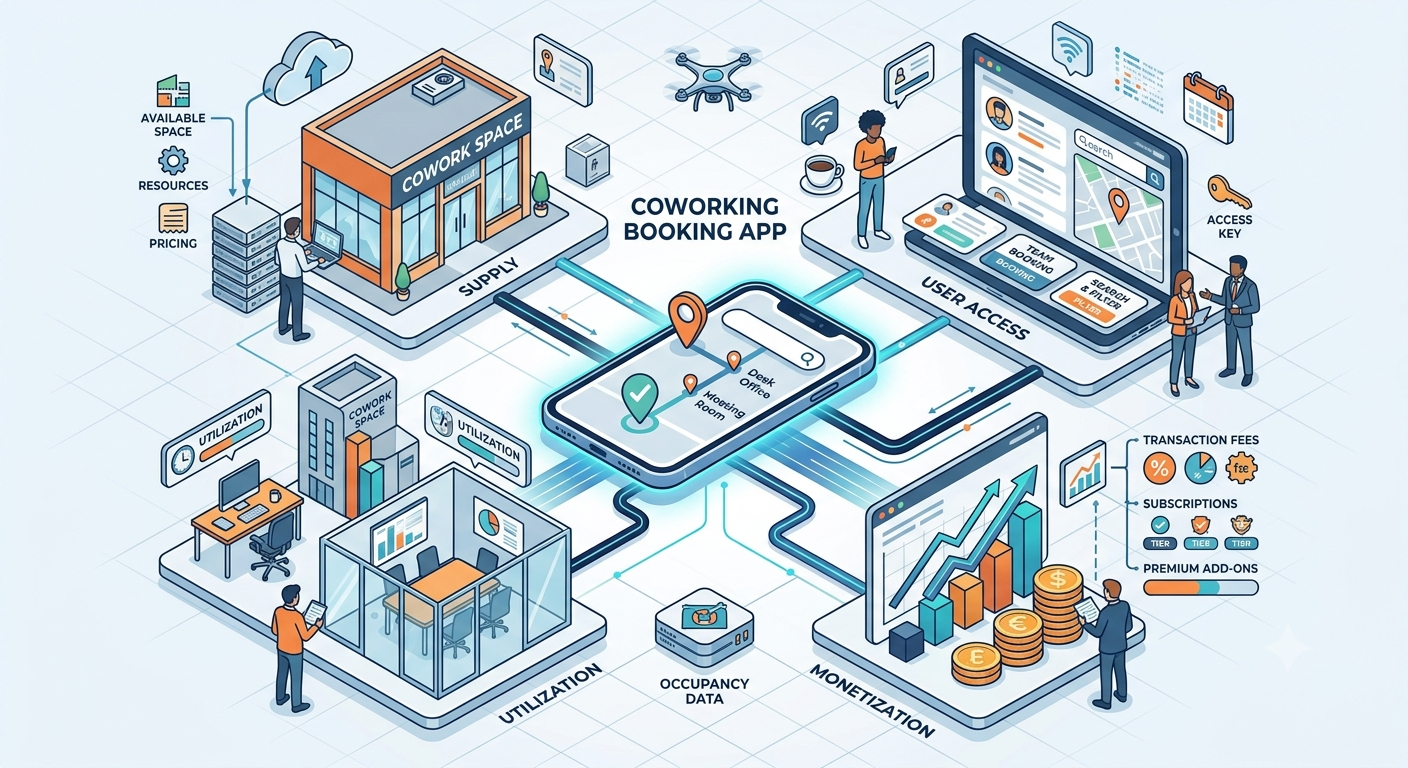
A coworking space booking app is a multi-sided digital marketplace and reservation engine that connects workspace seekers (freelancers, remote employees, startups, corporate teams) with workspace operators (coworking hubs, shared offices, hotel business lounges, underutilized commercial venues).
Instead of managing physical brick-and-mortar leases or negotiating complex real estate contracts, the platform acts as a digital matching layer. It manages space listings, displays real-time seat availability, processes instant bookings, handles access control keys, and automates payment distribution.
┌──────────────────────────────────────────────────────────┐
│            Coworking Platform Engine                     │
│    (Seat Inventory, Smart Access & Automated Payouts)    │
└───────────────┬──────────────────────────────┬───────────┘
                │                              │
                ▼                              ▼
  ┌──────────────────────────┐   ┌──────────────────────────┐
  │ Shared Space Operators / │   │  Desk Seekers / Remote   │
  │ Real Estate Venue Owners │   │  Workers & Corporate Teams│
  └──────────────────────────┘   └──────────────────────────┘
Aggregator Marketplace Model: Connects independent third-party coworking operators and boutique hubs to end users under a single unified discovery app (e.g., LiquidSpace, Deskpass, Croissant).
Proprietary Single-Brand App: Built specifically for a single coworking operator or regional chain to streamline multi-location seat management, member check-ins, meeting room credits, and event access.
Corporate "Work-from-Anywhere" Pass Engine: Focuses exclusively on B2B corporate contracts, giving distributed enterprise teams flexible monthly credit allowances to book meeting rooms and desks across a global network.
Coworking platforms leverage diverse monetization streams across individual users, enterprise clients, and space hosts:
| Revenue Model | Operational Mechanism |
| Transaction Commissions | Deducting a pre-negotiated percentage fee (typically 10% to 25%) from every hourly, daily, or monthly workspace booking completed through the platform. |
| Monthly Subscription Membership Passes | Charging users or corporate employers a recurring monthly subscription fee for a fixed quota of desk access days or meeting room credits. |
| Host Listing & Visibility Fees | Charging coworking space owners a fee for featured placement on homepage banners, top search results, and promotional email blasts. |
| Corporate Team Management SaaS | Charging enterprise companies a monthly SaaS fee to manage, monitor, and approve employee workspace allowances and expense reports. |
| Value-Added Service Add-Ons | Taking a fee margin on add-on amenities booked through the app, such as catering, printing credits, podcast studio rentals, and event space setups. |
To deliver a frictionless booking experience, a modern coworking software platform requires three distinct user modules:
User Mobile App & Web App (iOS, Android & Web): Geolocation search map, filter by workspace type (hot desk, dedicated desk, private office, meeting room), real-time seat availability calendar, instant booking checkouts, digital wallet, and QR code door access.
Space Host / Operator Admin Panel: Inventory manager (desk count, pricing, amenities, opening hours), booking request approvals, check-in logs, host payout requests, and analytics.
Super Admin Dashboard: Master platform portal for reviewing space listings, managing commission rates, monitoring overall GMV (Gross Merchandise Value), handling user disputes, and issuing platform announcements.
Building a custom coworking booking ecosystem completely from scratch—with native mobile front-ends, seat calendar sync, door access hardware APIs, and multi-currency payment routing—can take 4 to 8 months and cost $25,000 to $70,000+ in software engineering expenses.
Utilizing a ready-to-launch white-label coworking app platform provides a faster, highly cost-effective path:
Rapid Launch Timeline: Turn key reservation features into a live, fully branded application suite in days or weeks instead of months.
Pre-Built Real Estate Features: Built-in real-time seat availability, multi-location mapping, meeting room credit allocation, and multi-currency processing come pre-configured out of the box.
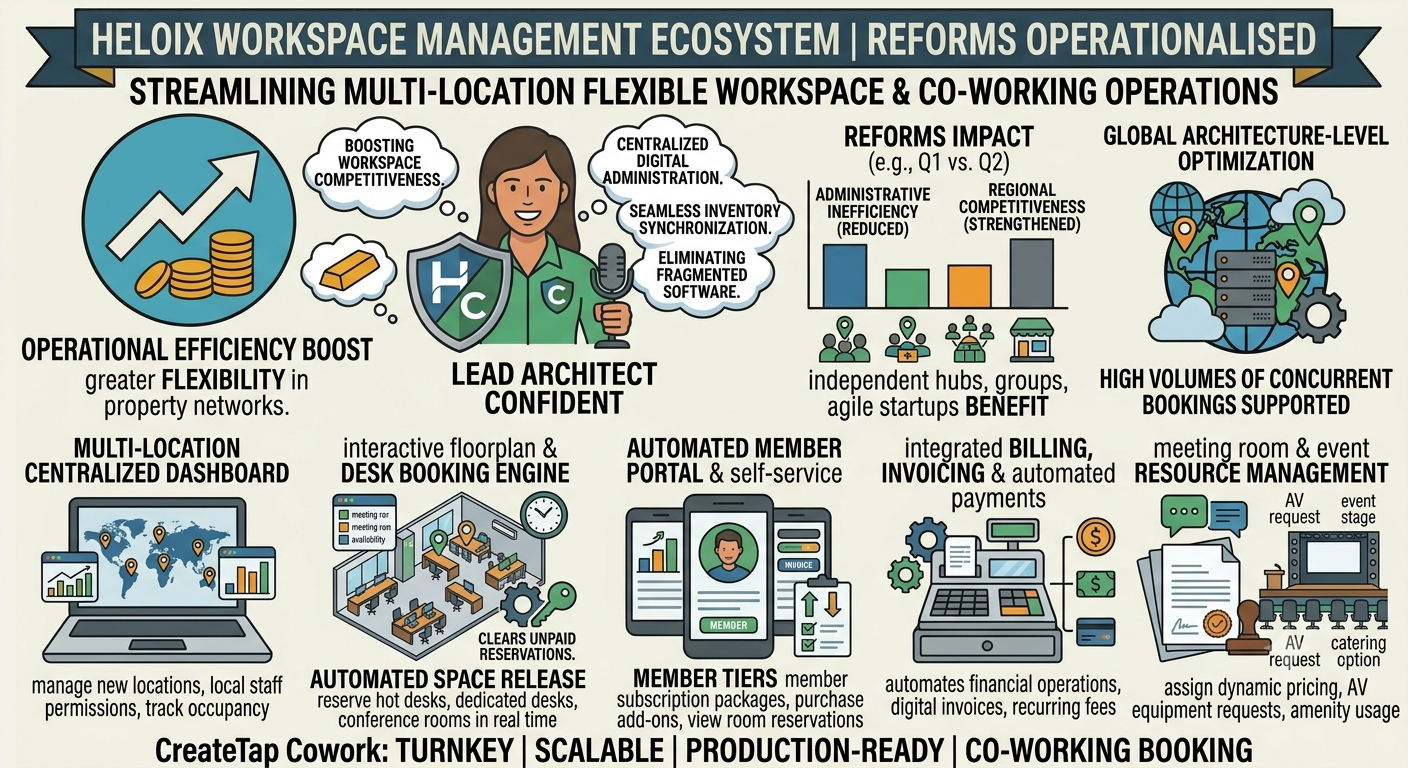
Complete Source Code Ownership: Platform providers like Heloix offer ready-to-launch software solutions (such as CreateTap Cowork) with full source code ownership included. This eliminates ongoing vendor lock-in and gives you total freedom to rebrand, customize, and scale your technology stack as your user base expands.
  ┌──────────────────────────────────────────────────────────┐
  │ 1. Define Your Market Vertical & Territory               │
  └─────────────────────────────┬────────────────────────────┘
                                │
                                ▼
  ┌──────────────────────────────────────────────────────────┐
  │ 2. Deploy Your Turnkey Ready-to-Launch Platform          │
  └─────────────────────────────┬────────────────────────────┘
                                │
                                ▼
  ┌──────────────────────────────────────────────────────────┐
  │ 3. Onboard Anchor Coworking Spaces & Venues              │
  └─────────────────────────────┬────────────────────────────┘
                                │
                                ▼
  ┌──────────────────────────────────────────────────────────┐
  │ 4. Configure Payment Gateways & Booking Rules            │
  └─────────────────────────────┬────────────────────────────┘
                                │
                                ▼
  ┌──────────────────────────────────────────────────────────┐
  │ 5. Execute User & Corporate Marketing Campaigns          │
  └─────────────────────────────┬────────────────────────────┘
                                │
                                ▼
  ┌──────────────────────────────────────────────────────────┐
  │ 6. Scale Network Coverage & Corporate Partnerships       │
  └─────────────────────────────┴────────────────────────────┘
Avoid attempting a global launch on day one. Focus on a specific geographic market or specialized workspace niche:
Urban tech hubs with high concentrations of remote workers and freelancers
Underutilized boutique hotel lounges, cafes, and private club workspaces
Specialized creative spaces (e.g., podcasting hubs, maker spaces, photo studios)
Acquire a production-ready white-label software foundation. Apply your brand identity, set up custom domains, structure workspace categories (Hot Desks, Meeting Rooms, Executive Suites), and prepare builds for submission to the Apple App Store and Google Play Store.
Address the supply side of the marketplace before marketing to end users:
Partner with independent local coworking space owners and real estate operators.
Assist hosts with listing setup, high-resolution photography, seat inventory configuration, and amenity checklists (Wi-Fi speed, coffee, parking, monitors).
Offer early host incentives, such as zero commission fees for the first 90 days or free featured placement spots.
Establish clear operational workflows in your super admin panel:
Set default transaction commission rates and host payout cycles.
Connect automated payment gateways (e.g., Stripe, PayPal, Razorpay) supporting instant credit card, digital wallet, and "Book Now, Pay Later" checkouts.
Define clear cancellation parameters and refund policies for flexible bookings.
Acquire active remote workers and corporate teams through hyper-targeted channels:
Local SEO & Intent Search: Build optimized landing pages targeting search terms like "book meeting room in [City]" or "hourly desk rental near me".
B2B Corporate Outreach: Pitch HR managers and remote-first company leaders on flexible employee workspace passes.
Community Partnerships: Collaborate with digital nomad groups, local startup incubators, and freelancer associations to offer exclusive first-time booking trial credits.
Track key performance metrics including Desk Occupancy Rate, customer acquisition cost (CAC), user booking frequency, and venue host retention rates. Continually gather feedback from both remote workers and space operators to optimize the user experience and expand into adjacent cities.
Please to post a comment
No comments yet
Be the first to share your thoughts.
@heloix_news
Launch
@heloix_news
Launch
@heloix_news
Launch

Subscribe for the latest on technology, business growth and digital transformation.