
HN
@heloix_news
Growth

Gaming Commerce Unlocked: How PlaySuper Is Converting In-Game Victories into Real-World Rewards
#PlaySuper#gamingcommerce#gamingrewards
Comment
1.0K
Mahesh P
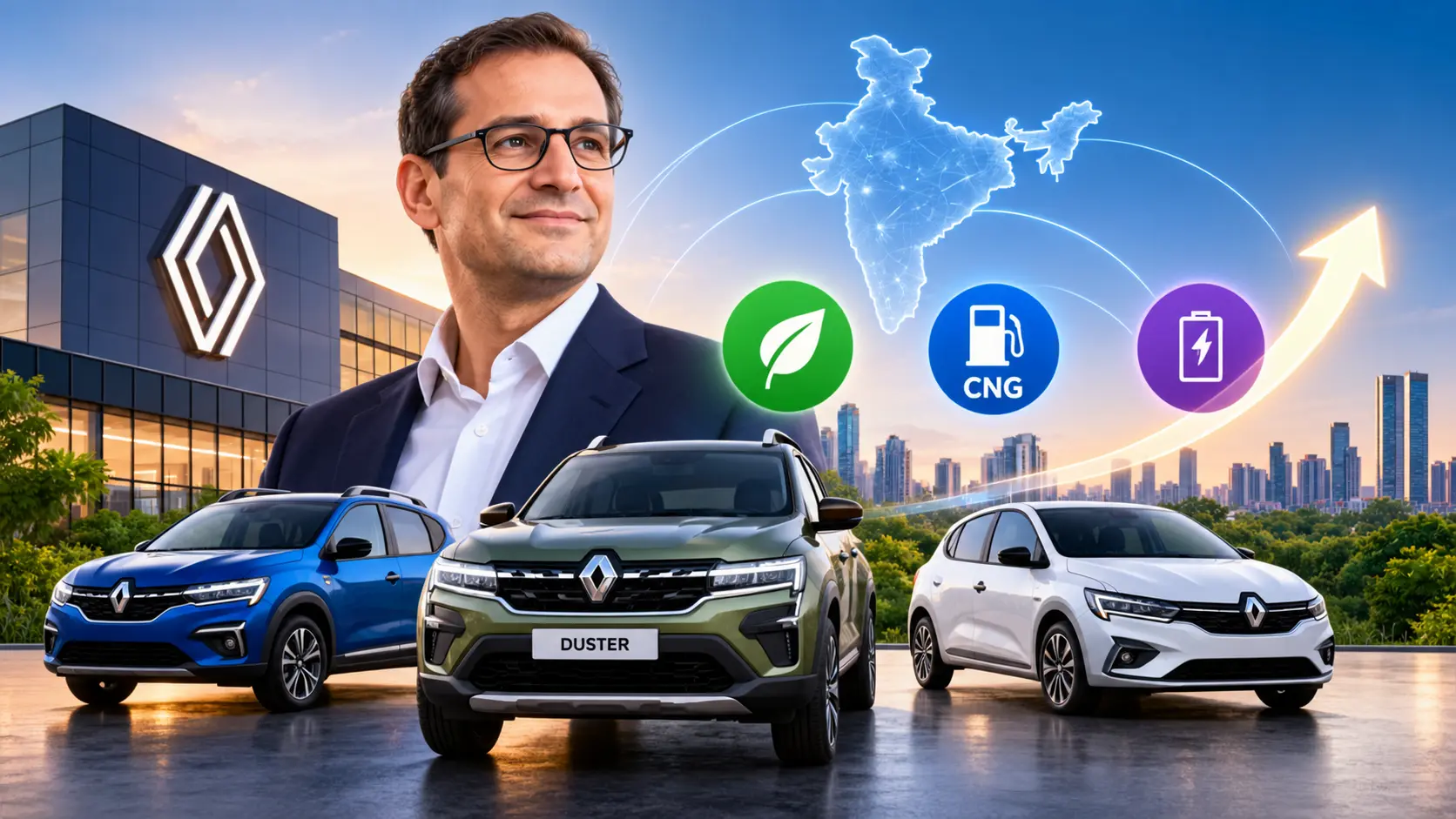
Renault India expects hybrid and compressed natural gas (CNG) vehicles to account for as much as 50% of its powertrain mix over the next two to three years as the automaker expands its range of fuel technologies in the country.
Renault India CEO Stéphane Deblaise shared the outlook as the French carmaker strengthens its focus on hybrid vehicles and prepares to introduce factory-fitted CNG models. The company has taken its first major step in this direction with the launch of the Duster Strong Hybrid E-Tech 160, marking Renault's entry into India's strong hybrid SUV segment.
Deblaise clarified that the company has not established a formal target for hybrid and CNG sales. However, he believes their combined contribution could reach half of Renault India's sales mix within the next few years.
Renault is increasingly presenting hybrid technology as an alternative to diesel-powered vehicles, particularly as stricter emission regulations reshape the automotive market.
According to Deblaise, hybrid vehicles could offer buyers fuel efficiency and driving performance comparable to or better than diesel models, while keeping prices at a similar level.
The company believes these advantages could make hybrids more appealing to Indian consumers who want better mileage without moving entirely to electric vehicles.
Deblaise also pointed out that hybrid adoption has remained relatively limited partly because customers have fewer models to choose from. He expects demand to improve as automakers introduce more options and demonstrate the benefits of the technology.
India's automotive market is gradually accommodating several powertrain options, including petrol, diesel, hybrids, CNG and electric vehicles. This shift gives manufacturers an opportunity to cater to different customer preferences rather than relying on a single technology.
Renault's hybrid strategy gained momentum with the launch of the Duster Strong Hybrid E-Tech 160 in India.
The SUV has two electric motors, a 1.4 kWh battery, and a 1.8-liter gasoline engine. Together, the system produces 160 PS of power and carries an ARAI-certified fuel-efficiency rating of 29 km per litre.
Three versions of the car are offered: Evolution, Techno, and Emotion. The starting price, ex-showroom, is Rs 16.99 lakh.
Renault says its E-Tech strong hybrid technology has already been used in more than one million vehicles worldwide since 2020. The company is now bringing this technology to India as part of its broader strategy to offer products suited to local driving conditions and customer expectations.
The automaker also plans to use its engineering and design facilities in Chennai to develop vehicles, powertrains and features tailored to the Indian market.
While Renault sees strong hybrid technology playing a larger role in vehicles measuring more than four metres in length, it believes CNG could be particularly suitable for smaller cars.
The company is considering factory-fitted CNG models as part of its future product plans. The Triber compact MPV is one potential candidate for a CNG offering.
Such models could appeal to buyers looking to reduce running costs, especially in segments where affordability and fuel efficiency are major purchase considerations.
By developing both hybrid and CNG options, Renault aims to address the needs of different customer groups while broadening its presence in India's competitive passenger vehicle market.
Renault India aims to rebuild its market position and achieve a share of 3-5% by 2030.
Deblaise said the company intends to prioritise product quality, customer satisfaction and long-term relationships rather than focusing solely on increasing sales volumes.
The company believes that delivering vehicles customers value and providing a positive ownership experience will encourage repeat purchases and support sustainable growth.
Renault's approach reflects its broader effort to strengthen its presence in India, which the group considers an important market for its future expansion.
Renault Group has outlined plans to introduce seven models by the end of the decade under its futuREady strategy.
The planned line-up will cover a range of vehicle categories, from compact cars to larger SUVs. It is also expected to include strong hybrid models and fully electric vehicles, giving customers more choices across different price points and powertrain technologies.
Alongside expanding its domestic product portfolio, the company plans to increase India's contribution to its global operations.
Renault aims to generate annual exports worth 2 billion euros, or approximately Rs 25,000 crore, from India by 2030. The target includes vehicles, components and related services.
Renault's renewed focus on hybrids, CNG and electric vehicles reflects the changing dynamics of India's automobile market. Consumers are increasingly considering fuel costs, efficiency and technology when choosing their next vehicle, while manufacturers must adapt to evolving regulations and competition.
The company's plans to expand its product range and increase exports could strengthen India's importance within Renault's global business.
If hybrid and CNG vehicles gain wider acceptance, these technologies could become a significant part of Renault India's portfolio over the next few years. The company's ability to offer competitive pricing, fuel efficiency and products suited to local needs will be crucial to achieving its ambitions.
Please to post a comment
No comments yet
Be the first to share your thoughts.
@heloix_news
Growth
@heloix_news
Growth

@heloix_news
Growth

Subscribe for the latest on technology, business growth and digital transformation.