
HN
@heloix_news
EdTech
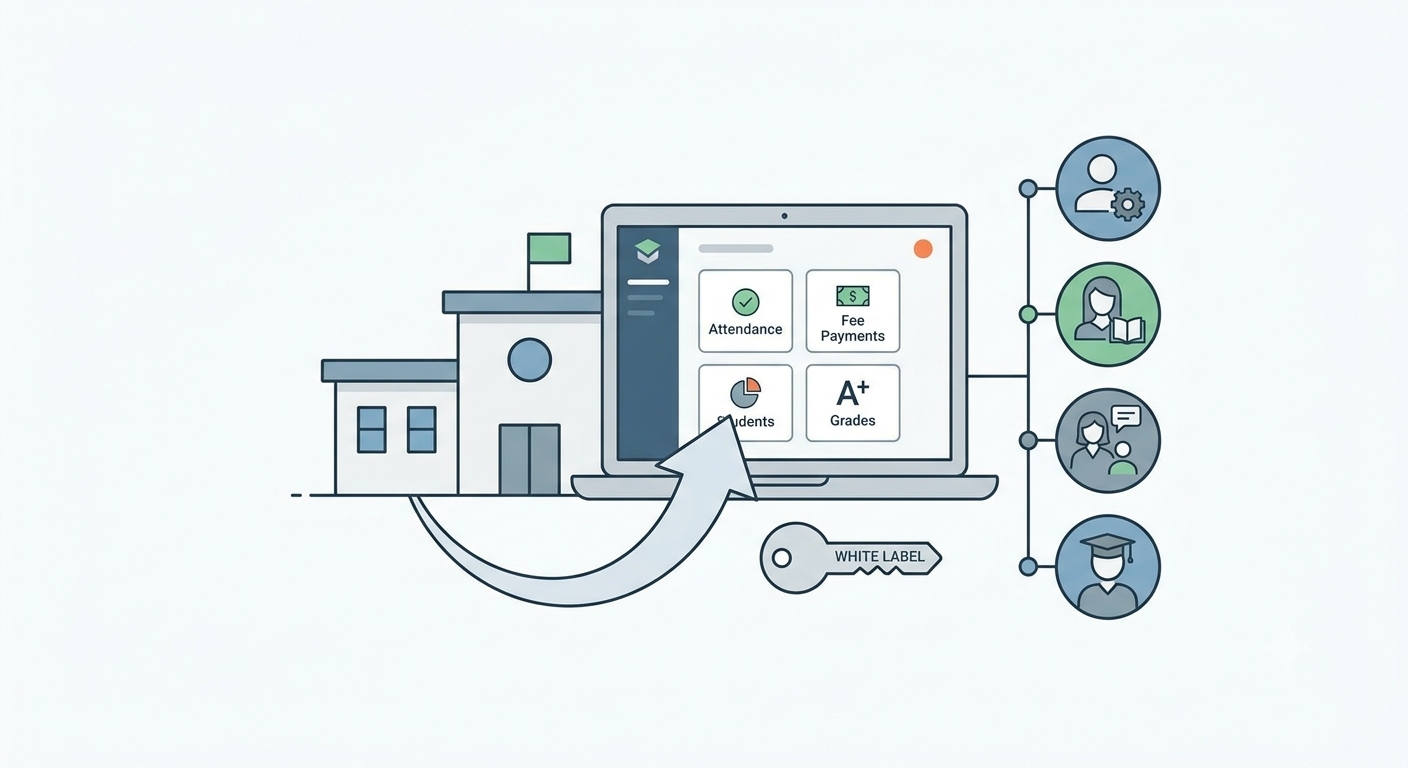
Top 5 Reasons Entrepreneurs Are Investing in School Management Software
#Edtech#school#technology
Comment
528
Shamita
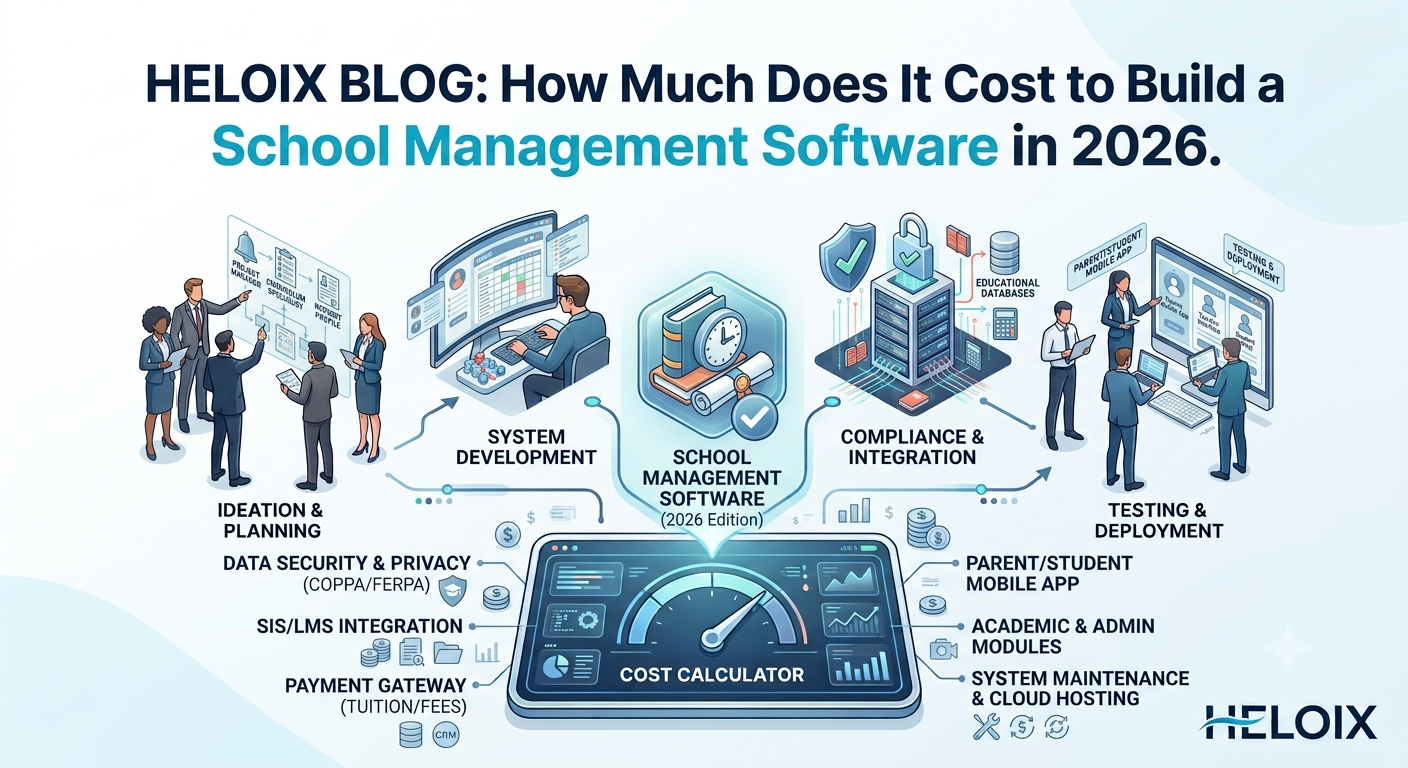
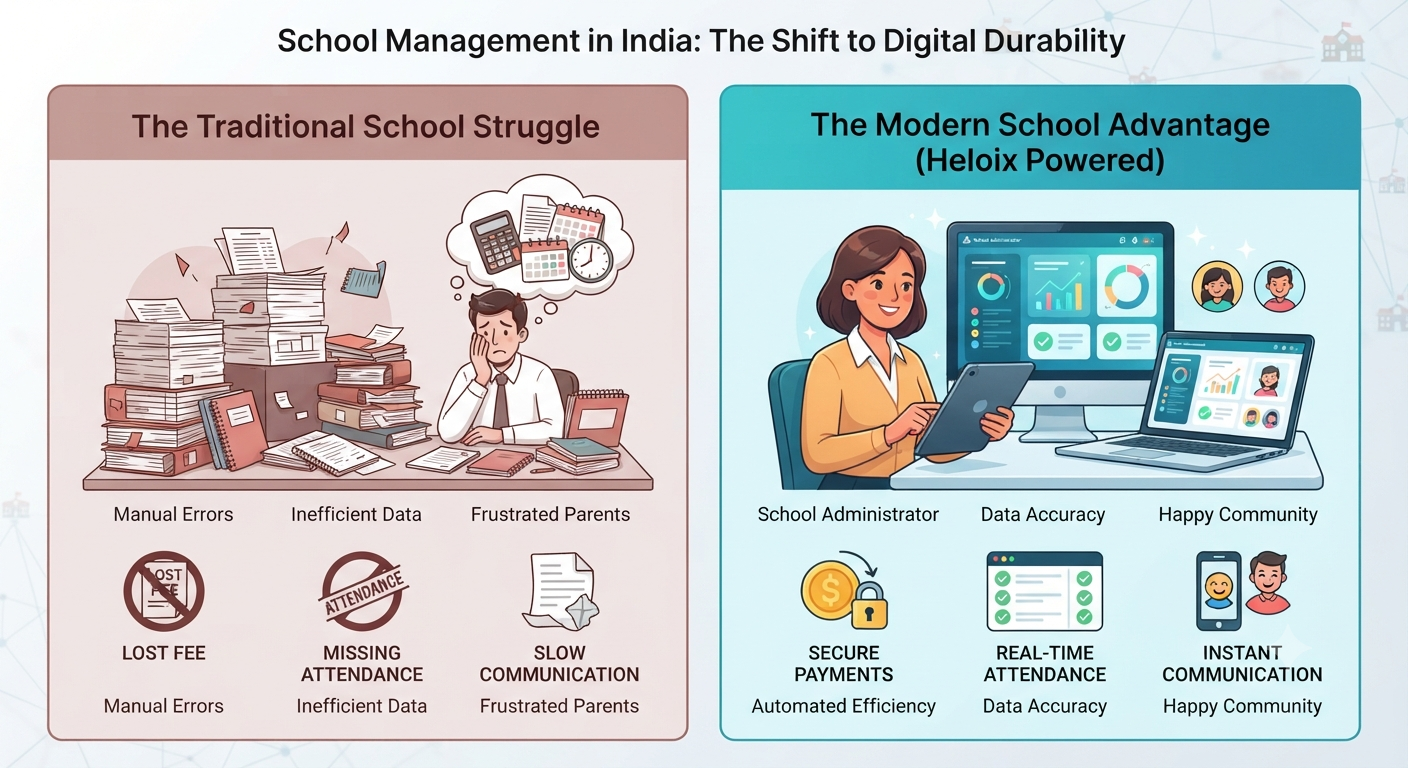
The global K-12 and higher education ecosystem is undergoing rapid digital transformation. Modern School Management Systems (SMS) or Educational ERPs handle far more than basic attendance registers; they serve as all-in-one operational hubs connecting administrators, teachers, parents, and students through real-time fee collection gateways, automated report card generation, bus transport GPS tracking, and AI-driven learning analytics.
Understanding the cost to build a school management platform depends on your build path: opting for custom software development, paying per-student SaaS subscriptions, or deploying a ready-to-launch white-label reseller solution. Below is a detailed breakdown of development costs, operating expenses, and a step-by-step launch framework.
The primary factors driving development costs are the number of functional modules, multi-role portal requirements (Admin, Teacher, Parent, Student), and third-party hardware integrations (biometric devices, RFID cards, GPS vehicle trackers).
  ┌──────────────────────────────────────────────────────────┐
  │ 1. Basic SMS / Core Portal: $3,000 – $8,000              │
  │    (₹3,00,000 – ₹6,00,000 in India)                      │
  └─────────────────────────────┬────────────────────────────┘
                                │
                                ▼
  ┌──────────────────────────────────────────────────────────┐
  │ 2. Standard Multi-Module ERP: $10,000 – $22,000         │
  │    (₹6,00,000 – ₹18,00,000 in India)                     │
  └─────────────────────────────┬────────────────────────────┘
                                │
                                ▼
  ┌──────────────────────────────────────────────────────────┐
  │ 3. Advanced Multi-Campus AI ERP: $25,000 – $60,000+       │
  │    (₹20,00,000 – ₹50,00,000+ in India)                    │
  └─────────────────────────────┴────────────────────────────┘
| System Scope | Core Modules & Features Included | Global Cost (USD) | Cost in India (INR) |
| Basic SMS / Core Portal | Student Information System (SIS), digital attendance, fee receipt generation, basic parent notices. | $3,000 – $8,000 | ₹3,00,000 – ₹6,00,000 |
| Standard Multi-Module ERP | Examination/Report card engine, online fee payment gateway, HR & payroll, timetable builder, library management, Parent & Teacher Mobile Apps. | $10,000 – $22,000 | ₹6,00,000 – ₹18,00,000 |
| Advanced Multi-Campus & AI System | Multi-branch central dashboard, live bus GPS tracking, RFID/Biometric integration, LMS/online learning portal, AI student performance analytics. | $25,00,000 – $60,000+ | ₹20,00,000 – ₹50,00,000+ |
Mobile Application Ecosystem: Building dedicated iOS and Android mobile applications for parents, teachers, and transport drivers increases development effort compared to a web-only dashboard.
Third-Party Integrations: Integrating biometric fingerprint/face scanners for staff attendance, RFID gates for student entry, and OBD-II vehicle devices for live bus tracking adds API hardware integration expenses.
Automated Communication Gateways: Connecting transactional SMS, WhatsApp Business API, and push notification pipelines for fee reminder alerts and exam result announcements.
Data Migration & Legacy Imports: Migrating historical student marks, fee registers, and staff files from legacy offline spreadsheets into a cloud database.
Building or acquiring the software software is only the baseline; long-term budgeting must account for annual operational fees:
Cloud Server Hosting: AWS, Google Cloud, or Azure server hosting scales with the number of enrolled students and peak report card generation days ($50 to $500+/month).
SMS & WhatsApp API Usage: Per-message charges for automated OTPs, fee reminders, and urgent weather closure alerts.
Payment Gateway Charges: Merchant transaction fees (1.5% to 2%) charged on online tuition fee checkouts.
Annual Maintenance Contract (AMC): Security patches, database backup automation, and server upkeep typically cost 15% to 20% of the initial software value annually.
Building a custom educational ERP from scratch requires full-stack software engineers, QA testers, and UI designers, taking 6 to 12 months of development time.
Utilizing a ready-to-launch school management software reseller framework or white-label solution offers a faster, highly profitable alternative:
Instant Market Entry: Deploy a fully functional, custom-branded School ERP platform under your own agency or reseller brand in days rather than waiting months for custom coding.
High Recurring Margins: License the software once or buy wholesale tenant access, then charge schools on a per-student per-month/year model (e.g., ₹150–₹600 per student/year), building predictable recurring revenue.
Pre-Built Enterprise Modules: Out-of-the-box support for grading engines, fee receipts, parent apps, attendance, and transport tracking.
Full Source Code Ownership: Platform providers like Heloix offer complete white-label business frameworks with full source code ownership. This eliminates software vendor lock-in and gives you complete freedom to host, rebrand, and customize your software technology stack.
  ┌──────────────────────────────────────────────────────────┐
  │ 1. Identify Target Educational Segment                   │
  └─────────────────────────────┬────────────────────────────┘
                                │
                                ▼
  ┌──────────────────────────────────────────────────────────┐
  │ 2. Deploy White-Label Software & Configure Branding       │
  └─────────────────────────────┬────────────────────────────┘
                                │
                                ▼
  ┌──────────────────────────────────────────────────────────┐
  │ 3. Integrate Local Payment Gateways & SMS Services      │
  └─────────────────────────────┬────────────────────────────┘
                                │
                                ▼
  ┌──────────────────────────────────────────────────────────┐
  │ 4. Pitch & Onboard Beta Pilot Schools                    │
  └─────────────────────────────┬────────────────────────────┘
                                │
                                ▼
  ┌──────────────────────────────────────────────────────────┐
  │ 5. Execute Direct B2B Sales & Educator Marketing         │
  └─────────────────────────────┬────────────────────────────┘
                                │
                                ▼
  ┌──────────────────────────────────────────────────────────┐
  │ 6. Provide Staff Training & Scale Platform Networks      │
  └─────────────────────────────┴────────────────────────────┘
Define your ideal client profile before approaching institutions:
K-12 Private Schools (seeking fee management, parent communication, and report card generation)
Coaching Centers & Tutoring Chains (focused on batch scheduling, student attendance, and test prep analytics)
Higher Education Colleges & Vocational Institutes (requiring credit systems, elective selection, and hostel/library modules)
Acquire a production-ready white-label software system. Apply your brand identity, map custom web domains, configure multi-tenant admin roles, and prepare mobile application packages for deployment on the Apple App Store and Google Play Store.
Connect regional payment processing gateways (such as Stripe, Razorpay, or PayPal) to process parent tuition fee payments directly into school accounts. Connect transactional SMS and WhatsApp APIs for instant automated alerts.
Solve the trust barrier by offering a 30-day risk-free trial or free setup to 2–3 pilot schools:
Assist school administrators with uploading Excel student rosters, staff files, and fee structures.
Conduct brief virtual training sessions for teachers and office clerks.
Collect testimonials and operational proof points (e.g., "Saved 80% administrative time on attendance and fee collection").
Acquire new client schools through targeted outreach:
Direct Sales Field Visits: Conduct live product demonstrations for school principals, directors, and IT heads.
EdTech Referral Programs: Partner with local school supply vendors, uniform providers, and IT hardware distributors to gain direct introductions.
Content & Search Marketing: Build landing pages targeting regional terms like "best school ERP software for private schools".
Ensure high client retention by establishing responsive support:
Provide dedicated onboarding documentation and video walkthroughs.
Monitor system uptime during high-stress periods (such as report card release days or new session admission rushes).
Upsell secondary add-on modules, such as GPS school bus tracking units or automated biometric hardware packages.
Please to post a comment
No comments yet
Be the first to share your thoughts.
@heloix_news
EdTech
@heloix_news
EdTech
@heloix_news
EdTech

Subscribe for the latest on technology, business growth and digital transformation.