
HN
@heloix_news
HealthTech

Simplifying Metabolic Health: Inside EYVA’s Pocket-Sized, Non-Invasive Biosensing Revolution
#EYVA#metabolichealth#biosensing
Comment
580
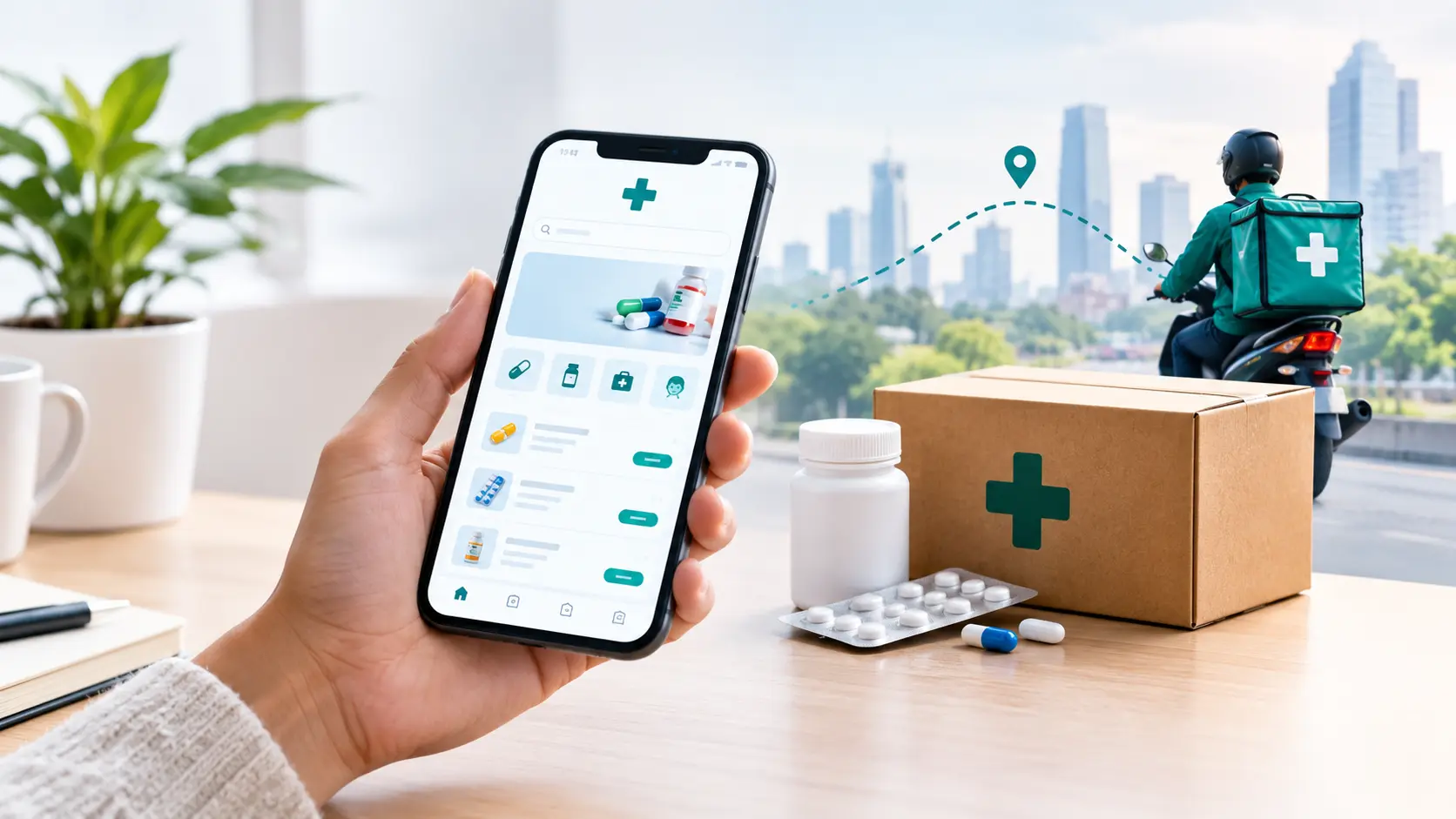
Buying medicines should be simple, especially when someone is unwell, elderly, or unable to visit a pharmacy in person. This is one reason online medicine delivery services have become an attractive business opportunity for entrepreneurs looking to build a digital healthcare business.
A pharmacy delivery app connects customers with pharmacies, allowing them to search for medicines, upload prescriptions, place orders, make payments, and receive deliveries at home. For pharmacy owners, it offers another way to reach customers and manage orders. For entrepreneurs, it creates an opportunity to build a business around convenience and reliable medicine access.
However, launching such a business involves more than developing an app. You need to understand the market, choose the right business model, meet healthcare regulations, establish pharmacy partnerships, and create a dependable delivery system.
This guide explains how to start a pharmacy delivery business in 2026, from planning your idea to launching your platform.
Before investing in software or hiring a development team, decide how your pharmacy delivery business will operate. Your business model affects your investment, daily operations, revenue, and legal responsibilities.
Here are three common options.
Single-pharmacy model: You operate an online ordering service for one pharmacy or an existing pharmacy chain. This model gives you greater control over inventory, pricing, and order fulfillment.
Multi-pharmacy marketplace: You connect multiple licensed pharmacies with customers through one platform. Customers can browse available products, place orders, and receive deliveries from participating pharmacies.
Pharmacy delivery software provider: Instead of selling medicines yourself, you provide software that helps pharmacies establish their own online ordering and delivery services. Revenue may come from subscriptions, setup fees, or software licensing.
Each model has different requirements. A single-pharmacy business may be easier to manage initially, while a marketplace can offer greater expansion opportunities but requires more coordination.
Choose a model that matches your budget, business experience, target market, and ability to manage healthcare compliance.
A pharmacy delivery app needs a clearly defined audience. Trying to serve every customer from the beginning can make operations unnecessarily complicated.
Start by studying your intended launch area. Look at the number of pharmacies, existing medicine delivery services, customer preferences, delivery coverage, and common problems with current options.
You might discover that customers struggle to find certain medicines, face long waiting times, or have difficulty arranging deliveries for elderly family members.
These observations can help you identify a practical starting point.
For example, you could focus on a specific city, partner with independent pharmacies, and initially serve a limited delivery radius. Once the process becomes reliable, you can expand into additional neighborhoods.
Research your competitors, too. Examine their ordering experience, prescription submission process, delivery estimates, customer support, and pricing. The goal is not simply to copy existing apps but to identify where your service can offer a better experience.
Customers expect a pharmacy delivery app to be easy to use. Complicated navigation, unclear product information, and uncertain delivery times can quickly discourage repeat orders.
Your first version should include the features needed to complete an order safely and efficiently.
Customer app features
User registration and secure login
Medicine search and product categories
Prescription upload and review workflow
Shopping cart and order placement
Secure payment options
Order tracking and delivery notifications
Order history and reorder functionality
Customer support and cancellation or refund requests
Pharmacy dashboard features
Pharmacies need a practical way to manage incoming orders. The dashboard should support inventory updates, order acceptance, prescription verification workflows, pricing, and order status changes.
Delivery management features
Delivery personnel should be able to access assigned orders, view delivery addresses, update delivery status, and contact customers when necessary.
Admin dashboard features
The administrator needs tools to manage pharmacy accounts, users, product listings, transactions, service areas, delivery settings, and reports.
Start with the features required for your business model. Advanced features such as automated inventory synchronization, demand forecasting, and personalized reminders can be introduced when there is a clear business need.
Healthcare businesses operate under stricter requirements than many ordinary e-commerce businesses. Compliance should be part of your business plan from the beginning, not something you address after the app is developed.
Requirements depend on the countries and regions you intend to serve.
In India, for example, you must assess the applicable drug licensing requirements, prescription rules, restrictions on medicine categories, pharmacy responsibilities, and relevant central and state regulations. Selling medicines online does not remove the obligations that apply to licensed pharmacies.
Your platform should support a process for reviewing prescriptions and confirming that orders can legally be fulfilled. Prescription medicines must not be treated like ordinary products that customers can purchase without appropriate checks.
You should also consider data protection, secure payment processing, access controls, and the handling of sensitive prescription information.
Before launching, consult a qualified legal or regulatory professional familiar with pharmaceutical commerce in your target market. Build your workflows around the applicable requirements and ensure that pharmacy partners meet their own legal obligations.
Trust is especially important in healthcare. Customers need confidence that their information is protected and their orders are handled responsibly.
Software development is one of the most important decisions you'll make. There are three main approaches.
Custom development: You hire developers or a software agency to build the application around your exact requirements. This gives you flexibility, but development can take considerable time and require a larger budget.
No-code or low-code development: You use visual development tools to build parts of the application with less traditional programming. This can be suitable for testing certain business ideas, although complex integrations and specialized workflows may require additional development.
Ready-made software: You start with an existing software product and customize it to suit your business requirements. This can reduce the amount of development needed compared with building everything from scratch.
For entrepreneurs who want to move faster, a pharmacy delivery app SaaS platform can be worth evaluating, particularly when it offers the necessary customer, pharmacy, and administration features.
Platforms such as heloix.com offer ready-made customizable software products that can help businesses establish digital services without developing every component from the ground up. Before choosing any provider, check whether its software supports your pharmacy workflows, prescription requirements, integrations, scalability, and customization needs.
Remember that ready-made software does not automatically guarantee regulatory compliance. You remain responsible for ensuring that your business and its processes meet the requirements of your market.
The cost of launching a pharmacy delivery app depends on the software you choose, the number of features, your operating model, and the size of your launch area.
Your budget should account for more than app development.
Common expenses include:
Software development, licensing, or subscription fees
App customization and third-party integrations
Hosting, maintenance, and technical support
Pharmacy onboarding and partnership development
Delivery personnel or logistics partnerships
Marketing and customer acquisition
Customer support and daily operations
Legal advice, licensing, and compliance
Payment processing and other transaction fees
A ready-made solution may reduce initial development expenses, but you should compare the total cost of ownership rather than looking only at the initial price.
Ask vendors about recurring charges, transaction fees, source code access, ownership rights, customization costs, support arrangements, and future upgrades.
Prepare a realistic budget for the first six to twelve months. This gives you room to test the business, resolve operational problems, and improve the service before expanding.
Even a well-designed app cannot succeed if customers cannot obtain the products they need.
If you are operating a marketplace or software-enabled delivery service, establish relationships with suitable licensed pharmacies before launch.
Discuss product availability, inventory updates, prescription verification, order acceptance, packaging, delivery responsibilities, returns, and customer complaints.
Clarify who is responsible for each part of the transaction. This is particularly important when your platform connects customers with independent pharmacies.
Start with a manageable number of partners. Test the entire process, from receiving an order to completing delivery, before bringing in more pharmacies.
Accurate inventory information is essential. If customers repeatedly order products that are unavailable, they may stop using your service.
Reliable pharmacy partnerships can become one of your strongest advantages as the business grows.
Delivery is a major part of the customer experience. A customer may appreciate an easy ordering process, but repeated delays or incorrect orders can damage trust.
Decide whether you will employ delivery personnel, work with third-party logistics providers, or let participating pharmacies manage deliveries.
Establish clear delivery areas, estimated delivery times, packaging procedures, and methods for communicating delays.
Medicines may have specific storage, handling, or temperature requirements. Your fulfillment process must account for these requirements wherever applicable.
You should also create procedures for failed deliveries, incorrect orders, damaged packages, and customer complaints.
Begin with a small delivery area and measure your performance. Useful metrics include average delivery time, successful delivery rate, order cancellation rate, and cost per completed order.
These figures can help you determine whether expansion is financially and operationally practical.
Your revenue model should cover operating expenses while remaining attractive to customers and pharmacy partners.
Depending on your business structure and applicable regulations, possible revenue sources include:
Order commissions: Earn a defined commission on eligible transactions.
Pharmacy subscriptions: Charge participating pharmacies a recurring software or platform fee.
Delivery fees: Collect delivery charges where appropriate.
Software licensing: Provide pharmacy businesses with access to your platform for a recurring or agreed fee.
Premium business features: Offer optional reporting, integrations, or operational tools.
Avoid depending on a single revenue source without understanding your costs.
For example, a business may generate plenty of orders but still struggle financially because delivery costs, discounts, customer acquisition, and support expenses exceed its earnings.
Calculate your expected revenue per order and compare it with the direct costs of fulfilling that order. This helps you understand whether the business can become sustainable.
Once your software, pharmacy partnerships, and operational processes are ready, begin with a controlled launch.
Test registration, medicine searches, prescription uploads, payments, order notifications, inventory updates, and delivery tracking. Check the experience on different devices and make sure customers can reach support when something goes wrong.
You can then promote your service through local search optimization, useful healthcare-related content, pharmacy partnerships, referral programs, and community outreach. Any health-related marketing should be accurate and must not make misleading medical claims.
Monitor customer feedback during the first few weeks. Identify where users abandon orders, which products generate demand, how quickly pharmacies respond, and what causes delivery problems.
Use this information to improve the app before expanding your service area.
If you plan to launch pharmacy delivery app services in multiple cities, expand gradually. Each new location introduces additional pharmacies, delivery logistics, competition, and potentially different regulatory requirements.
Starting a pharmacy delivery business in 2026 requires a combination of technology, healthcare compliance, pharmacy relationships, and dependable operations.
The best approach is to begin with a clear business model, understand your customers, choose essential features, and build a safe ordering and fulfillment process. You do not need to launch with every possible feature or operate across an entire country from day one.
A ready to launch pharmacy delivery app solution may help you shorten the path from planning to implementation, provided it meets your technical, operational, and regulatory requirements.
Focus on solving a genuine customer problem, building trust, and delivering a consistent experience. With careful planning and steady improvements, your pharmacy delivery business can develop a strong foundation for long-term growth.
Please to post a comment
No comments yet
Be the first to share your thoughts.
@heloix_news
HealthTech
@heloix_news
HealthTech

@heloix_news
HealthTech
Subscribe for the latest on technology, business growth and digital transformation.