
HN
@heloix_news
Tech

How to Launch a NFT Marketplace in Just 3 Days
#NFTMarketplace#NFTs#DigitalAssets
Comment
665
Shamita
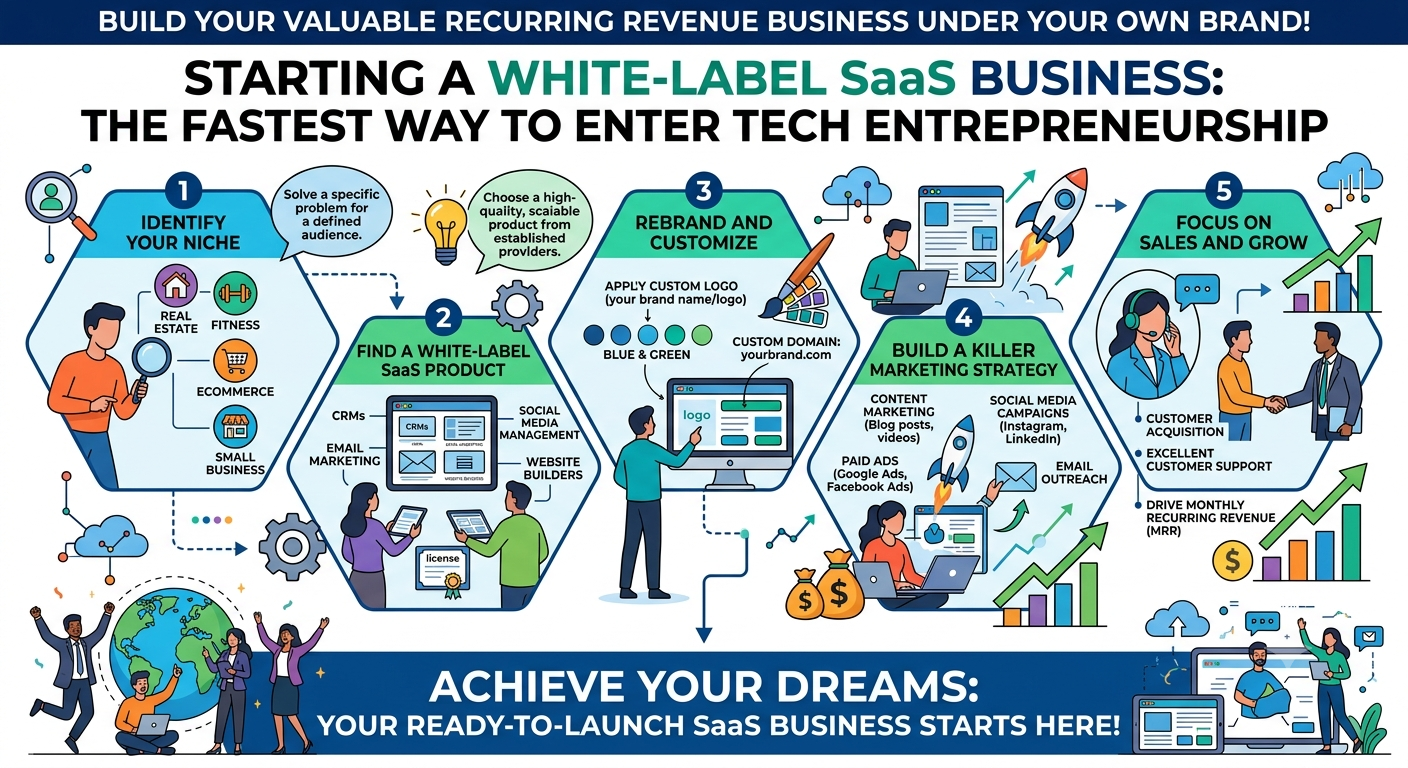
Have you ever dreamed of owning a software business but felt intimidated by the time, cost, and technical expertise required to build a product from scratch? Welcome to the world of white-label SaaS, where you can buy ready-made software, put your branding on it, and sell it as your own. This business model is taking the entrepreneurial world by storm, offering a shortcut to recurring revenue for those with marketing and sales skills.
For beginners, white-label SaaS presents an incredible opportunity. It allows you to enter a lucrative market with minimal risk and a pre-vetted product. In this post, we’ll break down exactly what a white-label SaaS business is, how it works, and a step-by-step guide on how you can launch your own white-label SaaS business today.
White-label SaaS (Software as a Service) is a software license agreement where a software provider (the "white-label partner") develops a software application, which is then resold by another company (the "white-label reseller") under the reseller's own brand and at their own price.
In simple terms, it's like buying "blank label" software. You change the logo, the color scheme, and the name, and you present it to the market as your unique product. Your customers never need to know who the original developer is. They subscribe to your service, and you pay a licensing fee (often a wholesale rate) to the original software provider.
Why is it perfect for beginners?
Skip the Development Headache: Building software from scratch takes months, sometimes years, and a massive financial investment. White-labeling allows you to skip this entire process and get to market immediately.
Reduced Financial Risk: Your main costs will be your white-label licensing fee (which is typically a fraction of development costs) and your marketing expenses.
Focus on What You're Good At: If you're a marketing or sales genius, you can focus on building a customer base while the original developers handle the tech.
Before you jump in, it's important to understand the four main players and components involved:
1. The White-Label Partner (The Developer)
This is the company that created the core software. They are responsible for maintenance, updates, fixing bugs, and ensuring the software works. They often provide you with "reseller tools" like a marketing kit and white-label documentation.
2. The White-Label Reseller (You)
This is your role. You are the customer-facing brand. Your responsibilities include:
Branding and Marketing: Creating a brand identity, a website, and marketing campaigns to attract customers.
Sales and Support: Acquiring new customers, handling their questions, and providing front-line support. (Note: Many white-label partners offer support packages, but you are the primary point of contact).
Pricing: You determine the subscription fees and pricing tiers for your service.
3. The White-Label Product (The Software)
This is the product itself. When you sign a white-label agreement, you gain access to the software. The "whitelabeling" process typically involves:
Logo and Branding: Uploading your own logo and choosing your brand colors.
Custom Domain: Hosting the software on your own domain (e.g., app.mybrandedsaas.com).
Billing and Invoicing: Setting up your own payment gateway and sending invoices with your branding.
4. The End Customer
These are the businesses or individuals who will subscribe to and use your white-labeled software. They may be totally unaware that another company is the technical brains behind the operation. Their relationship is with you, and they pay you for the service.
Ready to make your mark? Here is a simple, actionable roadmap for beginners to go from idea to launch:
Don't just pick any SaaS product. Research and identify a niche that has a real problem your software can solve. This could be anything from CRM software for real estate agents to social media scheduling for small businesses to an HR platform for dentists.
Once you have a niche, look for white-label SaaS products that already have traction in the market. You want a product that is "ready to launch." Read reviews, request a demo, and ensure it's a high-quality product that solves the problem it claims to.
Choosing the right partner is critical. Don't just settle for the first option. Conduct thorough due diligence:
Product Quality: Does the software work as advertised? Is it user-friendly?
Support: What level of technical support do they offer to you? What are their typical response times?
Branding Capabilities: How extensive are their white-labeling features? Can you truly make it look like your own?
Profit Margins: What is the licensing cost compared to your planned retail price? Ensure there's a healthy profit margin.
Roadmap and Updates: Are they actively developing the product and adding new features? You don't want a static, dying software.
Documentation and Marketing Materials: Do they provide resources to help you sell? This is a huge bonus.
Once you've chosen a partner, it's time to get official. Consult with a legal professional to review the white-label agreement. This document will outline:
Licensing Fees and Payment Terms.
Usage Rights: Where and how you can sell the software.
Support Obligations: Who is responsible for what.
Branding Guidelines: Any limitations on how you use their core IP.
Termination Clauses: What happens if you decide to end the partnership.
This is where you make it your own!
Choose a Compelling Name: Create a name that resonates with your target niche.
Design a Professional Logo: This will appear on the app and all your communications.
Setup your Custom Domain: Make sure your customers access the app via a URL that matches your new brand.
Configure the White-Label Platform: Upload your logo, set your brand colors, and configure the user interface to match your vision.
A white-label product is useless without customers. This step is your single most important focus.
Define Your Value Proposition: How does your branded version of this software uniquely solve your customers' problems?
Create Your Website: Build a compelling marketing website that explains the benefits of your solution and captures leads.
Choose Your Marketing Channels: Where does your target audience hang out? Is it LinkedIn? Facebook? Industry forums? Focus on a few channels and master them.
Setup your Pricing: Create subscription tiers that make sense for your value proposition and your target audience.
Consider Content Marketing: Write blog posts, create webinars, or make videos that demonstrate your expertise and educate potential customers on the problem your software solves.
The big day! Launch your white-label SaaS business to your target market. Offer a free trial or a heavily discounted introductory price to build an initial customer base.
Gather Feedback: Talk to your early adopters. What do they like? What's confusing? Where do they have problems?
Provide Exceptional Support: Your first customers will be your biggest advocates. Treat them like gold. Use their feedback to build a better customer support experience.
Communicate with your Partner: Share feedback from your customers with your white-label partner. They might use it to inform future feature development, which benefits everyone.
Analyze and Optimize: Track your key metrics (like customer acquisition cost, churn rate, and monthly recurring revenue). Use this data to continuously improve your marketing and product strategy.
Please to post a comment
No comments yet
Be the first to share your thoughts.
@heloix_news
Tech
@heloix_news
Tech

@heloix_news
Tech

Subscribe for the latest on technology, business growth and digital transformation.