
HN
@heloix_news
Fintech
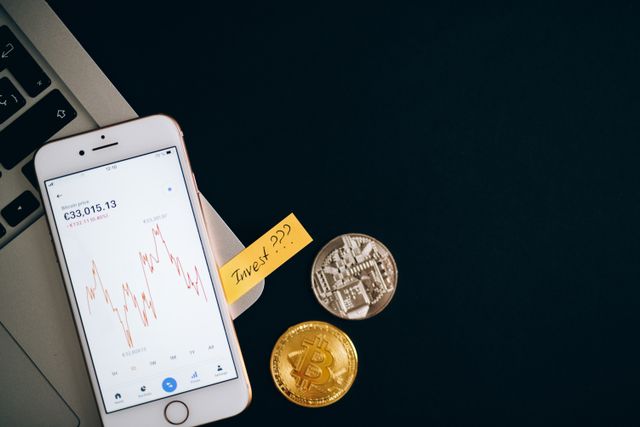
How to Launch a Crypto Exchange Platform in Just 3 Days
#CryptoExchangePlatform#CryptocurrencyExchange#CryptoTrading
Comment
326

The way people handle daily transactions has altered as a result of digital payments. From paying bills and sending money to shopping online and tracking expenses, users now expect financial services to be available from their phones.
This shift has created opportunities for entrepreneurs who want to build products around digital payments and personal finance. A fintech wallet app can be one such opportunity, especially when it solves a specific problem instead of trying to become another generic payment app.
If you are exploring fintech wallet app business ideas in 2026, this guide explains what you need to consider before launching one, how the business can work, and how to approach the development process.
A fintech wallet app is a mobile application that allows users to store, manage, transfer, or use digital money and financial services.
Depending on the business model, a wallet can offer features such as:
Digital payments
Money transfers
Bill payments
Mobile recharges
Transaction history
Expense tracking
QR payments
Bank account connections
Virtual cards
Rewards and cashback
Payment notifications
Not every wallet needs all of these features. In fact, starting with a focused set of functions can make it easier to launch and understand what customers actually need.
The type of wallet you build will depend on your target users, location, regulations, partnerships, and revenue model.
Consumers are becoming increasingly comfortable with digital financial services. People use mobile applications for transactions that previously required a bank visit, physical cash, or a desktop computer.
This creates room for specialized financial products.
For example, a wallet could focus on freelancers who receive payments from multiple clients. Another could target small businesses that need simple payment collection and expense management. A travel-focused wallet could help users manage spending across different currencies.
The opportunity is not simply about creating another payment application. It is about finding a specific financial problem and building a convenient solution around it.
That is where researching different fintech wallet app business ideas becomes important.
There are several directions an entrepreneur can explore.
A personal finance wallet can combine payments with basic money management. Users could see their spending, organize transactions into categories, set budgets, and receive reminders.
The focus would be on helping users understand where their money goes.
Small businesses often deal with multiple payments, expenses, and transactions. A wallet designed for business owners could provide payment collection, transaction records, employee spending controls, and basic financial reporting.
This can create a more focused product than a general-purpose consumer wallet.
Freelancers and independent professionals may receive payments from different clients and platforms.
A specialized wallet could help them organize incoming payments, track earnings, manage invoices, and monitor business expenses.
Travelers often deal with different currencies, cards, payments, and exchange rates.
A travel wallet could combine currency management, spending tracking, international payments, and travel-related financial tools in one application.
A rewards-focused wallet could allow users to collect and redeem points, cashback, or loyalty benefits from participating businesses.
The business model could involve partnerships with merchants rather than depending entirely on transaction fees.
Launching a fintech wallet requires more than developing an attractive mobile interface. Financial applications handle sensitive information and transactions, so planning needs to cover technology, security, compliance, and operations from the beginning.
Start by deciding who the application is for.
Are you targeting individual consumers, freelancers, small businesses, online shoppers, travelers, or another group?
A clearly defined audience makes it easier to decide which features should be included in the first version.
You should also research existing financial applications serving the same audience. Look at their features, pricing, customer reviews, and common complaints.
Replicating an existing product is not the aim. It is to identify where your proposed wallet can provide a useful alternative.
Your first version should focus on the functions customers actually need.
Depending on the idea, essential features could be:
User registration and login
Identity verification
Digital wallet balance
Money transfers
Payment processing
QR code payments
Transaction history
Notifications
Expense tracking
Customer support
Admin dashboard
You can add more advanced features after the basic product has been tested.
Starting with too many functions can increase development time and make the application harder to manage.
The product should have security from the start.
A fintech wallet may handle personal information, payment details, transaction records, and other sensitive data. Weak security can create serious problems for both users and the business.
Depending on the product and market, you may need measures such as secure authentication, encryption, access controls, transaction monitoring, fraud detection, and audit logs.
You should also work with appropriate security and financial professionals rather than treating security as something to add after development.
One of the things that business owners shouldn't ignore is this.
Financial applications can be subject to licensing requirements, payment regulations, consumer protection rules, data protection requirements, identity verification obligations, and anti-money-laundering measures.
The exact requirements depend on the country, services offered, and business structure.
Before launching, consult qualified legal and compliance professionals who understand financial technology in your target market.
A technically complete application cannot compensate for a business model that does not meet applicable regulations.
Once the product requirements are clear, you can plan the technical architecture.
A typical wallet application may include a mobile application, backend services, database, payment integrations, authentication systems, notification services, and an administrative panel.
Scalability will also need to be considered.
The application may have only a small number of users at launch, but the architecture should be capable of handling increased transactions without major rebuilding.
For entrepreneurs who want to launch quickly, using an existing ready-made product can reduce the amount of work involved in building common functionality from scratch. Platforms such as heloix.com can be useful when businesses want ready-made or customizable software products that can be adapted and launched under their own business model.
The exact approach depends on your budget, technical resources, customization requirements, and regulatory needs.
Never treat the first working version as the finished product.
Test registration, login, payments, transfers, notifications, transaction records, and account management. Try different devices and network conditions as well.
Security testing is particularly important for a financial application.
You should also test what happens when a transaction fails, a payment is delayed, an internet connection disappears, or a user enters incorrect information.
These situations may seem minor during development, but they can directly affect customer trust after launch.
A fintech wallet needs a sustainable revenue model.
Possible options include:
Transaction fees
Business subscriptions
Premium account features
Merchant fees
Partner commissions
Foreign exchange margins where legally permitted
Financial service partnerships
The right model depends on the target market and the services provided.
Avoid adding unnecessary fees simply because they are easy to implement. Users are likely to compare your pricing with competing financial services before deciding whether to use the application.
You do not need millions of users on the first day.
A smaller launch can help you understand how people actually use the product. Start with a defined audience and monitor sign-ups, completed transactions, feature usage, support requests, and customer feedback.
Pay attention to where users stop during registration or payment. If customers repeatedly struggle with the same process, that can reveal a product problem that needs attention.
Marketing can then focus on the specific problem your wallet solves rather than simply advertising it as another financial application.
A fintech wallet can become a useful digital business when it addresses a clear financial need and gives users a simple way to manage their money.
The biggest mistake is to think of the idea as only an app development project. A successful wallet also requires market research, a clear business model, strong security, reliable technology, regulatory planning, and ongoing customer support.
If you are evaluating fintech wallet app business ideas in 2026, start with the problem you want to solve. Define your audience, select a manageable set of features, understand the rules that apply to your market, and choose a development approach that fits your resources.
Once those foundations are in place, you can launch fintech wallet app products more systematically and improve them as you learn from real users.
Please to post a comment
No comments yet
Be the first to share your thoughts.
@heloix_news
Fintech
@heloix_news
Fintech
@heloix_news
Fintech
Subscribe for the latest on technology, business growth and digital transformation.