
HN
@heloix_news
Tech

How to Launch a NFT Marketplace in Just 3 Days
#NFTMarketplace#NFTs#DigitalAssets
Comment
663
Shamita
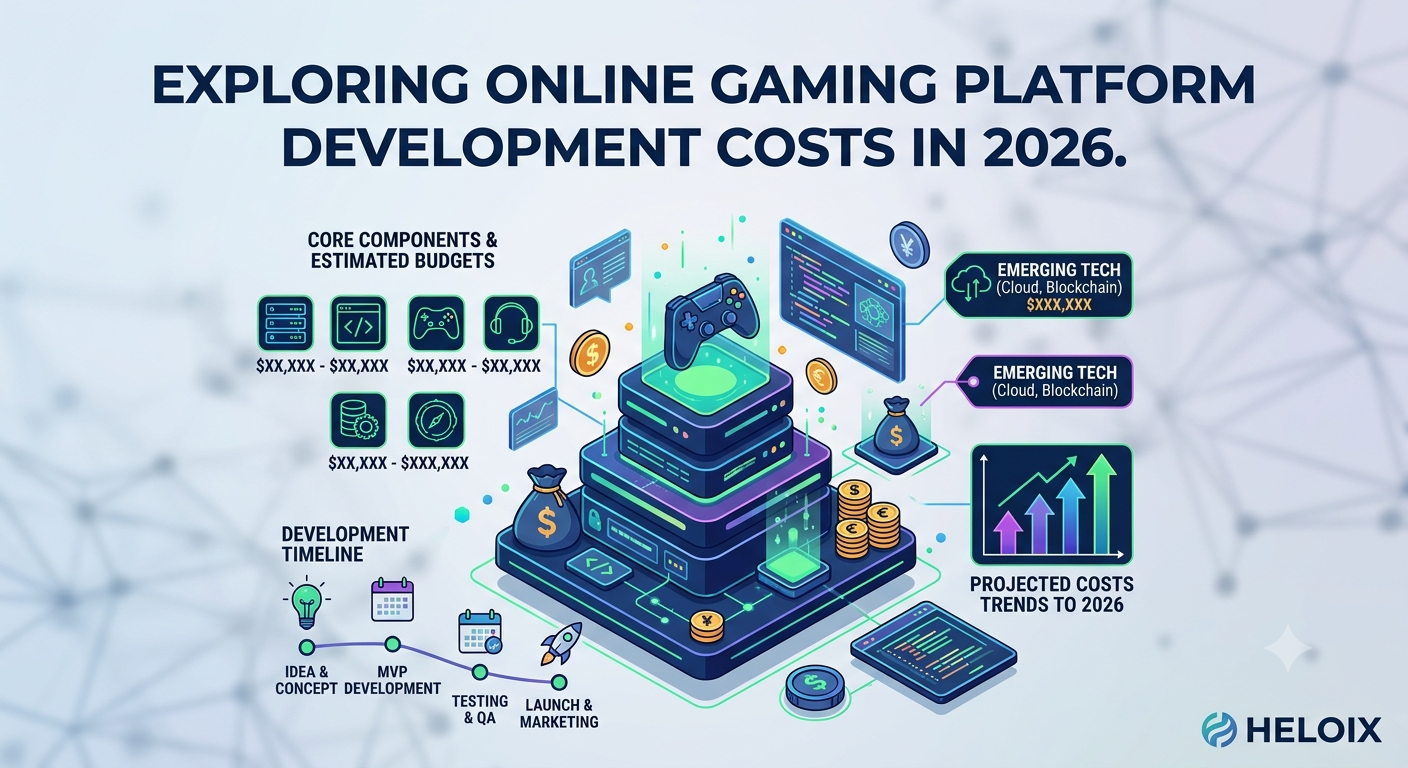
The global online gaming and esports industry continues to grow at a rapid pace. Modern online gaming platforms go far beyond simple downloadable titles; they function as interactive digital entertainment hubs incorporating real-time multiplayer matchmaking, live tournament leaderboards, in-game virtual asset economies, streaming integrations, anti-cheat security protocols, and multi-currency payment checkouts.
Whether you are aiming to launch a casual HTML5 skill-based gaming hub, a competitive esports tournament portal, or a full-scale real-money gaming (RMG) network, evaluating the financial requirement is essential. In this guide, we break down development costs, key cost drivers, recurring operating expenses, monetization models, and a step-by-step launch framework.
The total cost of developing an online gaming platform depends on user concurrency requirements, game engine selection (Unity, Unreal Engine, HTML5), backend multiplayer infrastructure, and regulatory compliance frameworks.
  ┌──────────────────────────────────────────────────────────┐
  │ 1. Casual HTML5 / Skill Gaming Hub: $4,000 – $10,000     │
  │    (₹3,00,000 – ₹8,00,000 in India)                      │
  └───────────────┬──────────────────────────────┬───────────┘
                  │                              │
                  ▼                              ▼
  ┌──────────────────────────────────────────────────────────┐
  │ 2. Esports Tournament & Matchmaking: $12,000 – $30,000   │
  │    (₹10,00,000 – ₹25,00,000 in India)                    │
  └───────────────┬──────────────────────────────┬───────────┘
                  │                              │
                  ▼                              ▼
  ┌──────────────────────────────────────────────────────────┐
  │ 3. Scalable Real-Money / Multi-Game: $35,000 – $100,000+ │
  │    (₹30,00,000 – ₹80,00,000+ in India)                   │
  └──────────────────────────────┴───────────────────────────┘
| Platform Model | Core Included Modules & Capabilities | Global Cost (USD) | Cost in India (INR) |
| Casual HTML5 / Skill Gaming Hub | 5–10 casual web/mobile games (Puzzles, Arcade, Cards), player accounts, basic leaderboards, ad network integration. | $4,000 – $10,000 | ₹3,00,000 – ₹8,00,000 |
| Esports Tournament & Matchmaking | Automated bracket management, team lobbies, match result verification, wallet checkouts, live stream embeds, chat rooms. | $12,000 – $30,000 | ₹10,00,000 – ₹25,00,000 |
| Scalable Real-Money / Multi-Game Ecosystem | Custom game engines, low-latency multiplayer servers (Photon/SmartFox), RNG certification, e-KYC validation, anti-cheat engine. | $35,000 – $100,000+ | ₹30,00,000 – ₹80,00,000+ |
Multiplayer Server Architecture & Latency: Real-time interactive games require specialized multiplayer server infrastructure (e.g., Photon, SmartFoxServer, AWS GameLift) to deliver sub-second state synchronization and prevent game lag.
Game Catalog & Licensing: Developing unique custom 3D games from scratch is capital-intensive. Integrating pre-built HTML5/Unity games or licensing titles via API feeds significantly reduces initial build expenses.
Anti-Cheat & RNG Certification: For skill-based or real-money gaming, obtaining Random Number Generator (RNG) audit certificates from accredited laboratories (like iTech Labs) and implementing server-side anti-cheat logic adds necessary security engineering costs.
Cross-Platform Mobile Apps: Building responsive web apps alongside native Android (APK/Play Store) and iOS application builds increases development and testing timelines.
Operating a production gaming platform involves ongoing technical and compliance expenses:
High-Bandwidth Cloud Servers: Dedicated AWS, Google Cloud, or Azure server hosting configured for low-latency WebSocket connections and peak concurrent player traffic ($100 to $1,000+/month).
Payment Gateway & Wallet Fees: Merchant processing fees (1.5% to 3.5%) charged by payment gateways (Stripe, Razorpay, PayPal) on deposit checkouts.
e-KYC & User Verification: Per-user costs for identity checks, document verification, and age verification APIs.
Transactional Communication APIs: Per-message charges for automated SMS/WhatsApp OTP verifications, match alerts, and withdrawal updates.
Gaming platforms leverage multiple complementary revenue channels:
Platform Entry Commissions (Rakeback): Taking a pre-negotiated service commission (typically 5% to 15%) from every tournament pool or contest entry fee.
In-Game Virtual Purchases & Skins: Selling cosmetic avatars, custom skins, game passes, and virtual currency bundles directly to players.
Freemium Ad Networks & Sponsorships: Monetizing non-paying players via rewarded video ads (e.g., watch an ad for extra game lives) and sponsored brand tournaments.
VIP Subscription Passes: Offering players monthly membership tiers that unlock exclusive tournaments, lower commission rates, and custom profile badges.
Building a custom, multiplayer-ready online gaming engine completely from scratch requires specialized game developers, backend architects, and security auditors—taking 6 to 12 months of custom development.
Utilizing a ready-to-launch white-label online gaming platform reseller solution provides a faster, highly profitable alternative:
Rapid Market Launch: Deploy a fully branded, production-ready gaming portal under your own company brand in weeks rather than waiting months.
Pre-Built Game Catalog & Infrastructure: Access pre-integrated game libraries, wallet engines, tournament bracket automation, and admin controls out of the box.
High-Margin Reseller Opportunities: Resellers and agencies can license the platform framework, onboard multiple client brands, and generate recurring monthly SaaS revenue.
Full Source Code Ownership: Solution providers like Heloix offer complete ready-to-launch software business frameworks with optional full source code ownership. This eliminates vendor lock-in and gives you complete freedom to host, rebrand, and customize your gaming technology stack.
  ┌──────────────────────────────────────────────────────────┐
  │ 1. Define Target Gaming Niche & Legal Framework          │
  └───────────────┬──────────────────────────────┬───────────┘
                  │                              │
                  ▼                              ▼
  ┌──────────────────────────────────────────────────────────┐
  │ 2. Deploy Turnkey White-Label Platform Infrastructure    │
  └───────────────┬──────────────────────────────┬───────────┘
                  │                              │
                  ▼                              ▼
  ┌──────────────────────────────────────────────────────────┐
  │ 3. Connect Payment Gateways & e-KYC Verification         │
  └───────────────┬──────────────────────────────┬───────────┘
                  │                              │
                  ▼                              ▼
  ┌──────────────────────────────────────────────────────────┐
  │ 4. Seed Initial Tournaments & Beta Player Testing        │
  └───────────────┬──────────────────────────────┬───────────┘
                  │                              │
                  ▼                              ▼
  ┌──────────────────────────────────────────────────────────┐
  │ 5. Execute Player Acquisition & Influencer Campaigns     │
  └───────────────┬──────────────────────────────┬───────────┘
                  │                              │
                  ▼                              ▼
  ┌──────────────────────────────────────────────────────────┐
  │ 6. Scale Server Infrastructure & Add New Game Titles     │
  └──────────────────────────────┴───────────────────────────┘
Specify your platform scope before writing code:
Casual Skill-Based HTML5 Gaming (broad demographic appeal, easy browser accessibility)
Esports Tournament Portal (popular titles like PUBG, BGMI, Free Fire, Valorant)
Fantasy Sports or Real-Money Skill Games (requiring strict state/regional legal compliance)
Acquire a production-ready white-label gaming software suite. Apply your visual brand identity, map custom web SSL domains, configure multi-tenant admin roles, and prepare application packages for submission.
Set up secure financial infrastructure:
Connect local payment processing gateways (Stripe, Razorpay, PayPal) to accept instant deposits and process fast player withdrawals.
Attach e-KYC verification APIs to validate player age and prevent fraudulent multi-account registration.
Ensure system stability prior to full public launch:
Host small pilot tournaments with zero-fee prize pools to test real-time server concurrency, leaderboard updates, and wallet settlements.
Collect user feedback on game loading speeds, UI responsiveness, and deposit workflows.
Drive active players into your gaming ecosystem:
Esports & Gaming Creator Partnerships: Collaborate with gaming streamers on Twitch, YouTube, and Instagram to host exclusive sponsored tournaments.
Sign-Up Deposit Bonuses: Offer welcome bonus credits (e.g., "100% Match Deposit Bonus up to $10") to incentivize initial wallet top-ups.
Referral Loops: Implement "Refer-a-Friend" incentives where players earn bonus credits when invited friends complete their first paid tournament entry.
Track core operational metrics including Monthly Active Users (MAU), Average Revenue Per User (ARPU), player retention rates, and payment withdrawal fulfillment speeds. Continuously optimize server performance, introduce fresh game titles, and scale infrastructure as your player base expands.
Please to post a comment
No comments yet
Be the first to share your thoughts.
@heloix_news
Tech
@heloix_news
Tech

@heloix_news
Tech

Subscribe for the latest on technology, business growth and digital transformation.