
HN
@heloix_news
Tech

Robotics Startup Origin Secures $20 Million to Develop Autonomous Construction Machines
#constructionrobots#AI
评论
1.1K
Mahesh P
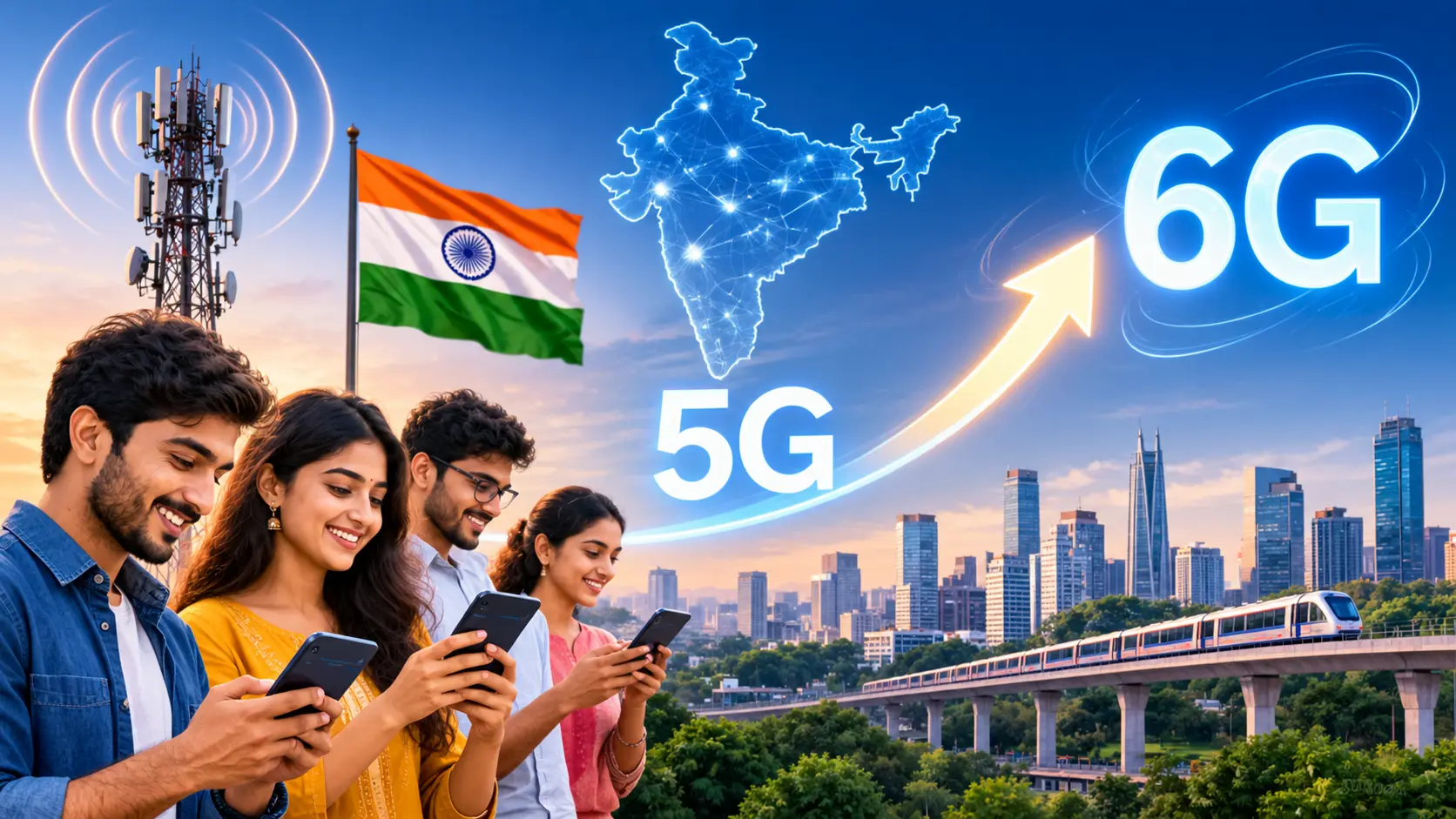
India aims to expand its 5G user base to one billion by 2030, up from the current 550 million, as the country looks to strengthen its position in next-generation telecommunications. Communications Minister Jyotiraditya Scindia announced the target at the 10th edition of the India Mobile Congress (IMC) 2026.
Speaking at the event's inauguration, Scindia highlighted India's rapid adoption of 5G technology and outlined the country's ambition to become a global leader in 6G. He said India had previously lagged behind other nations in 4G deployment but had made significant progress with 5G. The next goal, he indicated, is to take a leading role in developing and advancing 6G technology.
The government is working to strengthen India's contribution to next-generation telecom research through the Bharat 6G Alliance. According to Scindia, the alliance brings together 90 institutions and has established a portfolio of 7,700 patents, including 4,400 international patents.
These developments reflect India's efforts to build its own technological capabilities and contribute to the global evolution of telecommunications standards.
Scindia also announced that the International Telecommunication Union (ITU) Council had accepted India's proposal to host its Plenipotentiary Conference in 2030.
India previously hosted the ITU's World Telecommunication Standardisation Assembly in 2024. The gathering was the first of its kind to take place in India and was also the largest edition held outside Geneva in the organisation's history.
Scindia pointed to the substantial growth in India's telecommunications sector since the first India Mobile Congress in September 2017.
The country's broadband subscriber base has increased from 60 million to more than 1.1 billion, while the total number of mobile subscribers has reached approximately 1.35 billion.
Internet access has also become significantly more affordable. The price of 1GB of mobile data has dropped from Rs 268 in 2014 to around Rs 8, making mobile internet accessible to a much wider population.
This expansion in connectivity has helped support the growth of digital services, online payments and internet-based businesses across the country.
India's digital public infrastructure has become another important part of its technology transformation.
Scindia highlighted the role of the Unified Payments Interface (UPI), which accounts for 84% of digital transactions in India. He also noted that India contributes approximately 49% of digital transactions worldwide.
UPI processes around 260 billion transactions annually, with a combined value of approximately $3.4 trillion. The payment system has also expanded beyond India's borders, reaching 11 other countries.
Its growth reflects the increasing adoption of digital payments by consumers, merchants and businesses, while demonstrating how technology can support financial transactions at a large scale.
The government is continuing to invest in digital infrastructure to extend reliable internet access to rural communities.
Scindia discussed BharatNet, a government-funded programme with an allocation of $15 billion, aimed at strengthening connectivity across the country.
The initiative is expected to provide middle-mile connectivity to nearly 260,000 gram panchayats. It will also support on-demand connectivity for another 380,000 villages, with the objective of providing 100 Mbps connections to homes based on demand.
Expanding rural broadband access is important for connecting underserved communities and improving access to digital services, education, business opportunities and government platforms.
India's mobile phone manufacturing sector has also experienced significant growth over the past decade.
According to Scindia, the industry was valued at approximately $2 billion to $3 billion in 2014. It has since grown into a $63 billion industry, reflecting the expansion of domestic manufacturing capacity.
India is now the world's second-largest mobile phone producer, with mobile phone exports approaching $29 billion.
The expansion of manufacturing and exports highlights the country's growing role in global electronics production and its efforts to strengthen domestic capabilities across the telecommunications supply chain.
India's target of reaching one billion 5G users by 2030 represents the next stage in its telecommunications expansion. At the same time, investments in 6G research, broadband infrastructure and mobile manufacturing are intended to strengthen the country's position in the global technology sector.
The progress of these initiatives will depend on continued infrastructure development, wider network access, research capabilities and the adoption of new technologies.
As India moves towards its 2030 goals, the focus is shifting beyond expanding connectivity to building the technological expertise and infrastructure needed to compete in the next generation of global telecommunications.
请先 以发表评论
暂无评论
成为第一个发表评论的人。
@heloix_news
Tech
@heloix_news
Tech

@heloix_news
Tech

订阅以获取前沿技术、业务增长与数字化转型的最新资讯。