
HN
@heloix_news
Growth

Gaming Commerce Unlocked: How PlaySuper Is Converting In-Game Victories into Real-World Rewards
#PlaySuper#gamingcommerce#gamingrewards
评论
2.2K
Sumit sanjay
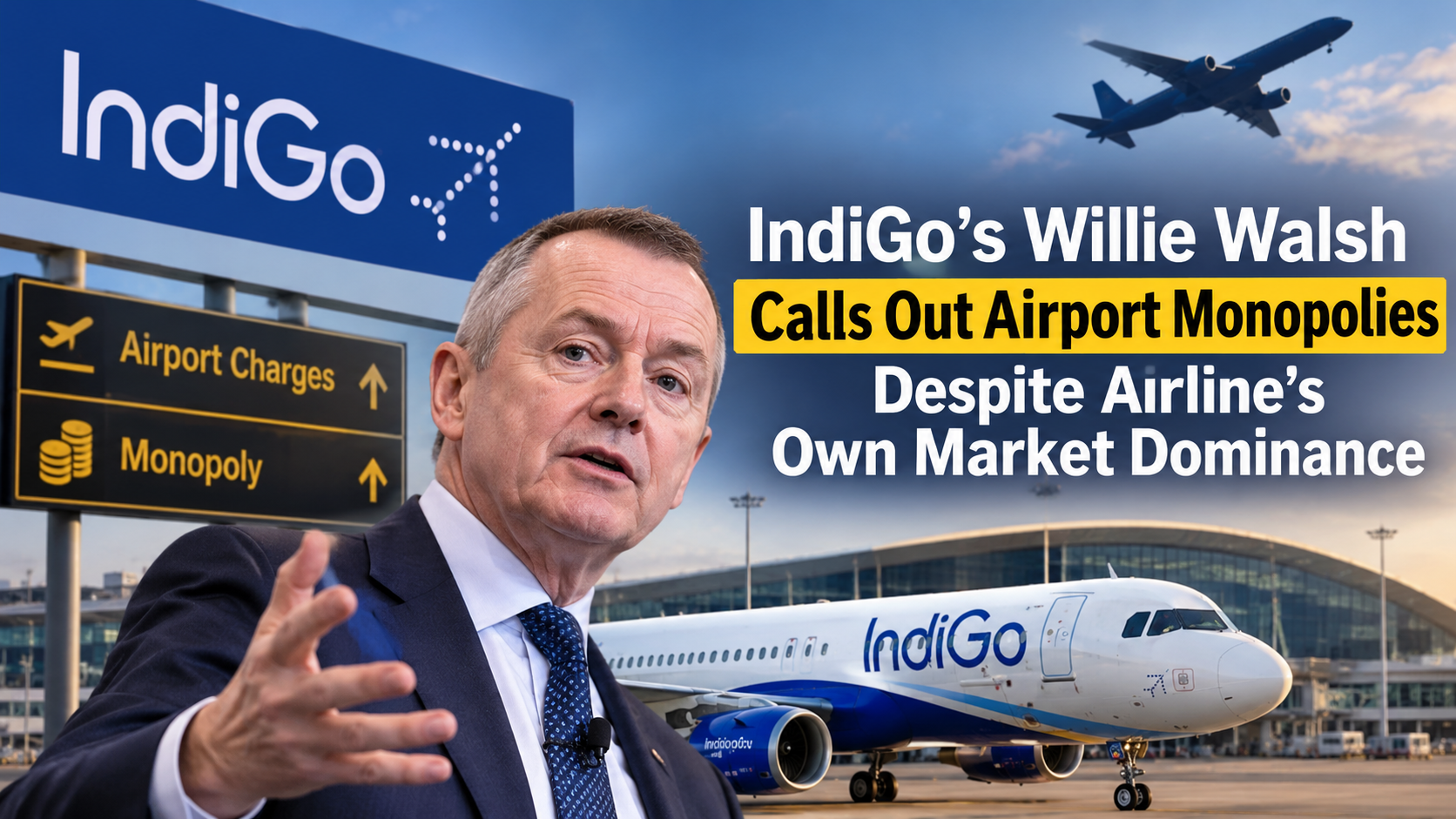
In 2018, Willie Walsh launched a sharp attack on Heathrow Airport in a column for the Financial Times. At the time, he was the chief executive of International Airlines Group, the parent company of British Airways, and his criticism centred on Heathrow’s expansion plans and the high costs associated with running the airport.
Walsh argued that if Britain wanted to emerge as a global trading powerhouse after Brexit, Heathrow needed to become more competitive rather than remain one of the world's most expensive airports. He believed this would require changes to the role of the Civil Aviation Authority (CAA), which approves and monitors the airport's capital expenditure while effectively protecting its profit margins.
To make his case, Walsh highlighted a striking example of how airport costs could spiral.
British Airways had asked Heathrow to install three self-boarding gates at each of the 12 conventional boarding gates in Terminal 5. According to suppliers, each self-boarding gate cost approximately £20,000, putting the total expense at around £720,000. However, Heathrow estimated that completing the project would cost £7.8 million.
Walsh argued that Heathrow could charge such high prices because the regulator allowed it to operate without sufficient scrutiny. He pointed to the lack of transparency, proper cost benchmarking and meaningful ways for airlines to challenge expenditure estimates.
His concerns were not entirely misplaced. Heathrow's expansion has become one of the most expensive airport development projects, while its passenger charges remain among the highest in the world.
Nearly eight years later, Walsh is making a similar argument in a different market. This time, his attention is on Indian airports.
Now the chief executive of IndiGo, India's largest airline, Walsh criticised airport charges during a media briefing on Monday. Having taken charge of the airline in August, he made it clear that reducing operating costs would be a priority.
"Lower taxes, lower airport charges, that's the way forward," Walsh said. He added that IndiGo would continue pushing airports to offer better value and more competitive pricing, particularly because many airports effectively operate as monopolies.
The timing of his comments is significant. IndiGo's total expenses increased by nearly 20% year-on-year in the September quarter, driven largely by higher aviation turbine fuel prices and the rupee's depreciation against the US dollar. Airport charges also contributed to the increase, rising by almost 10%.
Walsh acknowledged that fluctuations in jet fuel prices would remain a challenge for the airline industry for some time. With limited control over fuel costs, reducing expenditure in other areas becomes increasingly important. Airport charges, therefore, offer an obvious area for IndiGo to seek savings, even if negotiating lower rates will not be straightforward.
India's airport sector is largely controlled by two major business groups, Adani and GMR, which together manage 14 airports, including major facilities in Mumbai, Delhi, Ahmedabad and Hyderabad.
However, Walsh's criticism of airport monopolies raises an interesting question: what about the position of IndiGo itself in India's aviation market?
The airline has faced similar accusations over its dominant market share. In December 2025, IndiGo cancelled around 2,500 flights, partly because it had not adequately prepared for changes to mandatory pilot rest requirements. The disruption triggered widespread criticism, with opposition leader Rahul Gandhi describing the situation as a consequence of the government's "monopoly model".
GR Gopinath, the founder of Air Deccan, also described IndiGo as a de facto monopoly in India's aviation market.
The criticism became significant enough for IndiGo co-founder Rahul Bhatia, who generally stays away from the public spotlight, to address the airline's market dominance in interviews.
Bhatia defended IndiGo's approximately 65% market share by arguing that a substantial portion of its operations serves routes where no other airline operates.
"Of that 65% market share, one-third of it is flying into markets where nobody else is flying," he explained. He estimated that this represented around 250 city pairs without competing airline services.
According to Bhatia, these routes are not closed to competitors. Other airlines are free to enter these markets, but IndiGo has taken the initiative to connect cities that previously had no direct air links.
His argument was that the airline's dominance should also be viewed in the context of the connectivity it provides to underserved parts of the country.
Still, the contrast is difficult to ignore. While Walsh wants Indian airports to face greater competition and scrutiny over their pricing, IndiGo itself operates with a commanding position in the country's aviation market.
For airlines, airport operators and passengers, the larger question remains the same: how can a market dominated by a handful of powerful players ensure competitive pricing, transparency and better value?
请先 以发表评论
暂无评论
成为第一个发表评论的人。
@heloix_news
Growth
@heloix_news
Growth

@heloix_news
Growth

订阅以获取前沿技术、业务增长与数字化转型的最新资讯。