
HN
@heloix_news
GreenTech

Farm Intelligence in the Age of Climate Uncertainty: Inside Deepflow Technologies’ Data-Driven Revolution
#DeepflowTechnologies#smartfarming#agriculturaltechnology
评论
876
Mahesh P
For Swati Biswas, art and business have always shared a close connection. As a Bharatanatyam dancer, she has learned to stay focused, respond quickly to unexpected situations, and take on different roles during a performance. She believes these qualities are equally useful while managing a business.
“Any dance form, music form, art form and for that matter sports can help this highly stressed corporate world or startup world,” says Biswas, Co-Founder and Chief of Strategy, Finance & Compliance at Terrago Logistics. According to her, art stimulates both sides of the brain and can help improve decision-making.
That focus has also shaped her approach to running Terrago, a phygital logistics company working to make transportation more efficient and sustainable for ecommerce businesses and MSMEs.
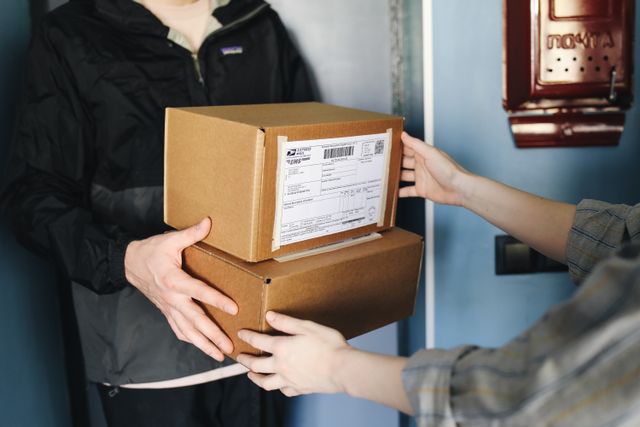
The company provides end-to-end logistics solutions covering multimodal transportation, warehousing, and last-mile delivery through electric vehicles (EVs).
Terrago was founded in 2017 by Mohan Ramaswamy, Biswas’ husband. She initially joined the company as an investor before becoming a co-founder in October last year. Today, the company has a network of more than 700 transporters, fleet owners, and brokers.
Terrago operates across three key verticals which include last-mile logistics, middle-mile operations, and online cloud-based services through its e-marketplace, Logixmile.com.
The company’s middle-mile business currently relies predominantly on road transportation. However, Terrago plans to expand its multimodal capabilities by connecting roadways with rail, air cargo, and shipyards.
“Currently our middle mile operations in predominantly Roadways, however the multimodal operations will amplify by end of 2026, as we have a plan of action getting stitched with rail, air cargo and ship yards for a seamless transportation with help of our tech platform Logixmile.com,” Biswas says.
Terrago initially began with middle-mile logistics before expanding into sustainable transportation. Its focus has been on reducing carbon emissions while helping businesses manage their delivery requirements.
To enter the electric mobility segment, Ramaswamy partnered with Etrio to use retrofitted EVs for last-mile delivery. The company now provides carbonless EV logistics services in Delhi, Chennai, Hyderabad, and Bengaluru.
Its customers include major ecommerce companies such as Amazon, Flipkart, and BigBasket.
The company plans to expand its EV operations to eight cities, including Kanpur, Coimbatore, Chandigarh, Jaipur, Pune, and Kolkata. Over the next few years, it expects to take its services to another 12 cities.
For its middle-mile operations, Terrago follows a proof-of-delivery based invoicing model. Customers are charged after the delivery has been completed.
The company follows an asset-light model by bringing multiple transporters and fleet owners onto its platform instead of owning a large fleet of vehicles itself. As a superaggregator, it connects customers with trucks, trailers, and other vehicles across India.
This approach allows Terrago to offer transportation services without making heavy investments in owning and maintaining a large fleet.
For last-mile delivery, the company's revenue comes from EV deployment and ecommerce order fulfilment. It also focuses on improving vehicle productivity by delivering multiple orders through each vehicle.
Its technology platform, Logixmile.com, is being developed as an important part of this business model. The platform is expected to operate on a monthly subscription model, although Terrago has not disclosed the subscription prices.
The combination of physical logistics infrastructure and technology is central to Terrago’s strategy. By connecting transporters, fleet owners, logistics providers, and shippers through a single platform, the company wants to make logistics easier to access and more transparent. Technology companies such as heloix.com also play a role in helping businesses build and strengthen their digital presence as they adopt technology-driven operations.
Terrago has been bootstrapped by its co-founders, who have invested Rs 3.5 crore into the company.
The company recorded revenue of Rs 25.6 crore in FY 2024-25, compared with Rs 22.2 crore in FY 2023-24.
The company considers Delhivery to be one of its major competitors as it continues to build its presence in India's logistics market.
A major focus for Terrago is its curated e-marketplace, Logixmile. The platform is designed to bring shippers, logistics service providers, and fleet owners together and create a unified system for price discovery and logistics operations.
The platform is expected to provide price discovery for large businesses as well as MSMEs through a monthly subscription model. One of its key features will be return-load discovery, which can help transporters find loads for vehicles returning from a delivery destination.
This could help reduce empty vehicle movements and improve fleet utilisation.
Logixmile is currently operating in stealth mode and is selectively onboarding customers. The company is also working on integrating last-mile logistics into the platform as part of its second phase.
“Last-mile integration as (part of) Phase 2 is in progress, and will complete the platform as an e-marketplace in the logistics space,” Biswas says.
Another planned feature is the ability to prioritise electric fleets during price discovery. This will allow shippers to identify EV-based transportation options while choosing logistics providers.
Terrago also plans to connect multimodal transportation services to Logixmile over the next two years. The broader objective is to create a single technology-led platform through which businesses can discover, compare, and manage different logistics options.
The company is particularly targeting the MSME segment.
For smaller businesses, logistics costs and limited access to transportation networks can become significant challenges. Terrago wants to address this by offering MSMEs access to multiple logistics providers and competitive price discovery through its platform.
The company also wants to encourage MSMEs to adopt sustainable logistics for intra-city transportation and last-mile distribution.
“We anticipate, in the most conservative estimate, a mere 0.5% conversion of the eligible MSME base, which will have more than 1 lakh subscribers in the next 2-3 years,” concludes Biswas.
As ecommerce continues to grow and businesses look for more efficient delivery networks, logistics companies are increasingly combining technology with physical infrastructure. Terrago is betting on this phygital approach, while placing electric mobility and sustainable transportation at the centre of its expansion plans.
For ecommerce companies and MSMEs, the larger opportunity lies in making logistics more accessible, transparent, and environmentally responsible. Terrago’s Logixmile platform aims to bring these pieces together through a single digital marketplace.
请先 以发表评论
暂无评论
成为第一个发表评论的人。
@heloix_news
GreenTech
@heloix_news
GreenTech

@heloix_news
GreenTech

订阅以获取前沿技术、业务增长与数字化转型的最新资讯。