
HN
@heloix_news
AI/ML

تعليق
1.2K
Saumya Kumari
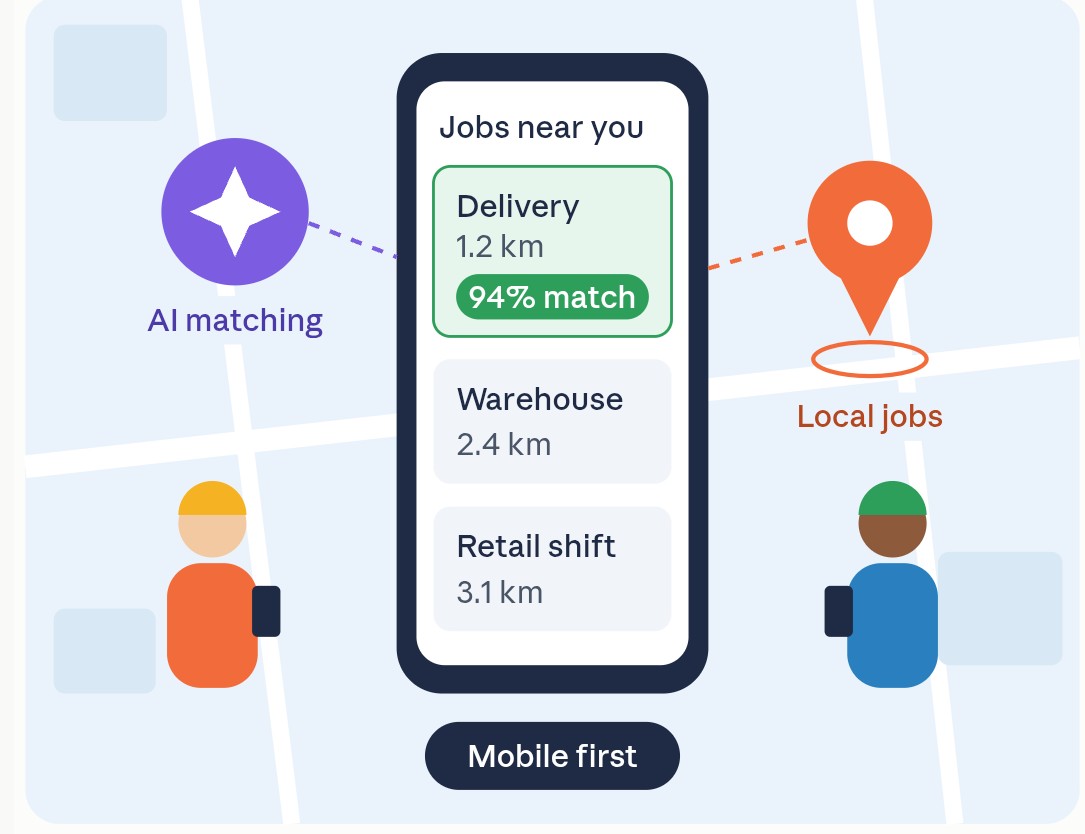
An original perspective on AI-powered hiring, frontline workers and the technology making recruitment more accessible
The Hiring Problem Is Bigger Than the Job
Hiring frontline workers can look straightforward from the outside. But when a company needs to recruit hundreds of delivery executives, retail employees, warehouse workers or field staff within a short period, the process can become complicated very quickly.
The challenge is not always a lack of candidates. In many cases, the bigger issue is connecting the right person with the right opportunity at the right time. Job information may be spread across portals, WhatsApp messages, phone calls and referrals. Candidates can miss interviews because communication is delayed, while recruiters may spend hours reviewing applications that do not match basic requirements.
Recent developments in recruitment technology are attempting to close this gap. AI-powered platforms are increasingly being used to screen candidates, automate communication, collect documents and support onboarding. A YourStory report on Hunar.AI, for example, highlighted how AI and WhatsApp can be combined to simplify different stages of frontline recruitment.
Why Frontline Hiring Needs a Different Approach
Frontline recruitment is different from hiring for many corporate positions. Employers often need to fill large numbers of roles quickly, and location can be just as important as qualifications.
A warehouse employee may need to live within reasonable travelling distance of the facility. A delivery worker may need to be available in a particular neighbourhood. A retail business may need several employees before a new outlet opens.
This makes local job matching an important part of the recruitment process.
Instead of asking candidates to complete long applications before they know whether a position is suitable, technology can help employers provide basic information earlier. Location, availability, experience and role requirements can be used to identify potentially relevant candidates before recruiters spend time on detailed screening.
AI Can Reduce Recruitment Friction
AI does not necessarily need to replace recruiters to make a difference. Its more practical role may be handling repetitive tasks that consume recruiters' time.
Automated screening can help organise applications. AI-based communication can answer common questions and remind candidates about interviews or documentation. Systems can also help recruiters identify applicants who meet predefined requirements.
For candidates, mobile-first recruitment can make the process more accessible. A person who primarily uses a smartphone may find messaging-based communication considerably easier than repeatedly navigating complicated recruitment websites.
Companies such as "Heloix" (https://heloix.com?utm_source=chatgpt.com) are part of a broader technology landscape focused on digital solutions that can help businesses improve how they connect with customers, workers and opportunities.
Local Matching Could Become More Important
The future of frontline hiring may depend less on collecting the largest number of applications and more on improving the quality and speed of connections.
Local matching can help narrow opportunities based on practical factors such as distance, role requirements and availability. Combined with AI-assisted screening and mobile communication, this could create a recruitment process that is faster without making it harder for candidates to participate.
For employers, the benefit is operational efficiency. For job seekers, it could mean fewer irrelevant applications and clearer communication.
Frontline hiring will always require human judgement. But as recruitment technology becomes more accessible, AI, mobile platforms and local matching could make the journey from “looking for work” to “starting work” significantly shorter.
يُرجى لنشر تعليق
لا توجد تعليقات بعد
كن أول من يشارك برأيه.
@heloix_news
AI/ML
@heloix_news
AI/ML
@heloix_news
AI/ML

اشترك لتصلك أحدث المستجدات حول التكنولوجيا ونمو الأعمال والتحول الرقمي.