
HN
@heloix_news
Growth

Gaming Commerce Unlocked: How PlaySuper Is Converting In-Game Victories into Real-World Rewards
#PlaySuper#gamingcommerce#gamingrewards
تعليق
2.2K
Sumit sanjay
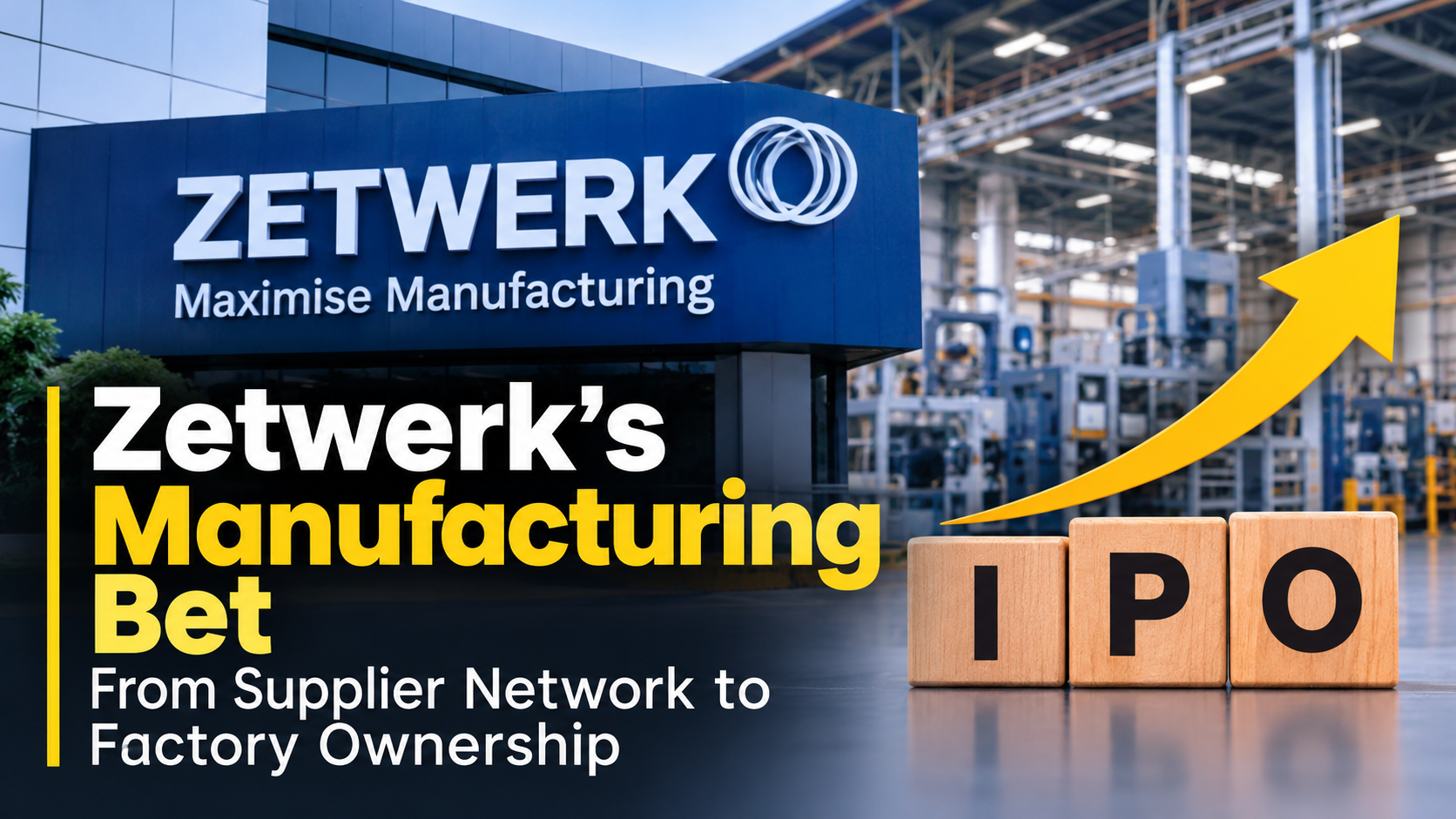
“Maximise Manufacturing” is the message displayed prominently on Zetwerk’s website, alongside the slogan “Make for India, Make for the World.” The company also describes itself as a technology-driven, asset-light manufacturing platform. These are likely to be among the key selling points for investors considering its ₹5,000 crore initial public offering (IPO), which opens on October 15.
An investment in Zetwerk is essentially a bet on India's manufacturing sector. Founded in 2018 and backed by investors such as Peak XV Partners and Accel, the company has built a network of small and medium-sized manufacturers to serve businesses of different sizes.
Its product portfolio spans several industries, covering everything from transformers and solar panels to smartwatches and electric vehicle (EV) chargers. The company currently has orders worth around ₹13,000 crore in its pipeline, nearly twice the amount it had two years ago.
Zetwerk's growing customer base reflects the scale of its operations. In FY26, 16 companies from the Nifty 50 were among its customers. It also works with nearly 7,000 manufacturers across 26 countries, allowing it to distribute large orders among multiple suppliers.
This network has become increasingly important to its business model. In FY24, an average order was divided among three manufacturers. Over the following two years, that figure more than doubled, highlighting the company's expanding supplier ecosystem.
Why Zetwerk Was Created
Co-founder and CEO Amrit Acharya explained the idea behind Zetwerk's business model in an earlier interview.
He pointed out that sourcing standardised products, such as laptops, is relatively straightforward because buyers already know established brands like Acer and Lenovo. However, finding suppliers for specialised machinery or customised components, such as parts used in wind turbines, is considerably more difficult.
Even large companies often lack the necessary information to identify the right manufacturers. Zetwerk aims to bridge this gap by connecting businesses with suitable manufacturing partners.
Over time, the company's customers began placing larger and more frequent orders. With approximately 90% of its manufacturing revenue coming from repeat customers, Zetwerk saw an opportunity to move beyond simply connecting buyers and suppliers.
The company began investing in its own manufacturing facilities and taking responsibility for product design. This shift allows Zetwerk to capture a larger share of the value generated from each order and potentially earn better margins than it would as a traditional intermediary.
Moving Beyond the Asset-Light Model
Zetwerk's strategy has gradually moved towards greater ownership of its manufacturing operations. The company now operates 26 factories across India, Spain, Germany and the United States.
Its involvement in product design has also increased. The share of design-linked contracts in its manufacturing business more than doubled to 14% in the June quarter.
The shift is particularly visible in the contribution of its own factories to overall manufacturing revenue. In FY24, these facilities accounted for just 7% of the company's manufacturing revenue. Today, their contribution has grown to well over 50%.
This transformation marks an important change in Zetwerk's business model. What began as a platform connecting manufacturers with businesses is increasingly becoming a manufacturing company with its own production capabilities and design expertise.
As Zetwerk approaches its IPO, investors will need to evaluate whether this transition can translate into sustainable growth and stronger profitability. Its expanding order book, established customer relationships and growing manufacturing capabilities offer reasons for optimism, but the company's ability to manage this increasingly capital-intensive business will remain an important factor.
يُرجى لنشر تعليق
لا توجد تعليقات بعد
كن أول من يشارك برأيه.
@heloix_news
Growth
@heloix_news
Growth

@heloix_news
Growth

اشترك لتصلك أحدث المستجدات حول التكنولوجيا ونمو الأعمال والتحول الرقمي.