
HN
@heloix_news
D2C
Rethinking Home Hygiene: Inside Cleevo’s Waterless Powder-to-Liquid Cleaning Revolution
#Cleevo#homecleaning#cleaningproducts
Comment
389
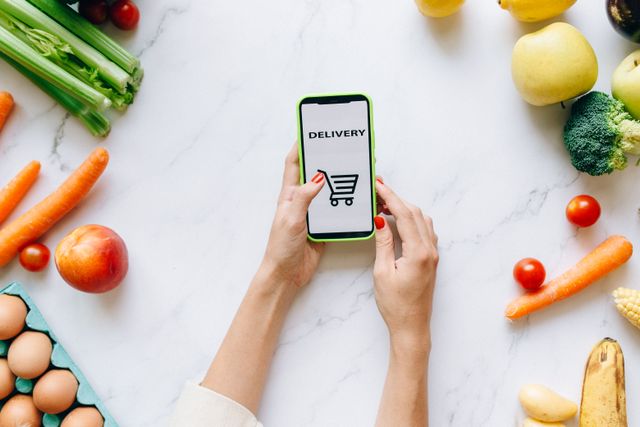
Grocery shopping has changed a lot in recent years. Instead of visiting a store for every purchase, customers can open an app, choose their groceries, pay online, and wait for the order to arrive at their doorstep.
This change has created opportunities for entrepreneurs who want to enter the grocery delivery market. You do not necessarily need to operate your own supermarket. You can build a platform that connects customers with grocery stores, supermarkets, delivery partners, or your own inventory.
However, launching a grocery delivery business involves more than simply putting an app online. You need to choose a business model, understand your customers, plan the technology, arrange delivery operations, and decide how the business will make money.
This guide explains the main steps involved in starting a grocery delivery app business in 2026.
A grocery delivery app usually connects three groups: customers, grocery sellers, and delivery partners.
Customers use the app to browse products, add items to their cart, place orders, and make payments. Sellers receive orders and prepare the products. Delivery partners collect the orders and deliver them to customers.
Depending on the business model, one company may manage all three parts.
For example, a local entrepreneur could partner with several grocery stores in a city. Customers place orders through one app, while participating stores prepare the products. A delivery team then picks up the orders and delivers them.
The model can also work with a single supermarket that wants its own online ordering system.
Before you start development, decide how your business will operate.
A marketplace connects multiple grocery stores with customers. The stores list their products, while the platform handles customer orders and may coordinate delivery.
The platform can earn money through commissions, delivery charges, listing fees, or other service fees.
In this model, the business owns or manages the inventory. Customers order directly from the platform, and the business handles storage, packing, and delivery.
This gives you more control over pricing and the customer experience, but it also requires more investment in inventory and operations.
A supermarket or grocery chain can use an app to allow its existing customers to order online.
This model can be simpler because the business already has stores, products, employees, and suppliers.
Some businesses combine these approaches. They may sell products from their own inventory while also allowing other grocery stores to sell through the platform.
Your choice should depend on your target market, available resources, and operational capabilities.
A grocery delivery app needs a clear target audience.
You could focus on:
Busy working professionals
Families
Students
Elderly customers
Apartment communities
Small towns
Local supermarkets
Independent grocery stores
Look at how people currently buy groceries in your target area. Find out which stores they use, what delivery options are available, and where customers experience problems.
For example, customers may complain about limited delivery areas, high delivery charges, poor product availability, or late deliveries.
These problems can help you identify what your platform should solve.
You do not need every possible feature when starting. Focus on functions that allow customers, sellers, and delivery partners to complete their jobs smoothly.
The customer side can include:
Account registration
Product categories
Product search
Product details
Shopping cart
Wishlist
Address management
Multiple payment options
Order tracking
Delivery time selection
Order history
Ratings and reviews
Push notifications
A simple search system is particularly important because grocery apps can contain thousands of products.
If you work with multiple grocery stores, sellers need a separate dashboard.
Useful functions include:
Product management
Price updates
Inventory management
Order notifications
Order status updates
Sales information
Customer order details
Delivery workers need tools that make deliveries easier.
The app can provide:
New delivery requests
Pickup details
Customer address
Navigation
Order status
Delivery confirmation
Earnings information
The administrator controls the overall platform.
An admin dashboard can manage customers, sellers, delivery partners, products, orders, payments, commissions, promotions, and reports.
A smooth ordering process can make a big difference.
A typical order could follow this sequence:
Browse → Add to cart → Confirm address → Select delivery time → Pay → Store prepares order → Delivery partner picks it up → Customer receives order
Try to keep unnecessary steps out of this process.
Customers ordering everyday products generally want to finish their purchase quickly. Complicated registration screens or checkout forms can create unnecessary friction.
You should also plan for situations such as unavailable products, substitutions, cancelled orders, refunds, and failed payments.
Technology is only one part of a grocery delivery business.
You also need a practical delivery system.
Decide whether you will employ delivery workers, work with independent delivery partners, or outsource deliveries to another service.
You also need to determine your delivery radius.
Starting with a smaller service area can make operations easier to manage. Once order volume increases, you can expand into additional neighborhoods or cities.
Delivery slots are another important consideration. You might offer instant delivery, scheduled delivery, or both.
Your choice depends on inventory, staffing, traffic conditions, and customer expectations.
A grocery delivery platform can use several revenue streams.
A marketplace can charge grocery stores a percentage of each order.
Customers can pay a delivery fee based on distance, order value, or delivery speed.
Frequent customers could pay a monthly or yearly fee for benefits such as free deliveries or special offers.
Grocery brands and sellers could pay to promote selected products inside the app.
Some platforms may charge sellers for additional services or premium placement.
You do not necessarily need to use every model. Start with a revenue structure that fits your business model and local market.
Building an app completely from scratch gives you greater control over the software, but it can take considerable time and require developers, designers, testing, infrastructure, and ongoing maintenance.
For entrepreneurs who want to launch grocery delivery app software without starting every component from zero, a ready-made solution can reduce some of the initial development work.
Platforms such as heloix.com can be useful for businesses looking for ready-made, customizable software products that can be adapted and launched under their own business model.
The right approach depends on how much customization you need and whether your business requires unique features from the beginning.
Do not wait until the public launch to discover basic problems.
Test the complete ordering process.
Create test customer accounts, place orders, process payments, update product availability, assign deliveries, and check notifications.
You should also test different situations.
What happens when a product becomes unavailable after an order is placed?
What happens if a customer cancels?
What happens when payment fails?
What happens if the delivery partner cannot complete the delivery?
Testing these situations can help you find problems before real customers encounter them.
You do not have to launch across an entire country on the first day.
A smaller launch can help you understand how customers actually use the platform.
For example, you could begin with one city or a few neighborhoods. Work with a limited number of grocery stores and delivery partners.
Track metrics such as:
Number of orders
Average order value
Repeat customers
Delivery time
Cancellation rate
Customer acquisition cost
Seller activity
Delivery costs
Use this information to improve the platform before expanding.
Once your platform is ready, people need a reason to try it.
You can promote the app through local social media campaigns, search engine optimization, paid advertising, referral programs, email marketing, and partnerships with grocery stores.
Local marketing can be particularly useful during the early stage.
For example, you could target residents in the neighborhoods where your delivery service operates instead of spending money trying to reach people outside your delivery area.
Referral offers can also encourage existing customers to introduce the app to friends and family.
The cost and timeline depend on the business model, features, development approach, number of platforms, integrations, and level of customization.
A basic platform may require fewer features than a large multi-vendor marketplace.
You should account for more than development costs. Your budget may also need to cover hosting, payment processing, maps and location services, maintenance, marketing, customer support, delivery operations, and future updates.
This is why planning the business model before development is important.
Starting a grocery delivery app in 2026 can be approached in different ways. You could build a marketplace for local grocery stores, create an online ordering system for one supermarket, manage your own inventory, or combine several models.
The technology is only one part of the business. You also need reliable sellers, suitable delivery operations, accurate product information, customer support, and a clear revenue model.
If your goal is to become a grocery delivery app reseller, understand exactly what you are offering, who will use the platform, and how you will support customers and sellers after launch.
A ready to launch grocery delivery app can reduce some of the work involved in starting from scratch, but you still need to adapt the platform to your target market and business model.
Start with a manageable market, test the ordering and delivery process, listen to customer feedback, and expand only when your operations can handle the additional demand.
Please to post a comment
No comments yet
Be the first to share your thoughts.
@heloix_news
D2C
@heloix_news
D2C

@heloix_news
D2C

Subscribe for the latest on technology, business growth and digital transformation.