HN
@heloix_news
AI/ML

Comment
366
Saumya Kumari
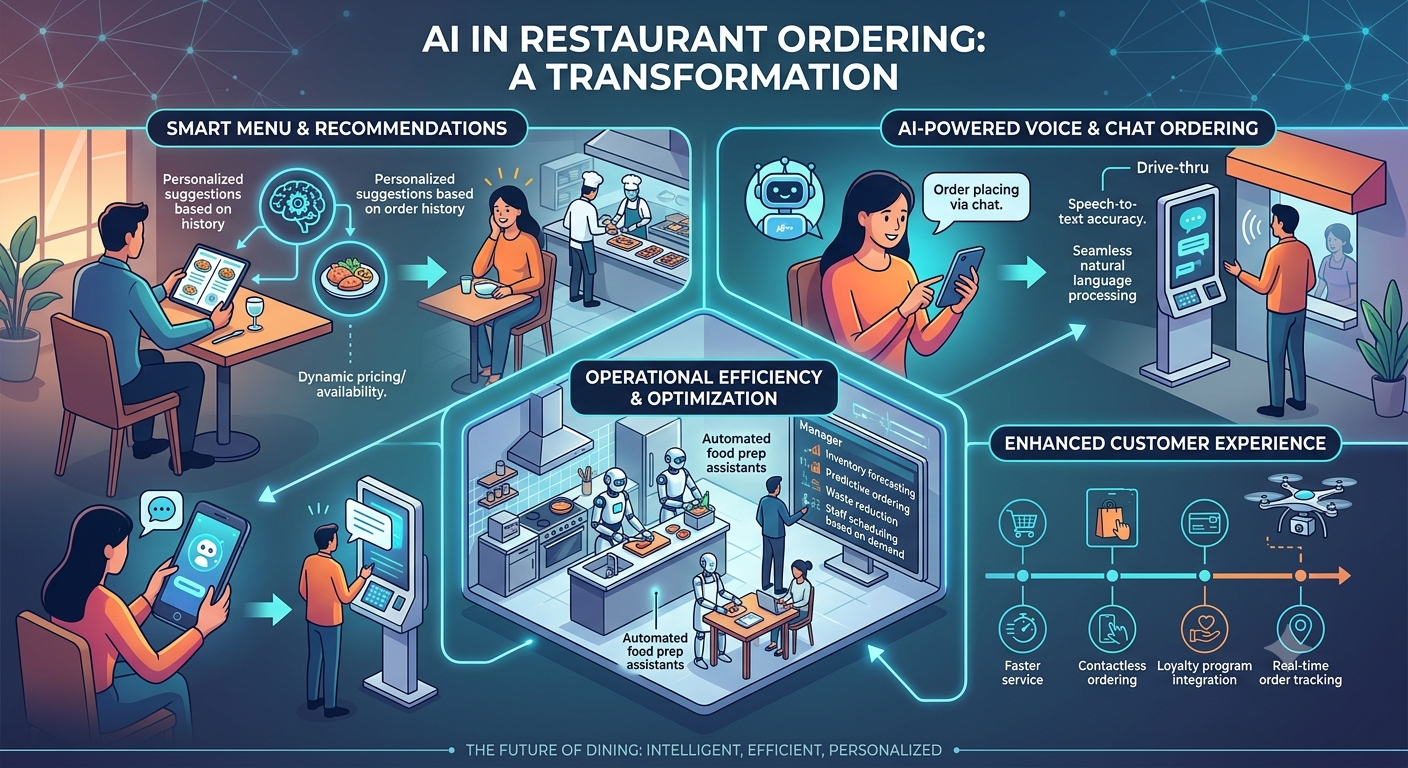
Artificial intelligence (AI) is rapidly changing the restaurant industry, and ordering systems are becoming one of the most visible areas of transformation. From personalized recommendations to automated customer support, AI-powered restaurant ordering systems are helping businesses improve service, streamline operations, and create more convenient dining experiences.
Modern customers increasingly expect fast and seamless ordering through websites, mobile applications, self-service kiosks, and other digital channels. AI can analyze ordering patterns, customer preferences, and product demand to help restaurants make smarter decisions while reducing repetitive manual tasks.
Smarter and More Personalized Ordering
One of the biggest changes brought by AI is personalized food recommendations. An intelligent ordering system can study previous orders and customer preferences to suggest relevant dishes, combinations, or promotions. This can make the ordering process more convenient while creating opportunities for restaurants to increase customer engagement.
AI can also support dynamic menu management. Restaurants can use data-driven insights to identify popular items, understand demand patterns, and adjust promotions according to customer behavior.
Automation Across Restaurant Operations
AI is also being used to automate several parts of the restaurant ordering process. Chatbots and virtual assistants can answer common questions, provide menu information, assist customers with orders, and share updates about delivery or pickup status.
For restaurant owners, these features can reduce the workload associated with routine customer inquiries. AI-based analytics can also help businesses understand peak ordering periods and improve inventory and staffing decisions.
Growing Demand for White-Label Solutions
The increasing adoption of restaurant technology is creating opportunities for entrepreneurs and technology providers. A restaurant ordering system white label solution allows businesses to launch their own branded ordering platform without developing an entire system from scratch.
With customizable branding, menus, payment integrations, customer management tools, and analytics features, white-label technology can provide a practical route for businesses entering the digital restaurant market.
Faster Market Entry
Technology providers are also making it easier for entrepreneurs to launch restaurant ordering system solutions with ready-made infrastructure. Instead of spending extensive time building every feature independently, businesses can customize an existing platform according to their target market and operational requirements.
This approach can be particularly useful for startups and restaurant technology companies looking for a ready to launch restaurant ordering system that can be adapted to their branding and business model.
The Road Ahead
As AI technology continues to develop, restaurant ordering systems are expected to become more intelligent and data-driven. Predictive recommendations, automated customer assistance, voice-based ordering, and advanced analytics could become increasingly common across restaurants of different sizes.
The combination of AI and customizable restaurant technology is creating new possibilities for businesses seeking efficient digital ordering experiences. Companies exploring these opportunities can learn more about technology solutions and business models through "Heloix" (https://heloix.com).
AI is therefore moving restaurant ordering beyond simple digital menus toward smarter platforms designed to connect customers, restaurants, and business operations more efficiently.
Please to post a comment
No comments yet
Be the first to share your thoughts.
Subscribe for the latest on technology, business growth and digital transformation.