
HN
@heloix_news
Tech

How to Launch a NFT Marketplace in Just 3 Days
#NFTMarketplace#NFTs#DigitalAssets
Comment
663
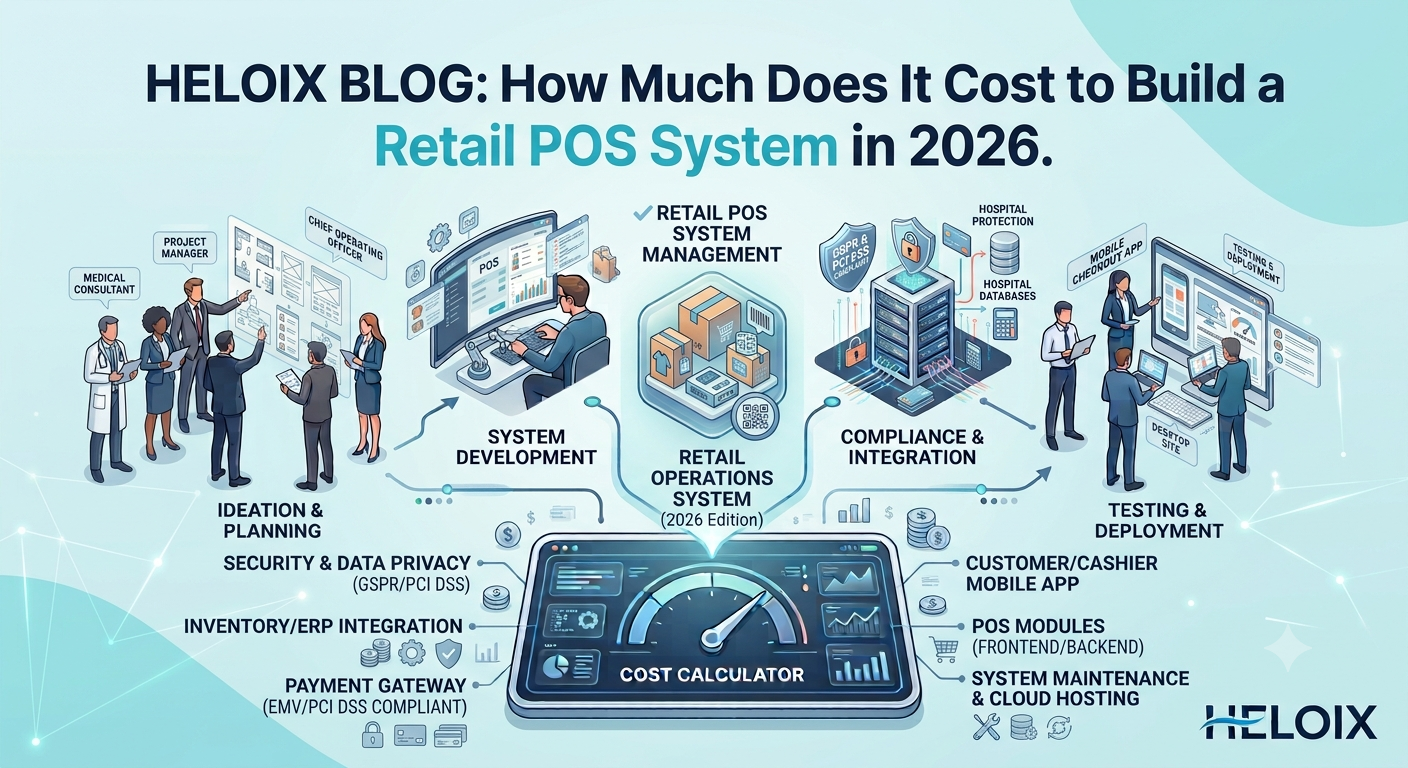
The modern retail ecosystem has moved far beyond simple electronic cash registers. Today's Point of Sale (POS) software serves as an all-in-one command center, integrating barcode billing, real-time multi-store inventory management, automated GST/VAT compliance, customer loyalty programs, offline-first sync, and unified e-commerce order routing.
Understanding the cost to build a retail POS system depends heavily on your execution strategy: whether you invest in a ground-up custom engineering build, subscribe to monthly cloud software, or deploy a ready-to-launch white-label solution. Below is a detailed cost breakdown, operational expenditure analysis, innovative business ideas, and a step-by-step launch framework.
The cost of developing a retail POS system depends primarily on the platform scope (Web, Desktop, iOS, Android, or mobile SoftPOS), hardware terminal drivers, payment gateway integrations, and multi-location inventory syncing.
  ┌──────────────────────────────────────────────────────────┐
  │ 1. Basic Single-Counter / Mobile SoftPOS: $3,000 – $7,000 │
  │    (₹2,00,000 – ₹5,50,000 in India)                       │
  └─────────────────────────────┬────────────────────────────┘
                                │
                                ▼
  ┌──────────────────────────────────────────────────────────┐
  │ 2. Standard Multi-Store Retail POS: $8,000 – $20,000     │
  │    (₹6,00,000 – ₹16,00,000 in India)                     │
  └─────────────────────────────┬────────────────────────────┘
                                │
                                ▼
  ┌──────────────────────────────────────────────────────────┐
  │ 3. Enterprise Omnichannel POS Hub: $25,000 – $60,000+   │
  │    (₹20,00,000 – ₹50,00,000+ in India)                    │
  └─────────────────────────────┴────────────────────────────┘
| POS System Type | Core Features & Capabilities | Global Cost (USD) | Cost in India (INR) |
| Basic Mobile SoftPOS / Billing | Smartphone/Tablet Tap-to-Pay, offline cash/UPI billing, thermal printer driver, simple stock ledger. | $3,000 – $7,000 | ₹2,00,000 – ₹5,50,000 |
| Standard Multi-Store Retail POS | Barcode scanning, inventory matrix (variants, sizes, colors), GST/VAT invoicing, staff permissions, multi-branch stock transfers. | $8,000 – $20,000 | ₹6,00,000 – ₹16,00,000 |
| Enterprise Omnichannel POS Ecosystem | Real-time e-commerce sync (POS ↔ Online Store), CRM loyalty engine, self-checkout kiosk mode, ERP/WMS connectors, AI demand forecasting. | $25,000 – $60,000+ | ₹20,00,000 – ₹50,00,000+ |
Hardware Driver Compatibility: Integrating thermal receipt printers (USB, Bluetooth, Ethernet), barcode scanners, weighing scales, cash drawers, and customer-facing secondary displays.
Offline-to-Online Data Syncing: Designing an offline-first local database architecture (SQLite/IndexedDB) that processes cash and card transactions during network outages and automatically syncs with cloud servers upon reconnection.
Payment Terminal & SoftPOS Integrations: Connecting card reader SDKs (Stripe Reader, Verifone, Ingenico) or Tap-on-Phone NFC payment frameworks.
Regulatory & Tax Engines: Supporting automated local tax calculations (GST in India, VAT in Europe, state sales taxes in the US), electronic invoicing (E-Invoicing/E-Way bills), and PCI-DSS payment security standards.
Beyond initial software development or acquisition, ongoing budget planning must account for running costs:
Cloud Server Hosting: AWS, Google Cloud, or DigitalOcean databases handling real-time inventory updates ($40 to $400+/month).
Payment Processing Merchant Fees: Transaction processing commissions (typically 1.2% to 2.9% per card checkout).
Communication APIs: Per-message charges for sending automated WhatsApp and SMS digital receipts, OTP checkouts, and customer loyalty alerts.
PCI Compliance & Security Audits: Annual data encryption audits, penetration testing, and software updates (~10% to 15% of software value annually).
To build a high-growth POS company, focus on specialized retail niches:
SoftPOS Tap-to-Pay for Micro-Merchants: A hardware-free POS mobile application transforming any NFC-enabled Android/iOS smartphone into an instant payment terminal and barcode billing counter.
Supermarket & Kirana Hyper-Local POS: Specialized POS tailored for high-volume grocery environments with integrated digital weighing scale drivers, batch/expiry date tracking, and automated reorder alerts.
Apparel & Fashion Boutique POS: Designed for complex variant matrices (Size, Color, Brand, Style) with integrated digital fitting room checkouts and customer style profile history.
Omnichannel D2C POS Engine: A unified POS that instantly syncs inventory pool between physical pop-up/retail stores and online web platforms (Shopify, WooCommerce, custom apps) to prevent double-selling.
Developing a custom, enterprise-grade retail POS from scratch requires hiring specialized system software engineers, QA testers, and hardware integration experts, taking 6 to 12 months of development time.
Utilizing a ready-to-launch white-label retail POS solution or reseller framework provides a faster, highly profitable path:
Instant Market Entry: Deploy a production-ready, custom-branded retail POS system under your own company brand in days instead of months.
Predictable SaaS Margins: Purchase wholesale multi-tenant access or license the software source code, then charge merchant clients recurring monthly/annual fees per counter (e.g., ₹4,999 – ₹15,000/year or $29 – $99/month per counter), creating compounding recurring revenue.
Pre-Built Enterprise Modules: Pre-configured out of the box with barcode billing, thermal printing, offline sync, GST/VAT tax rules, inventory controls, and WhatsApp receipt delivery.
Full Source Code Ownership: Solution providers like Heloix offer ready-to-launch white-label business packages with optional full source code ownership. This eliminates vendor licensing lock-in and gives you complete freedom to host, rebrand, and customize your retail technology stack.
  ┌──────────────────────────────────────────────────────────┐
  │ 1. Define Target Retail Vertical & Hardware Requirements │
  └─────────────────────────────┬────────────────────────────┘
                                │
                                ▼
  ┌──────────────────────────────────────────────────────────┐
  │ 2. Deploy Turnkey White-Label POS Infrastructure         │
  └─────────────────────────────┬────────────────────────────┘
                                │
                                ▼
  ┌──────────────────────────────────────────────────────────┐
  │ 3. Integrate Local Payment Terminals & Tax Engines       │
  └─────────────────────────────┬────────────────────────────┘
                                │
                                ▼
  ┌──────────────────────────────────────────────────────────┐
  │ 4. Pitch & Onboard Beta Pilot Retail Outlets             │
  └─────────────────────────────┬────────────────────────────┘
                                │
                                ▼
  ┌──────────────────────────────────────────────────────────┐
  │ 5. Execute Direct B2B Field Sales & Merchant Marketing   │
  └─────────────────────────────┬────────────────────────────┘
                                │
                                ▼
  ┌──────────────────────────────────────────────────────────┐
  │ 6. Provide On-Site Onboarding & Scale Store Networks     │
  └─────────────────────────────┴────────────────────────────┘
Specify your primary retail audience:
Supermarkets & Grocery Outlets (requiring high-speed barcode scanning, batch expiry tracking, weighing scale integration)
Apparel & Footwear Stores (requiring size/color variant matrices and barcode label printing)
Multi-Branch Retail Chains (requiring central HQ inventory management and inter-store stock transfers)
Acquire a production-ready white-label retail POS platform. Apply your visual branding, setup custom web domains, configure multi-tenant admin roles, and prepare cross-platform application builds (Android POS terminals, Windows Desktop, Web Dashboard).
Connect localized payment options:
Integrate card readers, UPI QR code displays, and digital wallets.
Configure automated tax rules (e.g., auto-calculated GST, HSN code classification, e-invoicing API integration).
Set up WhatsApp Business API connectors to automatically dispatch instant digital invoice receipts to customer phone numbers.
Overcome market adoption friction by offering a 30-day free trial or zero setup cost to 3–5 local retail shopkeepers:
Assist store managers with uploading product catalogs, barcode lists, and stock counts.
Test offline transaction handling and thermal printer receipt rendering.
Collect real-world feedback and testimonials (e.g., "Reduced checkout queue times by 3x").
Acquire new retail shop clients:
Direct Field Sales Outreach: Deploy local sales representatives to conduct live on-counter POS demonstrations for shop owners.
Retail Hardware Bundling: Partner with thermal printer, barcode scanner, and POS terminal hardware distributors to offer bundled "Hardware + POS Software" packages.
Local SEO & Search Marketing: Build landing pages targeting terms like "best barcode billing POS software for grocery store".
Ensure high customer retention:
Provide simple 1-page setup guides and video tutorials for cashier training.
Maintain high server uptime during peak weekend shopping hours.
Upsell secondary add-on modules, such as integrated zero-commission e-commerce storefronts, customer loyalty programs, and automated stock reordering.
Please to post a comment
No comments yet
Be the first to share your thoughts.
@heloix_news
Tech
@heloix_news
Tech

@heloix_news
Tech

Subscribe for the latest on technology, business growth and digital transformation.