
HN
@heloix_news
Policy
Kommentieren
975
Shreya
Blink Digital Takes Meta to Court Over Disabled Accounts
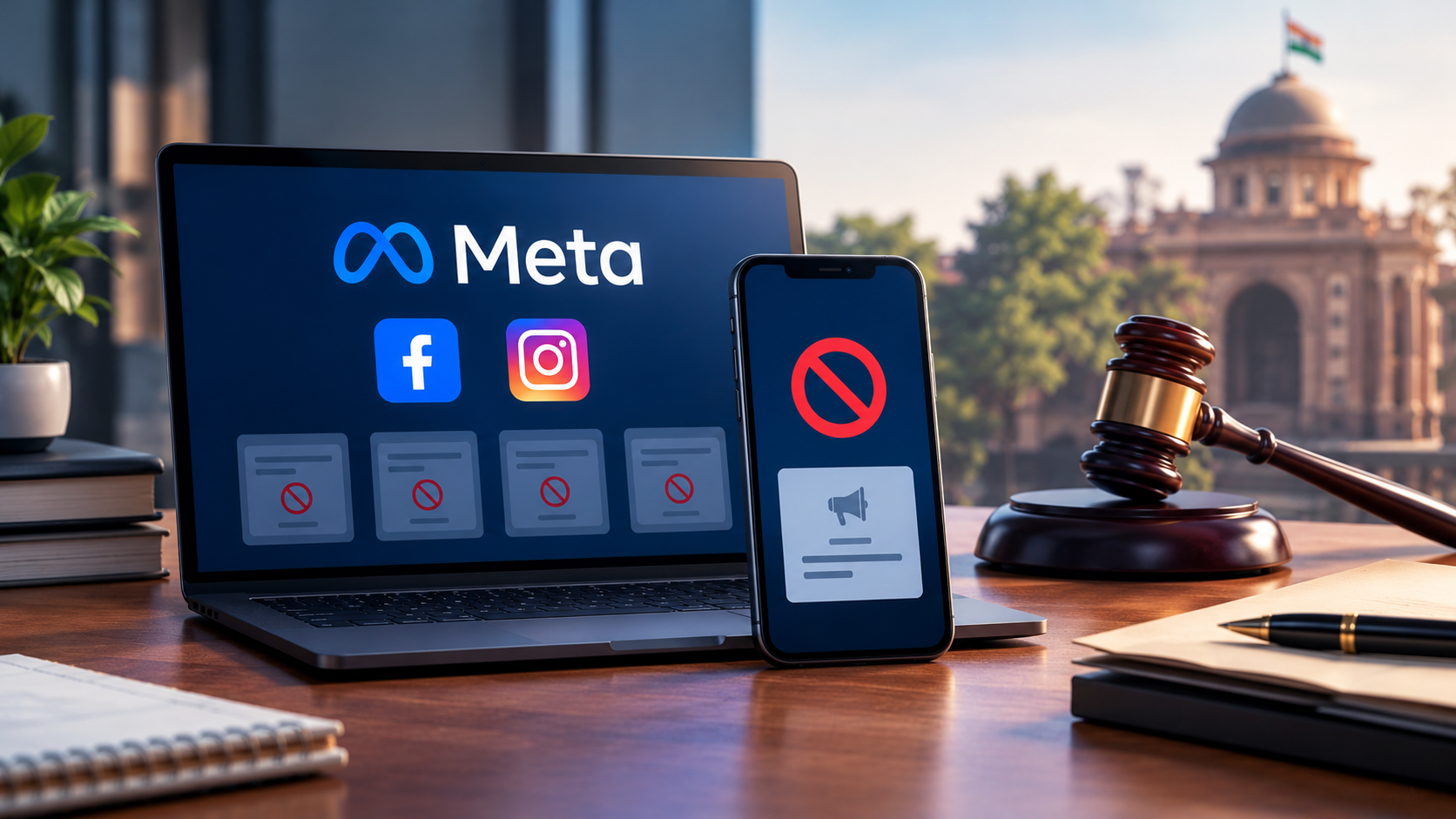
Digital advertising agency Blink Digital India has filed a lawsuit against Meta and its Indian subsidiary, Facebook India Online Services Private Limited, seeking ₹1,000 crore in damages after four of its Meta Business Manager accounts were disabled.
The agency approached the Bombay High Court on September 17, 2026, seeking compensation and the restoration of its accounts. The dispute highlights the risks businesses face when their advertising operations depend heavily on platforms such as Facebook and Instagram.
The court proceedings are ongoing, and the claims made by Blink Digital have not yet been finally adjudicated.
Why Blink Digital Is Seeking ₹1,000 Crore
Blink Digital relies on Meta's business tools to manage advertising operations and digital campaigns for its clients. The disabling of its four Business Manager accounts disrupted its access to the platform's advertising infrastructure.
Meta Business Manager allows agencies and businesses to manage Facebook Pages, Instagram accounts, advertising accounts, tracking tools and team permissions from a central dashboard. Losing access can make it difficult to manage campaigns and coordinate advertising activities across multiple clients.
According to the details reported in the case, the disabled accounts affected the agency's ability to manage advertising activities through the associated accounts and business portfolio.
Blink Digital is seeking to have its accounts restored and is demanding ₹1,000 crore in compensation for the disruption. The precise basis for the damages claim and the final outcome will depend on the proceedings before the court.
A Key Tool for Digital Advertising Agencies
Founded in 2009, Blink Digital works across digital marketing, websites, mobile applications, social media campaigns, video production, gaming and immersive brand experiences.
The agency is led by Dooj Ramchandani and has worked with brands including KFC, ITC, Star Sports, Vh1, Condé Nast, Moët Hennessy, Viber and Puma.
For agencies handling campaigns for multiple brands, Meta's business management tools are an important part of day-to-day operations. They provide a central place to manage client assets, assign permissions and coordinate advertising activity.
When access to these tools is restricted, the impact can extend beyond a single advertising campaign. Agencies may face difficulties managing client accounts, accessing campaign data and carrying out routine marketing activities.
The case therefore raises broader questions about how businesses can respond when access to essential digital advertising infrastructure is suspended.
What Has the Court Said So Far?
During the initial hearing, Meta's legal representative, senior advocate Janak Dwarakadas, sought additional time to file a response opposing Blink Digital's request for interim relief.
The Bombay High Court granted Meta two weeks to submit its affidavit. Blink Digital was then given one week to respond to Meta's filing.
The court scheduled a further hearing for October 12, 2026, to consider the matter.
The proceedings at this stage concerned the parties' submissions and requests for interim relief. The court had not yet ruled on the merits of Blink Digital's compensation claim or ordered a final resolution of the dispute.
The case puts the spotlight on the challenges businesses can face when they lose access to major digital platforms and seek legal remedies.
Meta Faces Wider Legal and Regulatory Scrutiny
The dispute comes amid broader legal and regulatory scrutiny of Meta in India.
The company has faced challenges involving content moderation, intellectual property rights and the responsibilities of digital platforms. These disputes have raised questions about how platforms enforce their policies and respond when businesses or rights holders challenge their decisions.
In a separate dispute, Zee Entertainment Enterprises Limited has accused Meta's platforms of allowing users to upload and monetise content allegedly infringing its intellectual property rights.
The Delhi High Court has previously directed Meta to remove certain URLs identified in connection with the dispute. However, the court did not grant every form of relief sought by Zee.
Although the Blink Digital and Zee cases concern different issues, both illustrate the legal challenges that can arise when businesses rely on large digital platforms for advertising, distribution or content management.
What the Case Means for Businesses
Blink Digital's lawsuit highlights the dependence many businesses have developed on third-party advertising platforms.
For digital marketing agencies, access to advertising accounts is essential to managing campaigns, reaching audiences and delivering results for clients. A sudden suspension can disrupt operations and create uncertainty for both the agency and the brands it serves.
The case also underscores the importance of clear platform policies, effective account support and transparent processes for reviewing suspensions.
For businesses, it serves as a reminder to assess their reliance on individual platforms, maintain appropriate records of advertising activity and develop alternative ways to reach customers.
The central question now is whether Blink Digital can secure the restoration of its accounts and establish its claim for compensation.
As the legal proceedings continue, the case could draw further attention to the relationship between digital platforms and the businesses that depend on them. For now, the ₹1,000 crore claim remains a demand made by Blink Digital, not a compensation amount awarded by the court.
Bitte um einen Kommentar zu verfassen
Noch keine Kommentare
Teilen Sie als erste Person Ihre Gedanken.
@heloix_news
Policy
@heloix_news
Policy
@heloix_news
Policy

Abonnieren Sie die neuesten Einblicke zu Technologie, Unternehmenswachstum und digitaler Transformation.