
HN
@heloix_news
GreenTech

Farm Intelligence in the Age of Climate Uncertainty: Inside Deepflow Technologies’ Data-Driven Revolution
#DeepflowTechnologies#smartfarming#agriculturaltechnology
Kommentieren
869
Mahesh P
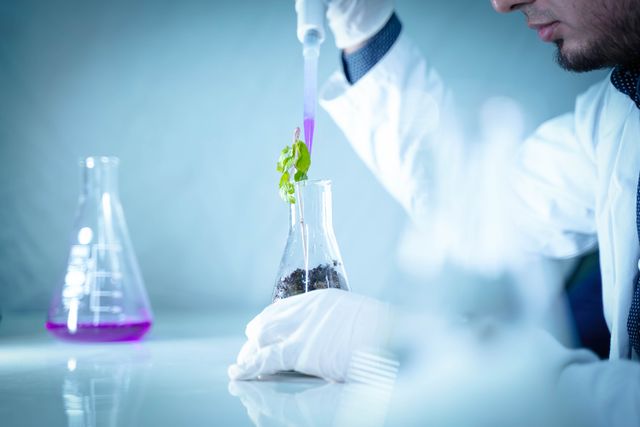
Every day, millions of households rely on everyday products like shampoos, toothpastes, and floor cleaners. While these items serve vastly different purposes, they share a common chemical foundation: synthetic polymers. These petrochemically derived additives act as thickeners, stabilizers, and texturizers to keep liquid mixtures uniform. However, when washed down the drain, many of these non-biodegradable polymers enter global waterways as microplastics, posing severe ecological and health risks.
As environmental regulations tighten worldwide, consumer goods manufacturers face increasing pressure to eliminate synthetic microplastics from their formulations. While biological alternatives exist, they have historically been cost-prohibitive or difficult to scale for mass-market consumer products.
Addressing this exact challenge, BacAlt Biosciences, a deep-tech biotechnology startup based in Electronics City, Bengaluru, is pioneering a method to turn agricultural waste into high-performance, bio-based specialty ingredients.
Founded in 2023 by biotechnologists Shruti Kutmutia (CEO) and Pranav Nair, BacAlt Biosciences operates as a business-to-business (B2B) specialty ingredient manufacturer. The company’s core innovation lies in upcycling post-harvest crop residue and agro-industrial fruit waste into two essential biopolymers:
Bacterial Cellulose (BC): Produced via microbial fermentation rather than traditional plant extraction, providing high structural stability.
Poly-Gamma-Glutamic Acid (PGA): A highly effective biological thickener and moisture-retaining agent.
By using low-cost agricultural residue as a primary feedstock, BacAlt prevents crop waste from being burnt while lowering the raw material costs associated with biopolymer production.
📌 Key Takeaway: The ReRaw Innovation
Proprietary Blend: BacAlt’s signature product, ReRaw, combines bacterial cellulose and polyglutamic acid into a single ingredient.
Additive Replacement: A single application of ReRaw can replace up to five synthetic additives in a formulation.
Microplastic Elimination: Offers formulators a fully biodegradable alternative that prevents microplastic pollution at the product level.
The primary barrier preventing mass adoption of biopolymers has historically been the high cost of industrial biomanufacturing. Traditional precision fermentation relies on energy-intensive, sterile tanks to prevent contamination. This continuous sterilization consumes massive amounts of energy and increases production overhead.
BacAlt bypasses these financial bottlenecks by utilizing a proprietary non-sterile fermentation platform. Combined with waste feedstocks and high-throughput bioprocessing, this energy-efficient process yields a multi-fold cost reduction compared to incumbent biopolymers, making sustainable ingredients commercially viable for mass-market applications.
🔬 Target Market Applications
Personal Care & Cosmetics: Skin creams, lotions, and body washes.
Oral & Home Care: Toothpastes, surface cleaners, and detergents.
Expanded Industrial Sectors: Agrochemicals, nutraceuticals, pharmaceuticals, textiles, and advanced wound care.
In September 2025, BacAlt Biosciences raised ₹18 crore (approximately $2 million) in a Seed funding round led by climate-focused venture firm Avaana Capital, alongside Lubrizol InnoVentures—the corporate venture arm of global specialty chemicals giant Lubrizol.
📌 Key Takeaway: The Value of Industry Support
Strategic Distribution: Strategic backing from a specialty chemical leader like Lubrizol provides formulation expertise, regulatory guidance, and global distribution access.
Capital Allocation: Funding was earmarked for scaling R&D, constructing pre-pilot manufacturing facilities in Bengaluru, and expanding the technical team.
Global Recognition: BacAlt was featured among select Indian innovations at the Bharat Innovates showcase in Nice, France, highlighting its potential for international export.
Deep-tech biomanufacturing and sustainable hardware startups require significant early-stage capital to transition from lab research to commercial production. Beyond traditional venture funds, community-driven investment platforms are becoming crucial for early-stage capital formation.
For entrepreneurs, impact networks, and platforms seeking to connect green ventures with early backers, building a structured fundraising ecosystem is vital. Turnkey software platforms like the FundStarter Crowdfunding Platform provide a complete digital framework for launching donation, reward, or equity-based crowdfunding portals.
💰 Essential Infrastructure Features for Crowdfunding Platforms
Multi-Campaign Management: Built-in tools for founders to launch, manage, and present verified startup campaigns.
Real-Time Backer Dashboards: Transparent tracking of funding goals, campaign timelines, and backer contributions.
Multi-Currency Payment Gateways: Seamless integration with global payment pipelines to accept international backing securely.
Investor Communication Tools: Integrated messaging and update channels to keep backers informed on milestone progress.
As regulatory deadlines for microplastic reduction approach, the shift from synthetic chemicals to bio-based alternatives will accelerate. By leveraging agricultural waste, non-sterile fermentation, and strategic industry partnerships, pioneers like BacAlt Biosciences are helping transition the consumer goods industry toward a cleaner, circular future.
Bitte um einen Kommentar zu verfassen
Noch keine Kommentare
Teilen Sie als erste Person Ihre Gedanken.
@heloix_news
GreenTech
@heloix_news
GreenTech

@heloix_news
GreenTech

Abonnieren Sie die neuesten Einblicke zu Technologie, Unternehmenswachstum und digitaler Transformation.