
HN
@heloix_news
Funding
Comentar
1.6K
Shreya
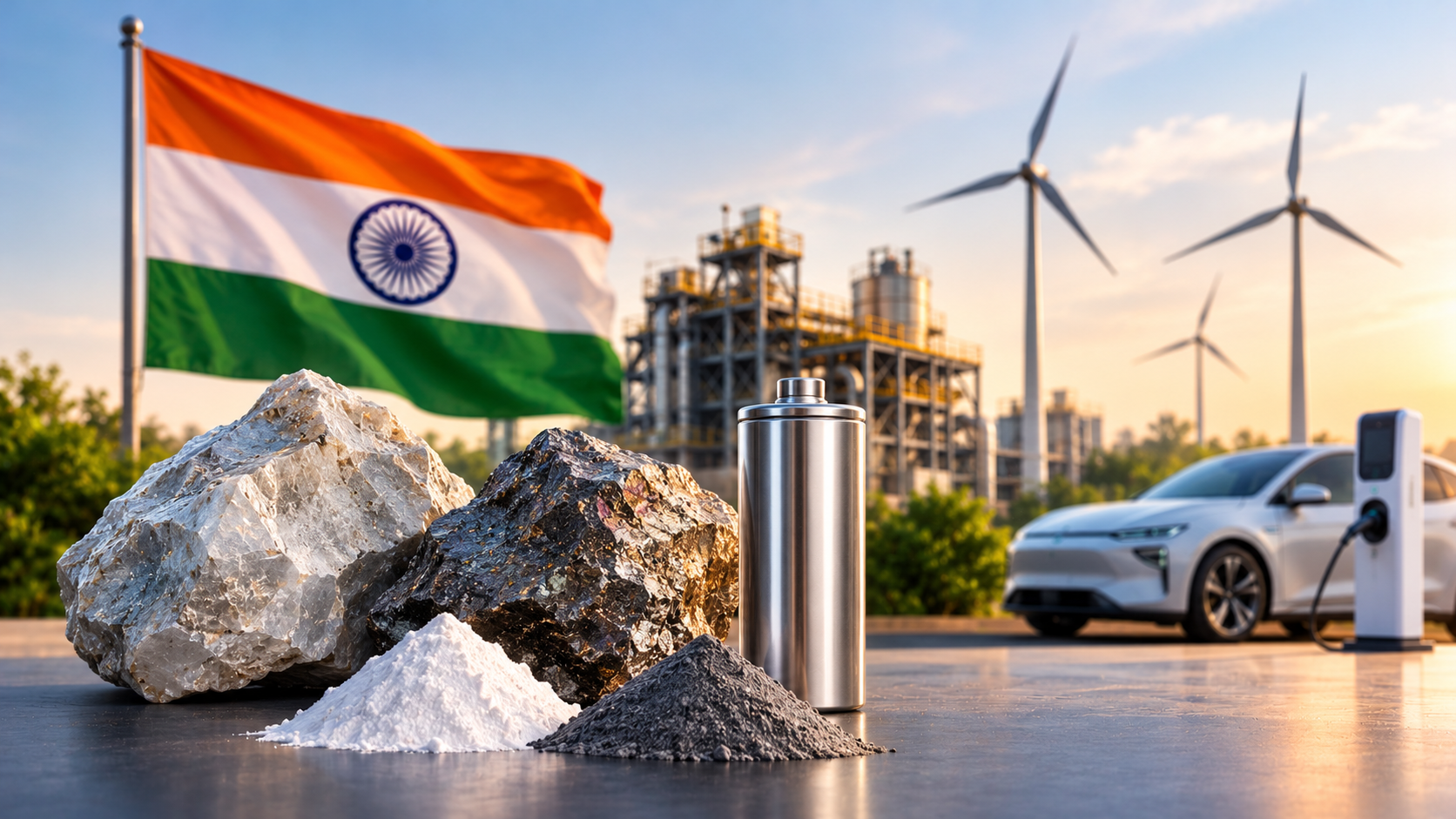
The Union Cabinet has approved a ₹2,814 Cr scheme to strengthen India’s domestic processing capabilities for critical minerals such as lithium and nickel. The initiative aims to reduce the country’s dependence on imported refined materials and build a stronger supply chain for industries including electric vehicles, battery storage, electronics and defence.
Named the **Capex Support Scheme to Promote Critical Mineral Processing**, the programme will run for five years, from FY27 to FY31. It is designed to support the establishment of four processing facilities in India — two for lithium and two for nickel.
According to the government, these facilities will convert lithium and nickel ores, as well as intermediate products, into high-purity compounds. Cobalt is also expected to be recovered as a by-product of nickel processing.
## Four Processing Plants to Receive Government Support
The scheme will provide capital subsidies covering 30% of eligible investments in the proposed facilities. The support will be subject to specified limits and capacity requirements.
For lithium processing, the government plans to support two plants, each with a minimum capacity of 30 kilotonnes (kt). Financial assistance will be capped at ₹500 Cr per beneficiary.
The two proposed nickel processing plants must each have a minimum capacity of 50 kt. The maximum capital support for each nickel beneficiary will be ₹900 Cr.
The government intends to make the assistance milestone-based rather than releasing the entire subsidy upfront.
## How Companies Will Be Selected
The selection process will take place in two stages.
First, applicants will be assessed on their technical qualifications. Only companies that meet the required criteria will move to the financial bidding stage.
For each mineral, two beneficiaries will be selected based on the least-cost criterion. In other words, preference will go to technically qualified bidders seeking the lowest amount of capital support from the government.
The approved incentives will be released in three instalments, linked to the completion of specific project milestones.
## Why India Needs Domestic Critical Mineral Processing
The scheme addresses a major gap in India's critical mineral supply chain. While these minerals are essential for several high-growth industries, much of the global processing capacity is concentrated in a limited number of countries.
This concentration exposes supply chains to geopolitical tensions, price fluctuations and possible export restrictions.
India remains heavily dependent on imports for refined intermediates and high-purity materials derived from critical minerals such as lithium, nickel and cobalt. Domestic processing infrastructure is still at an early stage, with large projects facing challenges such as high capital requirements, limited access to suitable technologies and difficulties in securing raw materials.
By supporting local processing facilities, the government aims to retain more value within the country instead of relying on overseas processors.
## Industries Expected to Benefit
The proposed plants are expected to supply high-purity materials to several strategic sectors.
These include electric mobility, battery energy storage systems (BESS), electronics, defence and speciality steel. The availability of locally processed minerals could help strengthen domestic manufacturing and support India's broader clean energy and decarbonisation goals.
The scheme also forms part of the government's wider effort to develop a domestic critical mineral ecosystem under the Atmanirbhar Bharat initiative.
## Building on India's Critical Mineral Recycling Push
The new programme follows another government initiative focused on critical mineral recycling.
In December 2025, the Union Cabinet approved a ₹1,500 Cr incentive scheme aimed at developing at least 270 kilotonnes of annual recycling capacity for critical minerals.
Together, the two initiatives address different parts of the supply chain: the latest scheme supports the processing of primary mineral resources, while the earlier programme encourages the recovery of valuable materials from used batteries and other sources.
However, building domestic processing capacity will require more than financial incentives. Companies will also need reliable access to raw materials, suitable technologies and the expertise required to operate large-scale facilities.
The ₹2,814 Cr scheme is intended to address the investment gap and encourage private participation. Its impact will ultimately depend on how quickly the selected companies establish the plants and develop a dependable supply of processed critical minerals for Indian industries.
Por favor, para publicar un comentario
Aún no hay comentarios
Sé el primero en compartir tu opinión.
@heloix_news
Funding
@heloix_news
Funding

@heloix_news
Funding

Suscríbete para estar al tanto de tecnología, crecimiento empresarial y transformación digital.