
HN
@heloix_news
Launch
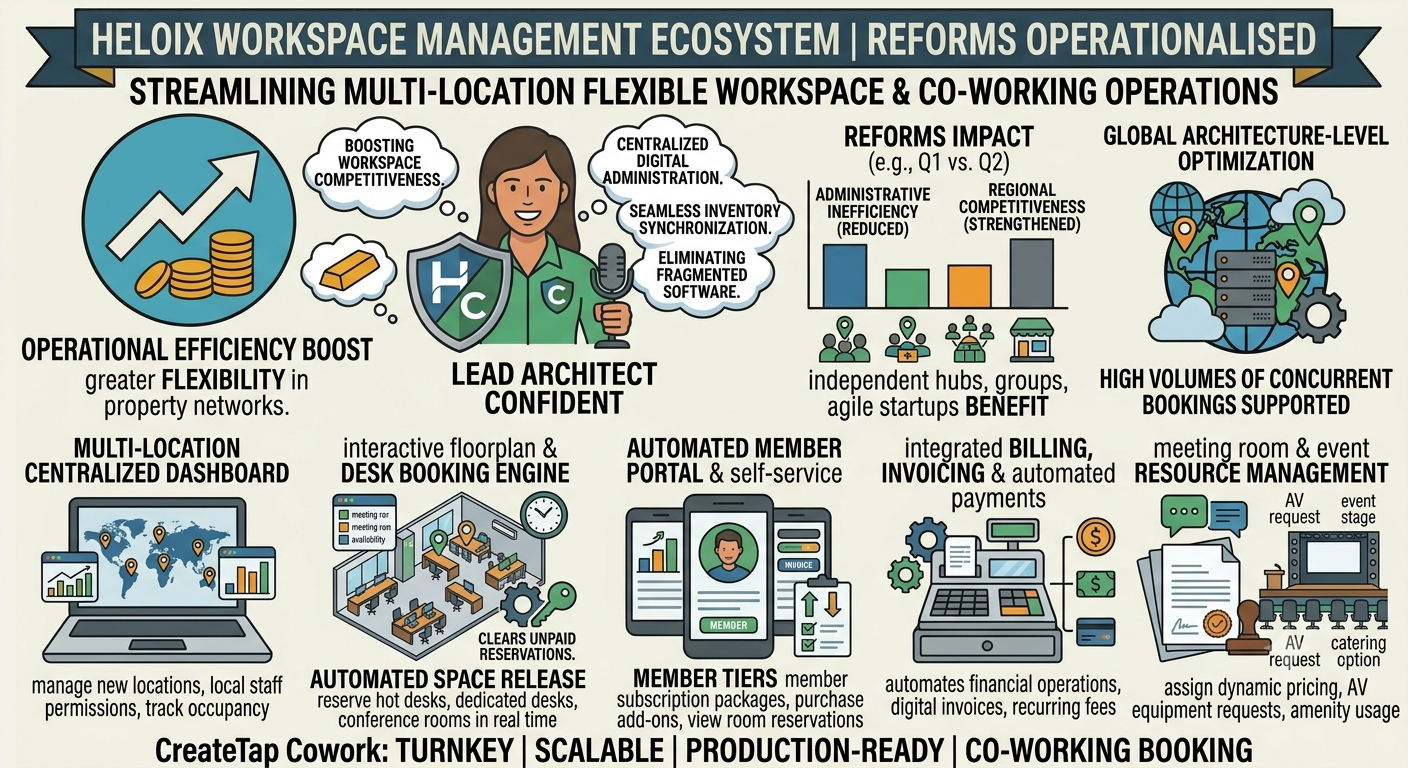
Heloix unveils new operational capabilities to boost multi-location cowork workspace management
#launch#SEO
Comment
227
Shamita
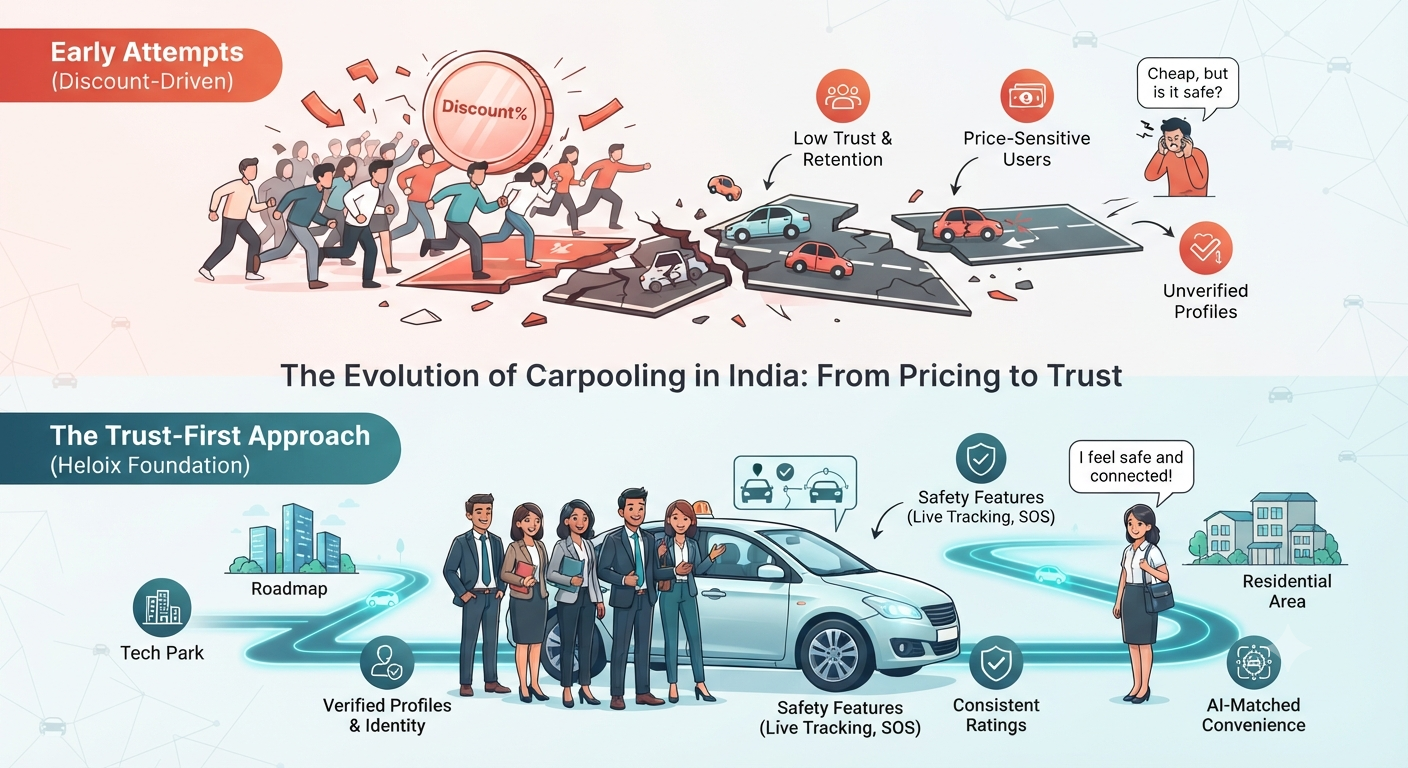
Carpooling has been tried in India before, more than once, and mostly failed to stick — early attempts leaned heavily on discount-driven growth that attracted price-sensitive users without building genuine habit or trust, and safety concerns, particularly for women commuters, were often treated as a secondary feature rather than a foundational design requirement. A newer generation of carpooling platforms is taking a noticeably different approach, and the difference in design philosophy is showing up in retention numbers that earlier attempts never quite achieved.
The core insight driving this second wave is that carpooling isn't really a pricing problem, it's a trust problem. Someone deciding whether to share a daily commute with a stranger cares far more about verified identity, consistent driver and rider ratings, route reliability, and safety features like live location sharing and emergency contacts than they do about saving another ten rupees per trip. Platforms that led with aggressive discounting in earlier years often attracted exactly the wrong kind of growth — users chasing the cheapest ride rather than building the recurring, trust-based relationship that makes carpooling actually work as a long-term commuting habit.
AI-assisted matching has also matured enough to meaningfully improve the experience, going beyond simple route overlap to account for actual commute timing patterns, driver and rider preferences, and gender-based matching preferences where relevant, rather than the fairly blunt matching logic that characterised earlier carpooling attempts. That improvement matters because a bad early match experience — a wildly inconvenient route, an uncomfortable ride — tends to permanently sour a new user on the entire concept, making first-match quality disproportionately important to long-term retention.
Building this kind of AI-matched, trust-first carpooling platform from scratch involves solving a fairly involved set of problems simultaneously — real-time matching, identity verification, in-app safety features, and payment splitting, among others. Founders entering this space have increasingly started from an existing AI-powered carpooling and ride-sharing platform from Heloix rather than building each of these systems independently, which lets a small team launch with the core matching and safety infrastructure already functional and focus their actual effort on the city-specific trust-building and driver-rider community management that determines whether a carpooling platform actually reaches critical mass in a given commuter corridor.
Reaching critical mass in a specific geography, in fact, is the single hardest problem in carpooling, more than matching algorithm quality or app polish. A carpooling platform is only useful if there are enough drivers and riders on a given route at a given time to generate a viable match, which means these platforms tend to succeed or fail based on how well they concentrate their early growth efforts on a small number of dense commuter corridors — a specific tech park, a specific set of residential-to-business-district routes — rather than spreading thin marketing spend across an entire city from day one.
Corporate partnerships have turned out to be an effective way to solve that density problem. Several newer carpooling platforms have found early traction by partnering directly with large employers to seed carpooling adoption within a single company's commuting employee base, which guarantees enough concentrated demand on specific routes to make matches reliable from the very first week, rather than hoping organic growth eventually reaches that density on its own.
Safety design continues to be the differentiator that determines long-term trust, particularly for women commuters who have historically been underserved or actively deterred by ride-sharing products that treated safety as an afterthought. The platforms building real, durable user bases in this space have generally made safety features — verified profiles, in-ride tracking, easy reporting mechanisms — genuinely central to the product experience rather than a checkbox feature buried in settings.
Looking ahead, the carpooling category's success in India will likely continue to hinge less on further matching algorithm sophistication and more on the patient, geography-by-geography work of building enough route density and enough earned trust that sharing a commute with a stranger starts to feel normal rather than risky. For founders in this space, the technology to match riders is increasingly solved and available off the shelf; the actual business is building a commuting community dense and trustworthy enough that people keep coming back.
Please to post a comment
No comments yet
Be the first to share your thoughts.
@heloix_news
Launch
@heloix_news
Launch

@heloix_news
Launch

Subscribe for the latest on technology, business growth and digital transformation.