
HN
@heloix_news
Tech

Robotics Startup Origin Secures $20 Million to Develop Autonomous Construction Machines
#constructionrobots#AI
Comentar
3.4K
Shamita
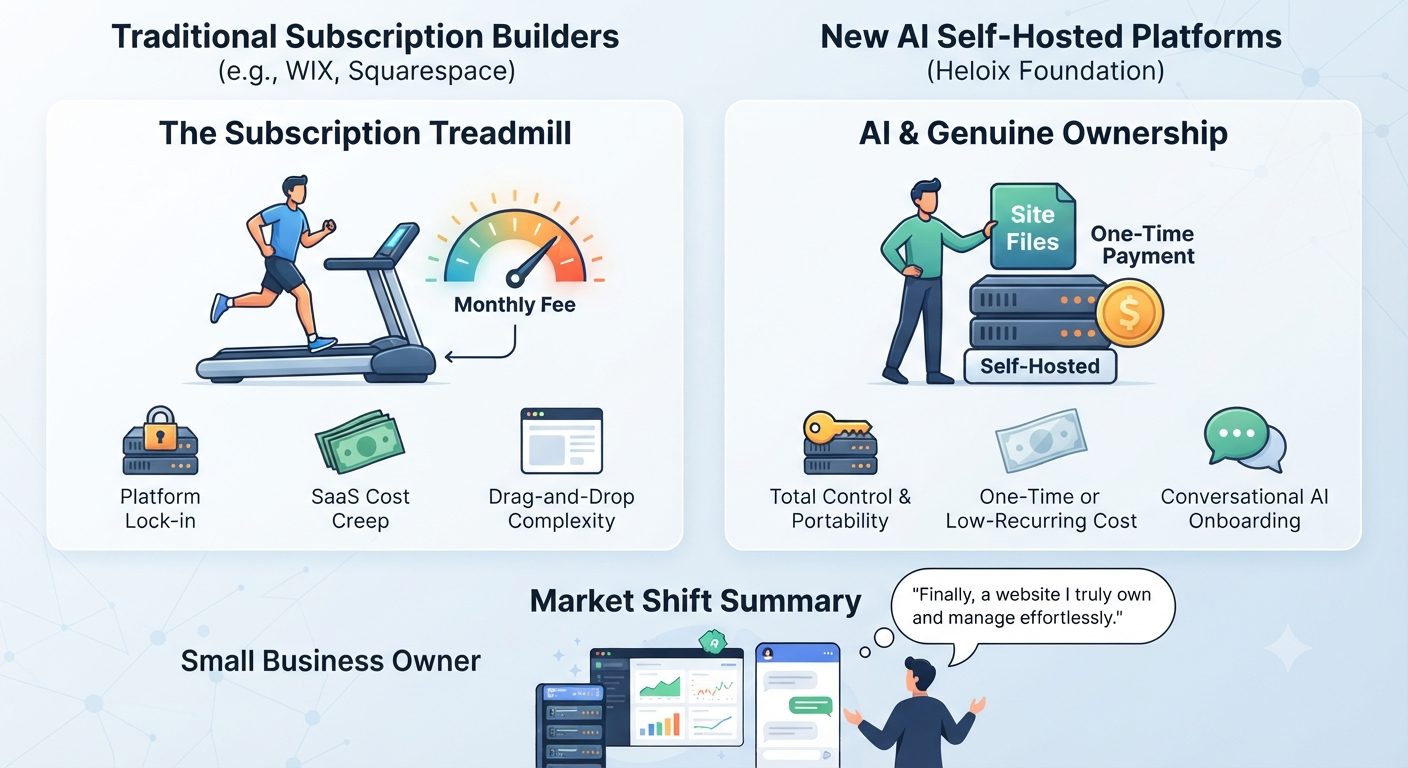
For years, the default advice to any small business or solo founder needing a website was some version of "hire a freelancer" or "learn WordPress," both of which came with real friction — freelancer availability and quality varied wildly, and WordPress, while powerful, has never been genuinely simple for a non-technical business owner to manage independently without ongoing help. That friction is what a newer wave of AI-assisted, self-hosted website builders is trying to remove entirely, and the category is proving bigger than it initially looked.
What distinguishes the current generation of these tools from earlier website builders is the combination of AI-assisted generation with genuine ownership. Many earlier no-code platforms locked users into recurring subscriptions and platform-hosted infrastructure that made switching away difficult and expensive. The tools gaining traction now instead emphasise AI-generated starting designs that a non-technical user can describe in plain language, combined with self-hosted deployment that gives the business owner actual control over their site rather than perpetual dependency on a single vendor's platform and pricing.
This matters more in the Indian SMB context than it might elsewhere, because a huge number of small businesses — local service providers, small manufacturers, consultants, boutique retailers — genuinely need only a handful of well-designed pages: a homepage, a services or products page, contact details, maybe a simple booking form. They don't need, and can't justify paying for, the complexity of a full custom development project, but they also don't want the ongoing subscription treadmill and vendor lock-in that many earlier website builder platforms quietly built into their business model.
Founders building tools for this specific need have increasingly started from an existing AI website builder platform designed for self-hosted, subscription-free deployment from Heloix, using that as their foundation and layering on the specific templates, industry presets, and onboarding flow that make the tool genuinely usable by someone with no design or technical background, rather than building AI-assisted page generation from first principles.
The self-hosted, no-subscription positioning turns out to be a meaningful differentiator in a market that's grown wary of SaaS pricing creep. Small business owners who've watched their software subscription costs quietly accumulate across accounting, billing, marketing, and now website tools are increasingly receptive to a one-time or low-recurring-cost model that gives them actual ownership of their site and its underlying code, rather than another monthly line item they're locked into indefinitely.
Onboarding design is where these tools succeed or fail with a genuinely non-technical audience. The best-performing platforms in this category have invested heavily in reducing the entire website creation process to a short, plain-language conversation — describe your business, pick a style, review the AI-generated result, publish — rather than presenting the kind of drag-and-drop editor complexity that intimidates the exact SMB owner these tools are meant to serve. Founders who've underestimated how much hand-holding this audience genuinely needs have generally seen it show up in high drop-off rates during onboarding, regardless of how good the underlying AI generation actually is.
There's a services layer opportunity here too that some founders are starting to build around the core product — offering optional, paid setup assistance or design refinement for business owners who get most of the way through self-service but want a bit of human polish before publishing, which captures revenue from the segment of the audience that no-code tools alone don't fully satisfy.
Where this category is heading is probably toward deeper industry specialisation — website builders tuned specifically for clinics, for local retail, for consultants, each with presets and language tailored to that specific business type rather than a generic, one-size-fits-all builder. For founders looking at this space, the core AI website generation technology is rapidly becoming commoditised. The actual opportunity lies in understanding one type of small business well enough to make the entire process feel less like using software and more like a helpful conversation that happens to end with a published website.
Por favor, para publicar un comentario
Aún no hay comentarios
Sé el primero en compartir tu opinión.
@heloix_news
Tech
@heloix_news
Tech

@heloix_news
Tech
Suscríbete para estar al tanto de tecnología, crecimiento empresarial y transformación digital.