
HN
@heloix_news
EdTech
Top 5 Reasons Entrepreneurs Are Investing in School Management Software
#Edtech#school#technology
Comment
249
Shamita
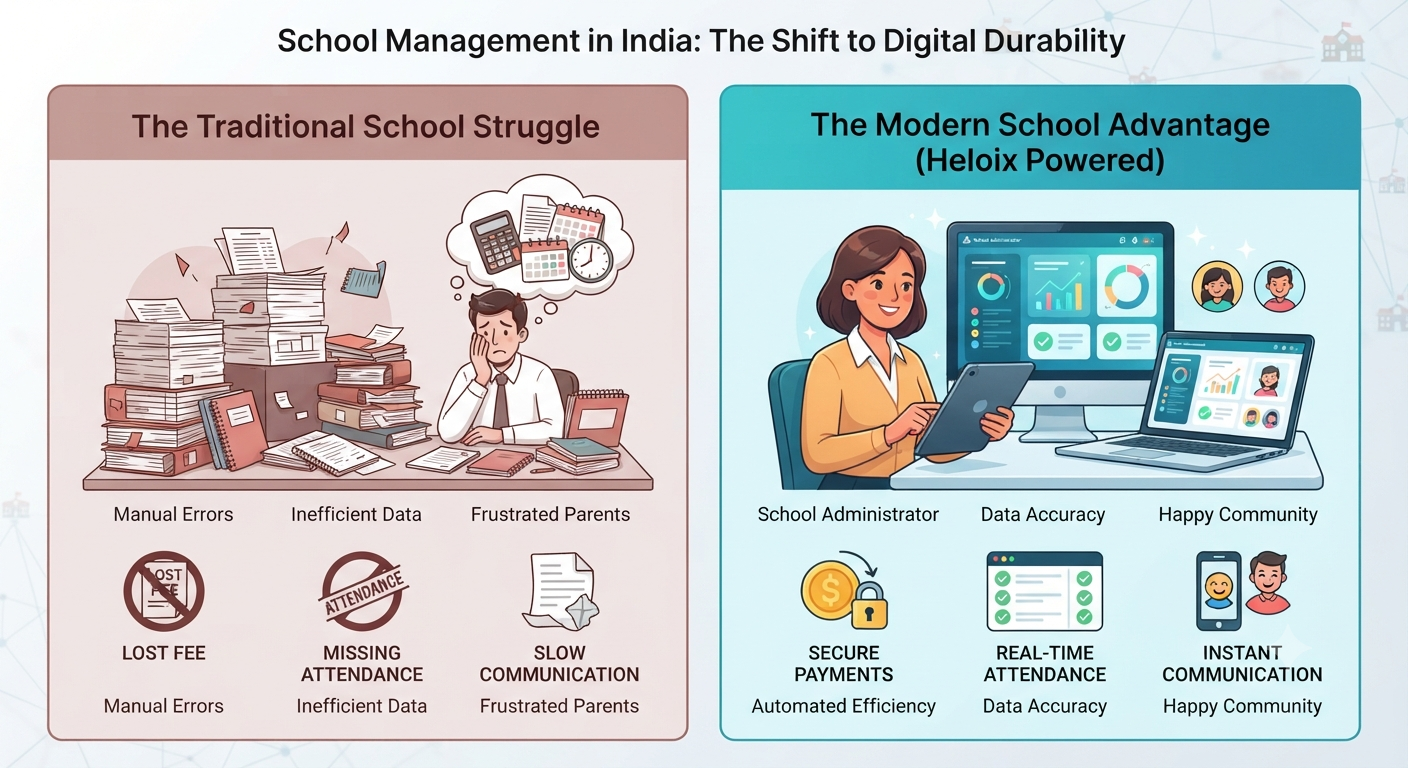
Compared to flashier startup categories, school management software rarely gets much attention — no one writes excited think-pieces about attendance tracking or fee collection dashboards. But quietly, it's become one of the more durable and defensible SaaS categories in Indian education technology, precisely because it solves an unglamorous, recurring, and genuinely painful operational problem for tens of thousands of schools that have no appetite for building or maintaining software themselves.
The core problem is straightforward: Indian schools, particularly outside major metro areas, are often still running attendance, fee collection, exam results, and parent communication through some combination of paper registers, spreadsheets, and WhatsApp groups. It works, in the sense that schools function, but it's inefficient, error-prone, and gives school administrators and parents alike very little real visibility into what's actually happening day to day — a fee payment that's easy to lose track of, an attendance pattern that goes unnoticed until it's a serious problem, exam results that take days to compile and communicate.
What's made this a genuinely attractive SaaS category, rather than just an obvious-in-hindsight problem nobody's solved, is that schools are unusually sticky customers once they adopt a system. Switching school management software mid-year is disruptive enough — retraining staff, migrating student records, re-onboarding parents to a new communication channel — that schools tend to stay with whatever system they've adopted for years, which gives founders in this category a rare combination in Indian SaaS: genuinely low churn, predictable annual renewal cycles tied to the academic year, and word-of-mouth growth as schools recommend systems to other schools in their network or trust.
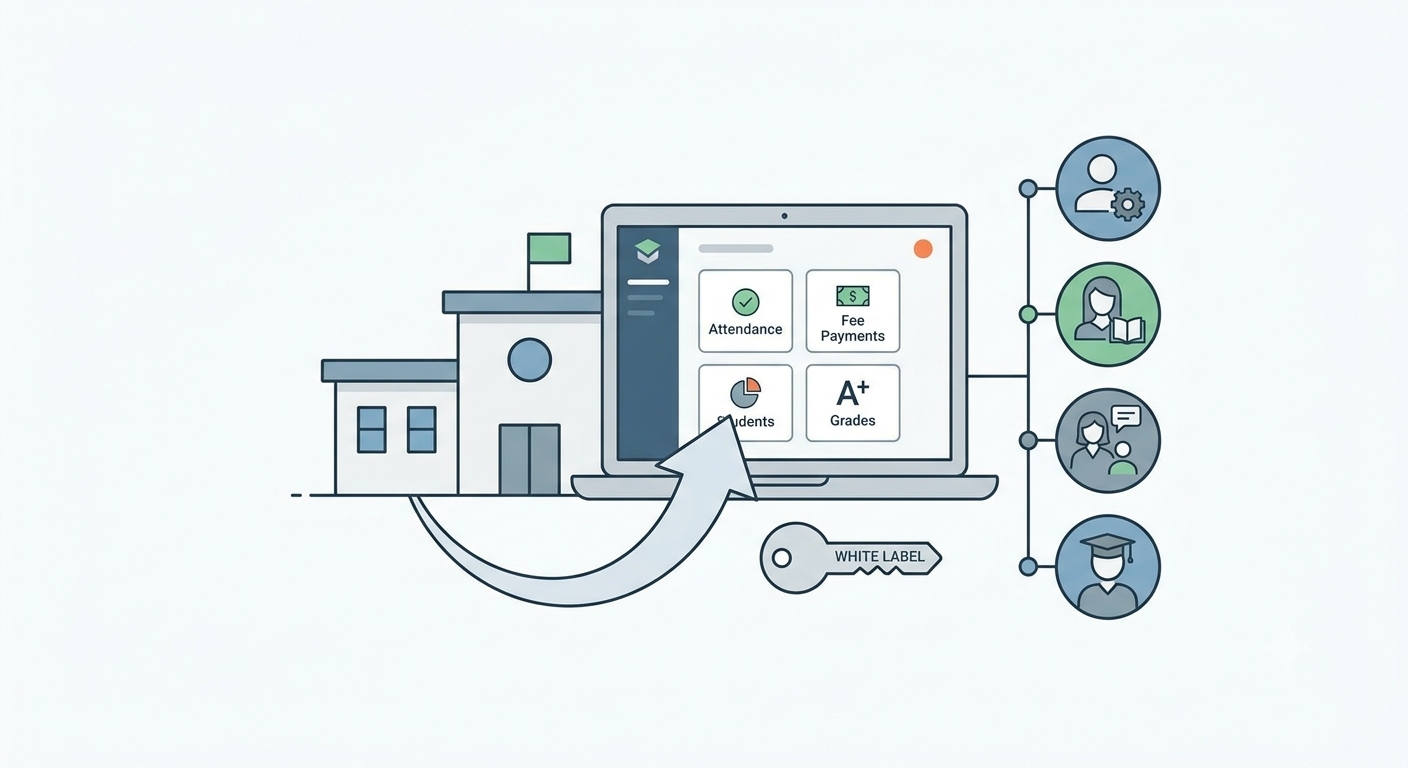
Given how well-understood the core feature set is — attendance, fees, results, parent communication, timetabling — founders entering this space have increasingly chosen to start from an existing, comprehensive SaaS school management system from Heloix rather than building each of these modules independently, which lets a small team offer a genuinely complete product from launch rather than a thin MVP that schools have to supplement with the very same spreadsheets and WhatsApp groups the software was meant to replace.
Sales cycles in this category look nothing like typical consumer SaaS, and founders who don't plan for that upfront tend to be caught off guard. School administrators are, understandably, cautious about adopting new systems that touch student data and daily operations, decisions often need buy-in from a principal, a management committee, and sometimes a trust or board, and the natural adoption window aligns tightly with the start of an academic year rather than being available year-round. Founders who've built successful school management businesses have generally adapted their entire sales calendar around this rhythm rather than fighting it.
Pricing in this category tends to be modest on a per-school basis but compounds meaningfully across a large customer base, particularly because schools rarely negotiate hard on software costs the way larger commercial customers might, and because the alternative — continuing with manual processes — carries real, if underappreciated, administrative cost that makes even a modest subscription fee an easy value proposition once a school actually evaluates it seriously.
Parent-facing features have become an increasingly important differentiator within this category too. Parents who can check attendance, fee status, and exam results directly through a simple app or portal, rather than relying entirely on a WhatsApp group or a physical diary, tend to become quiet advocates for the school's chosen system, which in turn strengthens a school's own willingness to stick with the platform rather than switch to a competitor.
Where this category likely heads next is deeper specialisation by school type — separate, tailored products for large private schools, budget-conscious low-fee private schools, and coaching institutes, each with meaningfully different needs and price sensitivity — alongside continued consolidation as the platforms with the strongest word-of-mouth reputation in a given region become the default choice for new schools evaluating options. For founders considering this unglamorous but genuinely durable category, the opportunity isn't in reinventing school administration from scratch. It's in delivering a genuinely complete, reliable system and then patiently earning the kind of trust that keeps a school renewing, year after year, without a second thought.
Please to post a comment
No comments yet
Be the first to share your thoughts.
@heloix_news
EdTech
@heloix_news
EdTech

@heloix_news
EdTech

Subscribe for the latest on technology, business growth and digital transformation.