
HN
@heloix_news
Tech

How to Launch a NFT Marketplace in Just 3 Days
#NFTMarketplace#NFTs#DigitalAssets
Comment
683
Shamita
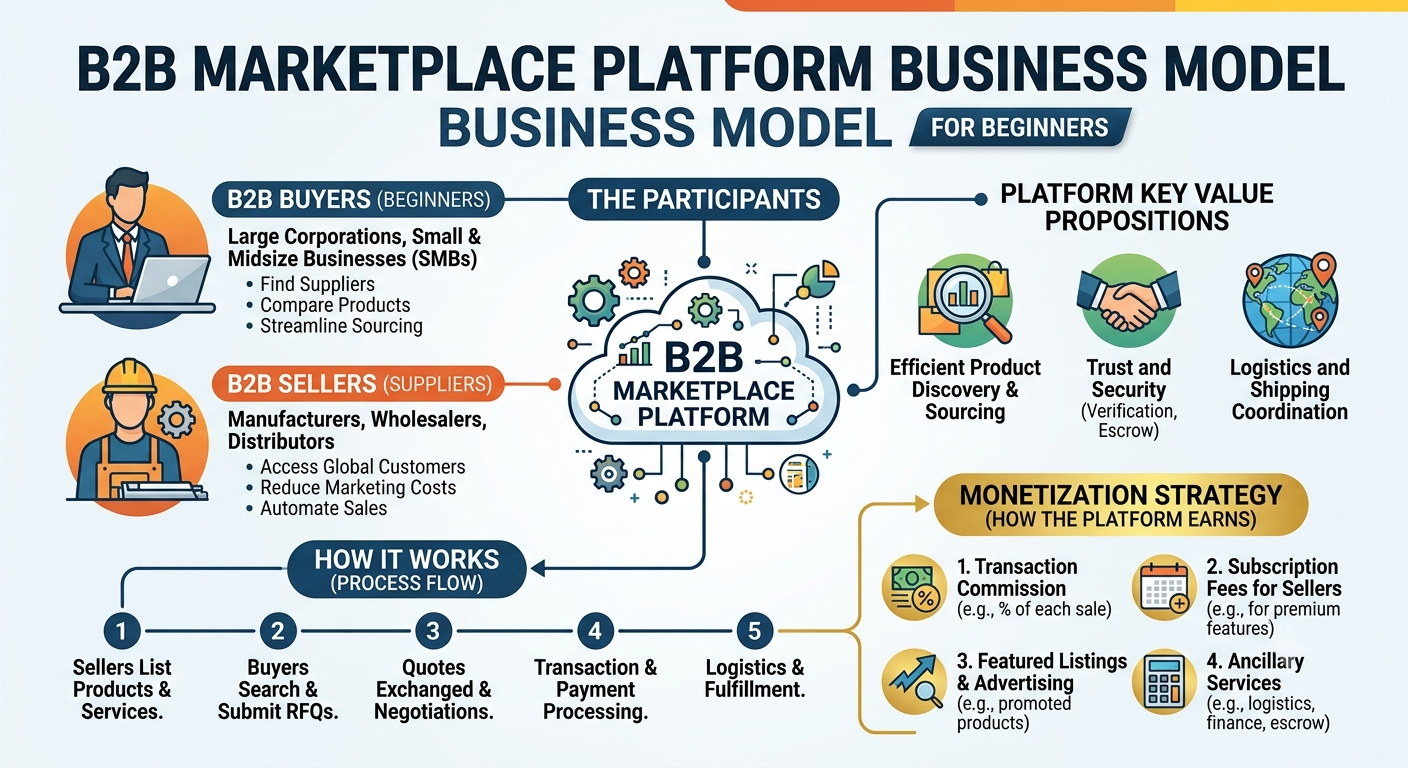
While consumer-facing (B2C) e-commerce garners significant public attention, the business-to-business (B2B) commerce market operates at a vastly larger scale. Trillions of dollars flow annually between manufacturers, wholesalers, distributors, and bulk buyers. Traditionally, these transactions relied on manual purchase orders, long phone calls, paper catalogs, and trade shows. Today, the shift toward digitization has created an unprecedented opportunity: the B2B marketplace platform.
For founders and enterprise leaders, building a B2B marketplace platform offers a way to modernize supply chains and capture recurring platform value. In this comprehensive guide, we will break down how the B2B marketplace business model works, explore its key revenue streams, explain how SaaS platforms accelerate deployment, and provide a step-by-step launch framework.
A B2B marketplace platform is a multi-tenant digital platform that connects business buyers (retailers, corporate buyers, institutions) with business sellers (manufacturers, wholesalers, master distributors) to trade goods, industrial materials, or bulk commercial services in an automated online environment.
Unlike B2C marketplaces (like Amazon or Etsy) where individual end-consumers make fast, low-value impulse purchases, B2B marketplaces accommodate complex purchasing workflows. These include negotiated tier pricing, minimum order quantities (MOQs), credit terms (e.g., Net-30 or Net-60 days), custom RFQs (Request for Quotes), and multi-tier organizational user approvals.
┌──────────────────────────────────────────────────────────┐
│              B2B Marketplace Platform Engine             │
│   (RFQ Engine, Net-Terms Credit, Tiered Pricing & Tax)   │
└───────────────┬──────────────────────────────┬───────────┘
                │                              │
                ▼                              ▼
  ┌──────────────────────────┐   ┌──────────────────────────┐
  │ Business Sellers / Mfrs  │   │  Corporate / Wholesale   │
  │ (Bulk Inventory & Stock) │   │  Buyers (Procurement)    │
  └──────────────────────────┘   └──────────────────────────┘
The marketplace administrator operates the overarching infrastructure, vendor compliance frameworks, trade credit mechanisms, and core digital interfaces while taking a fee or commission from transactions.
B2B orders feature substantially higher Average Order Values (AOV) than retail consumer orders. Consequently, even a modest commission rate or platform fee yields substantial revenue:
Transaction Commissions: Deducting a percentage or flat fee on completed bulk transactions. Because B2B order values are large, commission rates typically range between 3% and 10%.
Vendor SaaS Subscription Tiers: Charging manufacturers or wholesale suppliers a monthly or annual SaaS fee to maintain enterprise digital storefronts, access advanced trade analytics, and integrate ERP inventory systems.
Financing & Credit Services Fees: Facilitating buy-now-pay-later (BNPL) or Net-30/60 trade credit solutions for corporate buyers through integrated fintech partners, earning a percentage on credit processing.
Logistics & Warehousing Add-Ons: Partnering with 3PL (third-party logistics) and freight providers to offer integrated shipping, customs clearance, and warehousing services for a margin markup.
Featured Supplier Advertising: Offering suppliers premium placement on category search pages, homepage banners, or featured buyer RFQ broadcasts.
To design an effective B2B platform, it is essential to understand how B2B trading dynamics differ from consumer retail:
| Platform Feature | B2C Marketplace | B2B Marketplace Platform |
| Target Buyer | Individual end-consumers | Corporate procurement officers, business owners |
| Pricing Model | Fixed listing prices | Tiered bulk pricing, volume discounts, custom RFQ quotes |
| Payment Methods | Instant credit card / digital wallet | Bank transfers (ACH, Wire), Letter of Credit, Net-30/60 Terms |
| Order Volume & Value | Single items, low monetary value ($20–$200) | High-volume pallet/container orders ($2,000–$100,000+) |
| Order Fulfillment | Standard parcel post / home delivery | Freight shipping, LTL/FTL trucking, custom customs handling |
Developing custom software to handle complex B2B features—such as custom quote negotiation engines, volume price brackets, and ERP integrations—can take over a year of engineering and require a multi-hundred-thousand-dollar development budget.
Utilizing a pre-built B2B marketplace SaaS platform eliminates these initial barriers:
Speed-to-Market: Deploy a fully branded enterprise platform in days or weeks instead of waiting months for custom software development.
Pre-Integrated Trade Tools: Access out-of-the-box support for bulk order matrices, digital RFQs, tiered buyer roles, custom tax calculation engines, and international currency conversions.
Full Source Code & Scalability: Software architecture solutions—like those provided by platforms such as Heloix—offer scalable enterprise architecture with optional source code ownership, ensuring complete freedom from vendor lock-in as trade volume expands.
Focus Capital on Supply Acquisition: Save on initial software engineering costs and allocate capital toward recruiting verified manufacturers and attracting high-volume enterprise buyers.
  ┌──────────────────────────────────────────────────────────┐
  │ 1. Define a Specialized Industry Vertical                │
  └─────────────────────────────┬────────────────────────────┘
                                │
                                ▼
  ┌──────────────────────────────────────────────────────────┐
  │ 2. Deploy Your B2B Marketplace SaaS Solution             │
  └─────────────────────────────┬────────────────────────────┘
                                │
                                ▼
  ┌──────────────────────────────────────────────────────────┐
  │ 3. Configure Credit Terms, RFQs & Payment Engines       │
  └─────────────────────────────┬────────────────────────────┘
                                │
                                ▼
  ┌──────────────────────────────────────────────────────────┐
  │ 4. Recruit & Verify High-Quality Anchor Suppliers        │
  └─────────────────────────────┬────────────────────────────┘
                                │
                                ▼
  ┌──────────────────────────────────────────────────────────┐
  │ 5. Acquire Corporate Buyers & Procurement Teams          │
  └─────────────────────────────┬────────────────────────────┘
                                │
                                ▼
  ┌──────────────────────────────────────────────────────────┐
  │ 6. Scale Trade Operations & Logistics Partnerships       │
  └─────────────────────────────┴────────────────────────────┘
Horizontal B2B commerce (like Alibaba) is highly saturated. Higher success rates lie in specialized, high-demand industry verticals, such as:
Commercial building materials & construction supplies
Agricultural inputs and bulk commodities
Specialized medical and laboratory equipment
Automotive spare parts for fleet management
Commercial packaging & sustainable textiles
Select an enterprise-grade B2B marketplace platform engine. Configure your brand identity, set up custom domain names, define product taxonomies, and establish multi-tenant vendor configuration rules.
B2B trade requires robust financial options. Set up secure payment frameworks supporting ACH transfers, wire transfers, and automated escrow. Connect digital trade-credit partners to offer Net-30/60 financing to qualified corporate buyers while ensuring sellers receive payouts upon shipment confirmation.
Supply quality dictates B2B platform credibility. Onboard your initial cohort of verified manufacturers, master distributors, and wholesale vendors:
Establish a thorough vendor vetting process (e.g., verifying business licenses, tax IDs, and facility certifications).
Assist suppliers with catalog ingestion, setting up minimum order quantities (MOQs), and configuring tier-based bulk pricing.
Offer early supplier incentives, such as reduced platform commissions or zero listing fees during the initial setup phase.
Attract corporate purchasing agents and commercial buyers through targeted acquisition tactics:
Account-Based Marketing (ABM): Direct outreach to procurement managers at mid-sized and large enterprises within your target sector.
Industry SEO & Trade Search: Build optimized search pages focusing on bulk product terms (e.g., "wholesale commercial LED lighting manufacturer").
Trade Show Partnerships: Connect with trade associations and participate in industry exhibitions to recruit buyers seeking direct-from-factory pricing.
As order volume scales, focus on eliminating operational friction. Partner with regional and international logistics providers to offer real-time freight quotes at checkout, automated customs documentation, and seamless order tracking.
Please to post a comment
No comments yet
Be the first to share your thoughts.
@heloix_news
Tech
@heloix_news
Tech

@heloix_news
Tech

Subscribe for the latest on technology, business growth and digital transformation.