
HN
@heloix_news
Growth

Gaming Commerce Unlocked: How PlaySuper Is Converting In-Game Victories into Real-World Rewards
#PlaySuper#gamingcommerce#gamingrewards
कमेंट
1.6K
Mahesh P
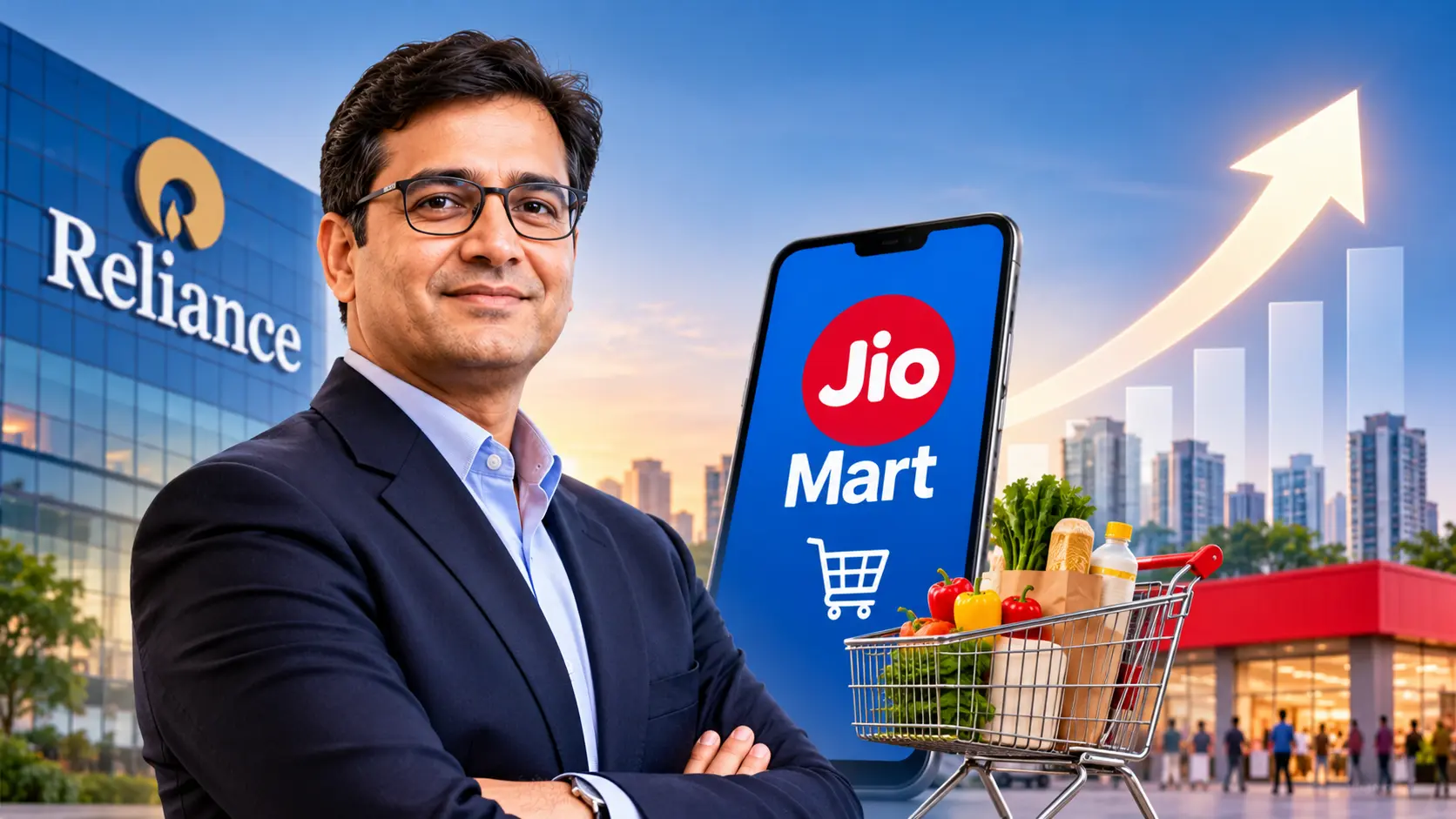
Reliance Retail is stepping up its investment in JioMart while placing greater emphasis on sustainable growth, efficient operations and profitability. The company plans to expand its dark store network, improve delivery speed and strengthen its presence in smaller cities, with investments expected to contribute more meaningfully to profits from FY28.
Speaking during an earnings call, Reliance Retail CFO Dinesh Taluja said the company was focused on building the capabilities needed to scale its online grocery and quick-commerce businesses. Its priorities include improving product availability, making deliveries faster and more reliable, and developing a stronger hyperlocal supply chain supported by technology.
Reliance Retail is continuing to invest in its digital commerce operations, but it intends to ensure that expansion is backed by sound unit economics. Rather than pursuing order volumes or customer reach simply to demonstrate growth, the company wants each part of its business to make commercial sense.
Taluja said the retailer would continue to expand its dark store network while shutting down larger stores that fail to deliver satisfactory performance. The approach reflects a broader effort to improve operating efficiency and direct resources towards locations and formats with stronger business potential.
The company is also working to improve the economics of online orders by making better use of its existing infrastructure and increasing the productivity of its retail network.
Reliance Retail believes its extensive physical presence gives JioMart an advantage over online-first competitors that must invest heavily in standalone fulfilment infrastructure.
The company operates more than 5,000 stores across over 1,000 cities. These outlets help support online orders and enable the business to serve customers across a wider geographic area, including markets beyond India's largest urban centres.
According to Taluja, demand for online grocery shopping is growing in smaller cities, where competition remains relatively limited in some locations. Reliance can serve these markets at a lower incremental cost by using its existing stores and supply chain rather than building an entirely separate network.
The company is continuing to add dark stores where additional capacity is needed to meet local demand and improve delivery times.
Reliance Retail's online grocery business recorded 42% growth in the second quarter of FY27, reflecting the increasing contribution of digital and hyperlocal channels to its grocery operations.
Taluja said the company's investments were beginning to translate into better operating performance. Average order values have increased, a larger proportion of orders are being fulfilled completely, and average delivery times have fallen substantially over the previous four quarters.
These improvements are important as the company seeks to build customer loyalty while making its online business more efficient.
Reliance Retail has also been expanding its omnichannel operations, allowing customers to shop through digital platforms while drawing on the company's physical retail infrastructure. Taluja said the growth of JioMart and the broader omnichannel business was beginning to show up in the company's financial performance.
India's quick-commerce market remains highly competitive, with multiple platforms spending on customer acquisition, delivery infrastructure and pricing to attract and retain shoppers.
Reliance Retail is making targeted investments in margins, particularly in metropolitan markets, to remain competitive. However, the company says it can use the profitability of its established retail operations to support the expansion of its online businesses.
Taluja said Reliance Retail had a profitable core business that could help finance newer growth initiatives. This, he indicated, distinguishes the company from competitors that continue to incur losses while building scale.
Reliance is also focusing on improving the use of its existing assets and strengthening operational efficiency instead of relying solely on discounts to drive customer acquisition.
The company said its share of the quick-commerce market had increased by 100 basis points. Taluja also highlighted the scale of Reliance's store network, noting that its infrastructure provides a significant base from which to expand its services.
Reliance Retail has outlined a three-year roadmap for JioMart and its omnichannel business. Under this plan, FY27 will focus primarily on building scale, expanding reach and strengthening the platform's operating capabilities.
The company plans to improve product availability, delivery speed and reliability while extending its presence across more locations and customer segments.
In FY28 and FY29, the emphasis is expected to shift towards converting that expanded reach into greater profitability and long-term value. Priorities will include encouraging repeat purchases, increasing average basket sizes and improving customer lifetime value.
The strategy signals a shift towards measuring success not just by the number of orders or customers added, but also by the value generated from each customer and the efficiency with which the business operates.
With its large physical store network, growing online grocery operations and continued investment in quick commerce, Reliance Retail is seeking to build a more sustainable digital retail business. Its next phase of growth will depend on whether JioMart can turn its expanding customer base and operational improvements into stronger financial returns.
कृपया कमेंट पोस्ट करने के लिए
अभी तक कोई टिप्पणी नहीं
अपनी राय सबसे पहले साझा करें।
@heloix_news
Growth
@heloix_news
Growth

@heloix_news
Growth

टेक्नोलॉजी, बिज़नेस ग्रोथ और डिजिटल ट्रांसफॉर्मेशन की ताज़ा जानकारियों के लिए सब्सक्राइब करें।