
HN
@heloix_news
Policy
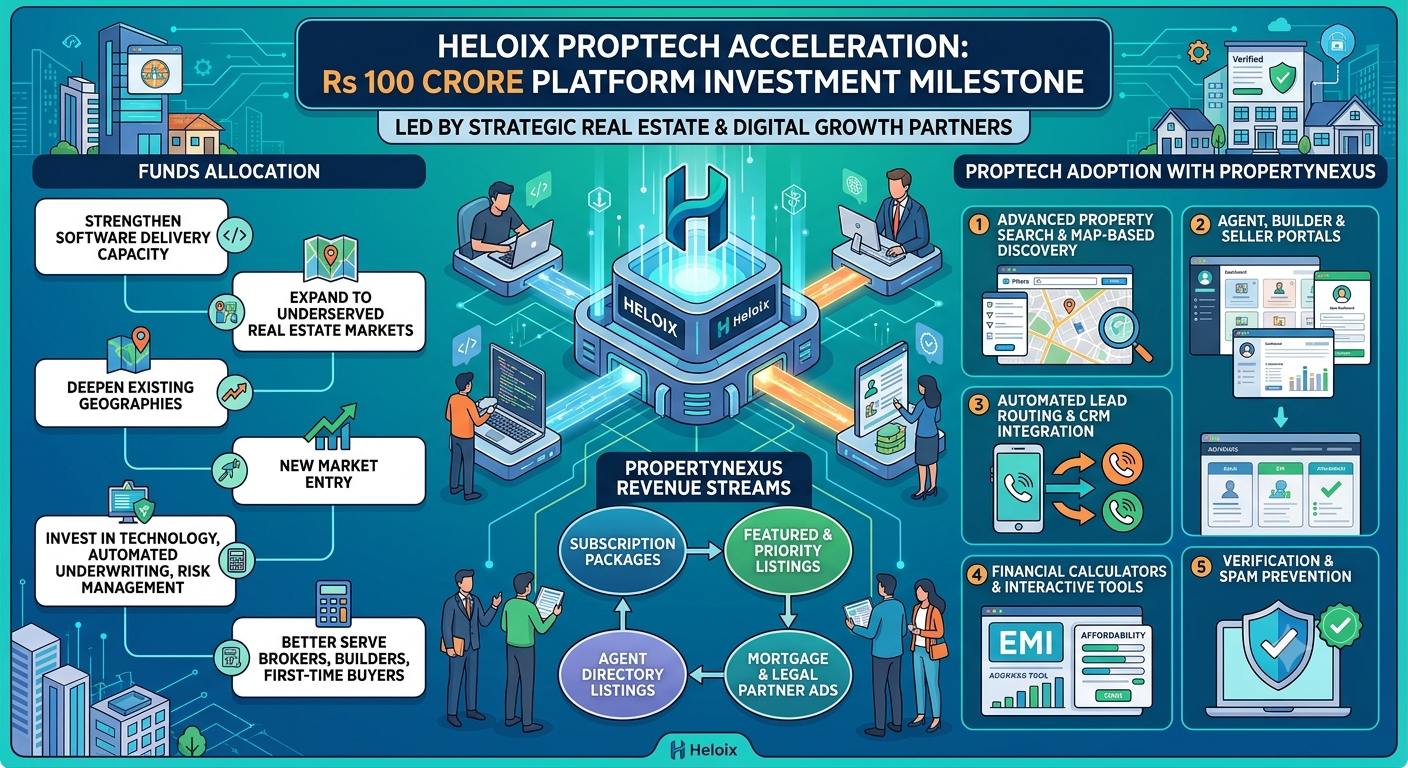
Heloix raises Rs 100 Cr scale-up momentum with PropertyNexus real estate platform
#realestate#marketplace
Commenta
1.7K

Despite widespread adoption of artificial intelligence tools across Singapore’s financial technology sector, only a tiny fraction of companies are successfully monetizing their deployment into direct top-line revenue growth.
Unveiled on November 18 at the Singapore FinTech Festival, a joint report published by the Singapore FinTech Association, digital payments firm Airwallex, and research entity Kapronasia surveyed 100 fintech leaders and interviewed 10 senior industry executives to measure enterprise AI integration.
The benchmark study revealed that while 86 percent of surveyed fintech firms have active AI deployments in production environments, only 4 percent identified generating new commercial revenue as the single largest benefit of their investment.
Instead of driving direct top-line monetization, fintech leadership teams prioritize back-office efficiency, operational resilience, and labor productivity gains:
Primary Efficiency Drivers: Respondents overwhelmingly cited operational cost reduction, risk mitigation, and employee productivity gains as the primary value drivers of deployed AI systems.
Budget Expansion Commitments: Despite muted direct revenue returns, 94 percent of fintech decision-makers plan to increase their organizational AI budgets over the upcoming year.
Data Governance Bottleneck: Internal data governance constraints were named by 63 percent of leaders as the single greatest barrier preventing them from scaling AI applications.
The operational hurdles identified in the report emerge alongside active regulatory and policy initiatives in Singapore designed to govern financial sector technology.
The Monetary Authority of Singapore (MAS) leads the Veritas consortium, an industry initiative establishing practical frameworks for responsible, fair, ethical, and transparent AI implementation across financial services.
Concurrently, the Personal Data Protection Commission (PDPC) maintains advisory guidelines governing the processing of personal data within AI decision-making engines and automated recommendation systems.
As regulatory standards tighten, fintech institutions must balance aggressive budget scaling against strict compliance mandates to unlock commercial value from their artificial intelligence infrastructure.
High AI Adoption, Low Revenue Impact: While 86 percent of Singapore fintechs have deployed AI tools, only 4 percent cite direct new revenue creation as their primary benefit.
Budget Growth Amid Governance Hurdles: 94 percent of fintechs plan to expand AI budgets next year, even as 63 percent struggle with internal data governance as a primary scaling barrier.
Tightening Policy Alignment: AI scaling coincides with Singapore policy frameworks, including the MAS Veritas responsible AI consortium and PDPC data privacy guidelines.
Why are Singapore fintechs increasing AI budgets if revenue gains remain low?
Fintech leadership teams are expanding budgets because AI yields significant indirect value through cost reduction, automated risk mitigation, and employee productivity gains rather than immediate top-line sales.
What is the primary operational obstacle preventing Singapore fintechs from scaling AI?
Internal data governance is cited by 63 percent of fintech leaders as the main barrier to scaling AI, requiring compliance with MAS Veritas standards and PDPC data privacy guidelines.
Effettua per lasciare un commento
Nessun commento
Scrivi il primo commento.
@heloix_news
Policy
@heloix_news
Policy
@heloix_news
Policy

Iscriviti per non perdere le ultime novità su tecnologia, crescita aziendale e trasformazione digitale.