
HN
@heloix_news
HealthTech

Simplifying Metabolic Health: Inside EYVA’s Pocket-Sized, Non-Invasive Biosensing Revolution
#EYVA#metabolichealth#biosensing
Comment
1.3K
Shreya

BioStack Secures $9.5 Million in Seed Funding
Healthcare technology startup BioStack has raised $9.5 million (approximately ₹90.4 crore) in a seed funding round to develop datasets that can support medical artificial intelligence (AI), research and biotechnology.
The funding round was backed by Peak XV Partners, Afore Capital, DCVC, Emerson Collective, SV Angel, Verdict Capital, Streamlined Ventures and Y Combinator.
Founded in 2025 by Sanat Mishra and Parth Patwa, BioStack is building a data infrastructure platform that brings together fragmented medical information from different healthcare systems. The company plans to use the fresh capital to expand its presence in the US and other international markets, strengthen its technology platform, and grow its engineering and research teams.
Turning Fragmented Medical Records Into Useful Data
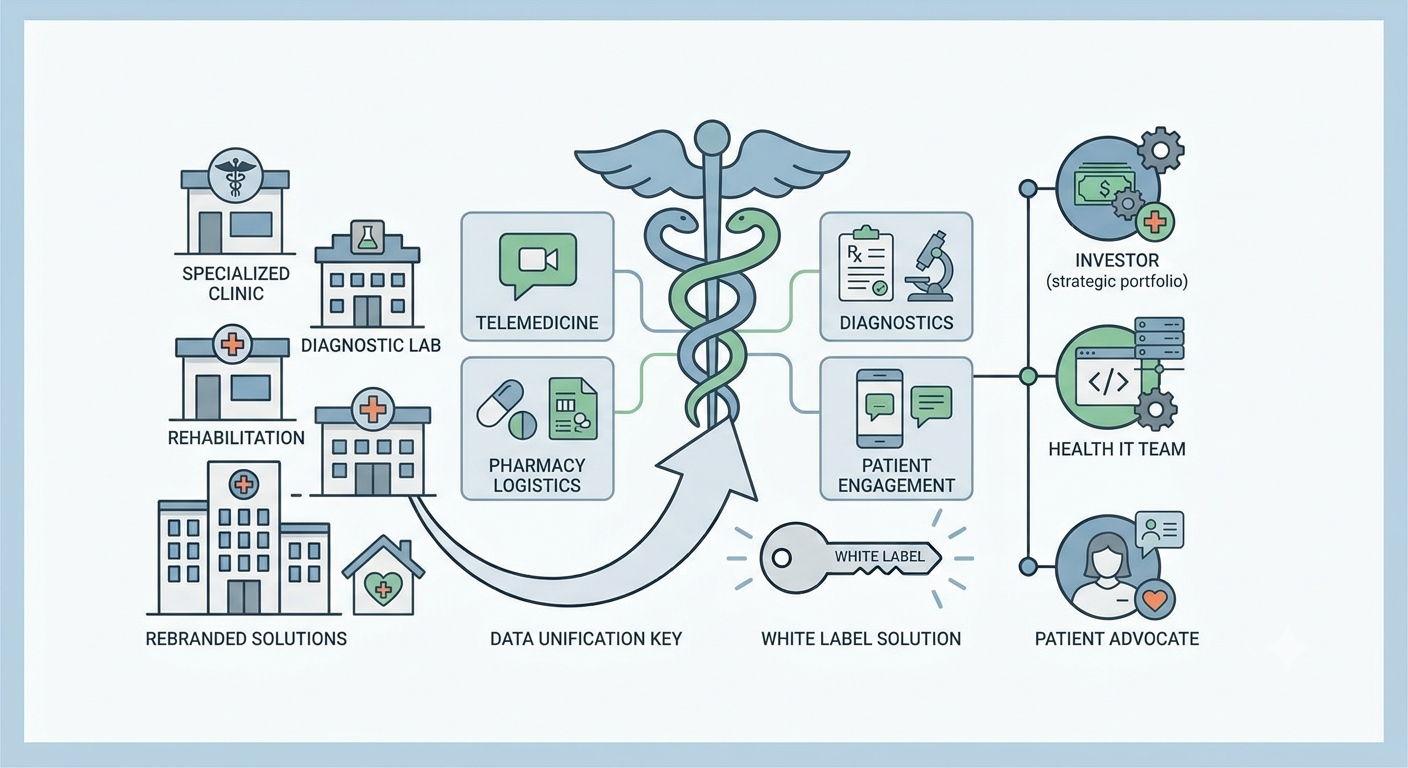
Medical information is often spread across multiple systems, making it difficult for healthcare professionals and researchers to build a complete picture of a patient's medical history.
Records such as clinical notes, laboratory results, medical scans, prescriptions and treatment histories may be stored separately across hospitals and healthcare providers. Bringing this information together can help researchers better understand how diseases progress and how patients respond to different treatments.
BioStack aims to address this challenge by connecting these scattered records and organising them into comprehensive patient histories. It then uses de-identified information to develop proprietary datasets for medical research, biotechnology and AI model training.
The approach is designed to make clinical information more useful for doctors, researchers and AI developers working on the next generation of healthcare solutions.
"By connecting clinical information across different systems, we want to make it more useful for doctors making decisions today and for researchers developing the medical technologies of tomorrow," the company's co-founder and CEO, Sanat Mishra, has said.
Building a Global Network of Healthcare Data
BioStack currently works with hospitals across the United States, Brazil and Argentina, while also operating in India. According to the company, its network provides access to more than 100 million de-identified patient records.
The startup has also processed several hundred thousand medical imaging files, including X-rays, MRI scans and CT scans, alongside millions of telehealth audio transcripts and other clinical records.
Combining these different data sources can help create datasets that reflect a patient's medical journey over time, rather than offering isolated snapshots of individual consultations or tests.
For medical AI developers, this type of information can be useful when training and evaluating models intended to support clinical decision-making. Researchers can also use it to study disease patterns, identify potential biomarkers, compare treatment responses and explore how different interventions affect patient outcomes.
BioStack says its platform supports applications such as disease modelling, patient stratification, biomarker discovery and treatment-response analysis.
The company also develops customised workflows for healthcare providers, with processes designed to protect patient privacy while making clinical information available for approved uses.
Exploring New Opportunities in Cancer Research
Beyond building datasets for AI development, BioStack is working to connect cancer patients in India with an investigational cancer vaccine programme.
The initiative highlights another potential application of the company's data infrastructure. By connecting clinical histories with research programmes, healthcare technology platforms can help biotechnology companies identify relevant patient groups and support the development of experimental treatments.
Access to well-organised clinical information can also help researchers examine how patients respond to treatments and identify patterns that may inform future studies.
However, investigational therapies remain under evaluation, and their safety and effectiveness must be established through appropriate clinical research.
India's Growing Role in AI Training Data
BioStack's funding comes at a time when India is attracting growing interest as a source of training data for AI systems.
As AI developers look beyond conventional text and publicly available information, demand is increasing for specialised datasets that can help models understand real-world activities, processes and environments.
In healthcare, this includes medical records, imaging data and treatment outcomes. Other areas of AI development are creating demand for data collected from people performing physical tasks, which can be used to train robotics systems and other AI-powered technologies.
Companies such as Awign, Objectways and Human Archive are building data collection and processing operations that supply information about human activities to AI developers. Pronto founder Anjali Sardana has also launched Provision Labs, a US-based venture focused on collecting data for physical AI systems.
These developments point to a broader opportunity for businesses that can collect, organise and prepare specialised datasets for AI applications.
According to a market projection cited by Inc42, India's AI training dataset market could reach $1.3 billion by 2033.
What Lies Ahead for BioStack?
The fresh funding gives BioStack additional resources to expand its international operations, improve its technology infrastructure and increase its engineering and research capabilities.
Its long-term opportunity lies in making fragmented healthcare information more accessible and useful for medical research, biotechnology and AI development. As demand for healthcare AI grows, datasets that connect medical history, treatment decisions and patient outcomes could become increasingly valuable.
At the same time, handling sensitive medical information requires strong privacy safeguards, appropriate permissions and reliable data management practices. Building partnerships with healthcare providers and ensuring that datasets are suitable for their intended research applications will remain important as the company scales.
BioStack is betting that better-organised clinical data can help bridge the gap between healthcare information and medical innovation. Its progress will depend on how effectively it expands its network, maintains patient privacy and turns complex medical records into datasets that deliver practical value to researchers and AI developers.
Please to post a comment
No comments yet
Be the first to share your thoughts.
@heloix_news
HealthTech
@heloix_news
HealthTech

@heloix_news
HealthTech
Subscribe for the latest on technology, business growth and digital transformation.