
HN
@heloix_news
Tech

How to Launch a NFT Marketplace in Just 3 Days
#NFTMarketplace#NFTs#DigitalAssets
Comment
669
Shamita
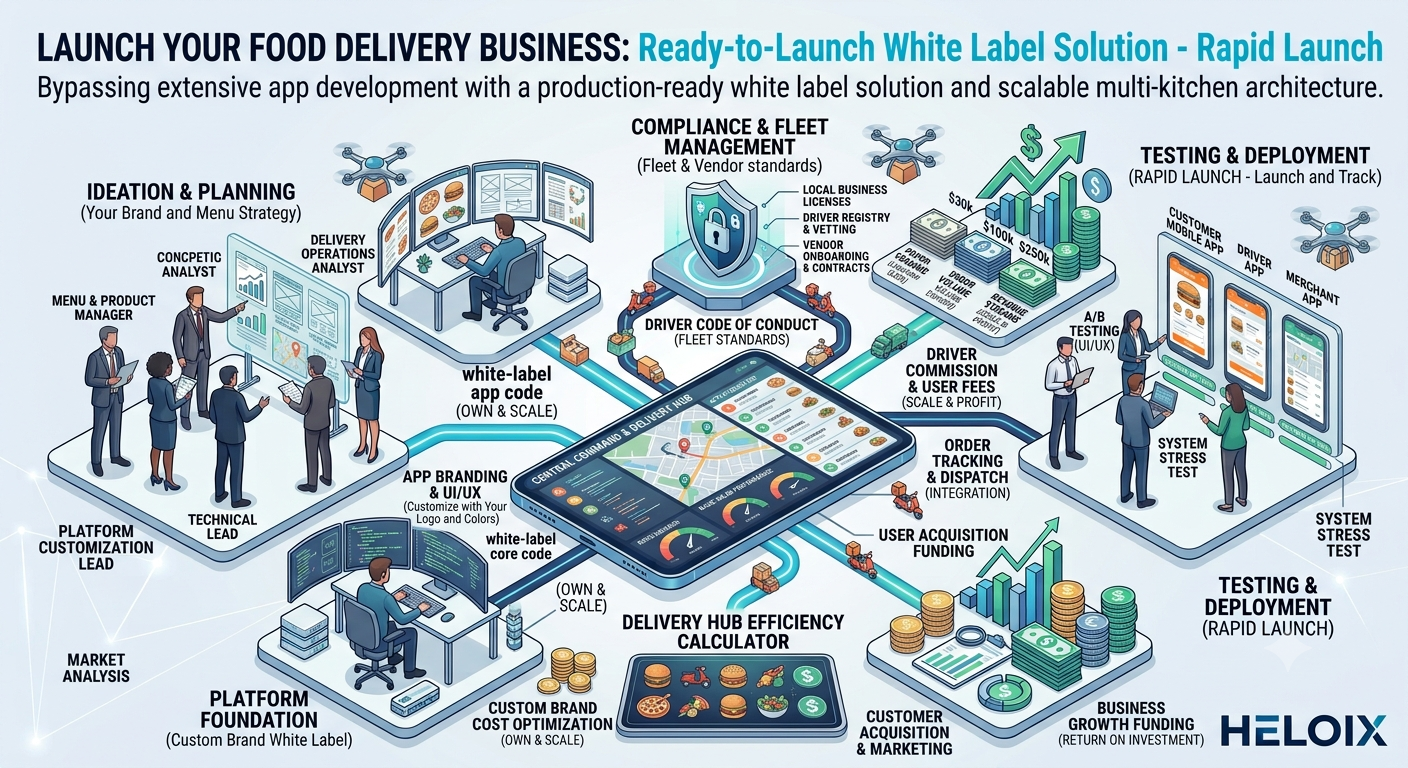
The global online food ordering and delivery market continues to expand as consumer demand for convenience, speed, and culinary variety remains at an all-time high. Modern food delivery platforms do far more than list restaurant menus; they orchestrate multi-restaurant catalogs, handle real-time geolocation driver dispatching, optimize delivery routes, process digital payments, and manage instant customer feedback loops.
Whether you choose a monthly subscription model, invest in a custom software build, or deploy a ready-to-launch white-label solution, understanding the full financial requirement helps you plan effectively. Below is a detailed cost analysis, operational expense breakdown, monetization strategies, and a step-by-step launch framework.
The total cost of establishing a food delivery business depends on your choice of software development approach, mobile application ecosystem (Customer, Driver, Restaurant, Admin), and operational scale.
  ┌──────────────────────────────────────────────────────────┐
  │ 1. Turnkey White-Label Platform: $1,500 – $5,000         │
  │    (₹1,00,000 – ₹4,00,000 in India)                       │
  └───────────────┬──────────────────────────────┬───────────┘
                  │                              │
                  ▼                              ▼
  ┌──────────────────────────────────────────────────────────┐
  │ 2. Custom App Build (Agency/Freelance): $12,000 – $35,000│
  │    (₹8,00,000 – ₹25,00,000 in India)                     │
  └───────────────┬──────────────────────────────┬───────────┘
                  │                              │
                  ▼                              ▼
  ┌──────────────────────────────────────────────────────────┐
  │ 3. Enterprise Hyper-Local Network: $40,000 – $100,000+   │
  │    (₹30,00,000 – ₹80,00,000+ in India)                   │
  └──────────────────────────────┴───────────────────────────┘
| Business Development Path | Core System Scope & Included Apps | Global Cost (USD) | Cost in India (INR) |
| Turnkey White-Label Software | Pre-built Customer App (iOS/Android), Driver App, Restaurant Portal, Super Admin Panel, payment gateway, real-time GPS tracking. | $1,500 – $5,000 | ₹1,00,000 – ₹4,00,000 |
| Custom Agency Build | Tailored UI/UX design, custom backend development, multi-platform mobile apps, native map integrations, custom analytics engine. | $12,00,0 – $35,000 | ₹8,00,000 – ₹25,00,000 |
| Enterprise Hyper-Local Hub | Scalable multi-city platform (DoorDash/Swiggy clone), AI route optimization, dark kitchen dispatch, multi-currency/multi-language modules. | $40,00,0 – $100,000+ | ₹30,00,000 – ₹80,00,000+ |
The Four-App Ecosystem: Food delivery software requires four distinct modules:
Customer Ordering App: Menu search, customization/add-ons, live GPS map tracking, wallet checkout.
Restaurant Merchant Portal: Order acceptance/rejection, live order prep tracking, menu availability toggle.
Driver / Fleet App: Instant order alerts, turn-by-turn navigation, order status toggle, daily earnings dashboard.
Super Admin Portal: Central dashboard for setting commission rates, managing delivery zones, and issuing merchant payouts.
Geolocation & Map APIs: Integrating real-time GPS tracking and route calculations (Google Maps API, Mapbox) adds recurring API query expenses based on active order volume.
Automated Order Dispatching: Implementing smart dispatch algorithms that assign orders to the nearest available delivery driver based on proximity, traffic, and restaurant preparation time.
Beyond the initial software deployment, operating a live food delivery network requires budget planning for ongoing operational costs:
Map API & Server Cloud Infrastructure: AWS/DigitalOcean server hosting and Google Maps API requests ($100 to $600+/month).
Payment Gateway Merchant Commissions: Transaction fees (typically 1.5% to 3%) charged by processing gateways (Stripe, Razorpay, PayPal).
Communication Gateways: Per-message charges for automated WhatsApp/SMS notifications sent to customers, drivers, and restaurant kitchens.
Initial Fleet Gear & Thermal Bags: Branded thermal delivery bags and jackets for initial delivery drivers ($25 to $50 per driver).
Food delivery apps operate on a multi-stream monetization strategy to maximize margins on meal orders:
Restaurant Commissions: Deducting a pre-negotiated fee (typically 15% to 30%) on every completed food order placed through the platform.
Customer Delivery & Service Fees: Charging consumers a distance-based or flat delivery fee alongside nominal service charges.
Featured Restaurant Advertising: Charging restaurant partners premium fees to feature their banners on homepage search tops and category highlights.
Customer VIP Subscriptions: Offering monthly membership passes (e.g., free delivery on orders above a minimum bill value) for a recurring subscription fee.
Building a custom four-app food delivery system from scratch requires hiring specialized mobile developers, backend architects, and UI designers—taking 6 to 10 months of custom software development.
Utilizing a food delivery business white-label solution provides a faster, highly cost-effective path:
Rapid Market Launch: Deploy a production-ready, custom-branded food ordering app suite under your own company brand in days or weeks instead of waiting months.
Drastic Cost Savings: Bypass high upfront custom development agency fees and allocate capital toward recruiting restaurant partners and driving customer acquisition.
Pre-Built Enterprise Infrastructure: Pre-configured out of the box with real-time GPS tracking, multi-gateway checkouts, automated driver assignment, and commission management.
Full Source Code Ownership: Platform providers like Heloix offer ready-to-launch white-label software frameworks with optional full source code ownership. This eliminates long-term vendor lock-in and gives you complete freedom to host, rebrand, and scale your tech stack.
  ┌──────────────────────────────────────────────────────────┐
  │ 1. Define Service Territory & Delivery Niche             │
  └───────────────┬──────────────────────────────┬───────────┘
                  │                              │
                  ▼                              ▼
  ┌──────────────────────────────────────────────────────────┐
  │ 2. Deploy Turnkey White-Label Software Infrastructure    │
  └───────────────┬──────────────────────────────┬───────────┘
                  │                              │
                  ▼                              ▼
  ┌──────────────────────────────────────────────────────────┐
  │ 3. Onboard Local Anchor Restaurants & Menus              │
  └───────────────┬──────────────────────────────┬───────────┘
                  │                              │
                  ▼                              ▼
  ┌──────────────────────────────────────────────────────────┐
  │ 4. Recruit & Equip Fleet Delivery Drivers                │
  └───────────────┬──────────────────────────────┬───────────┘
                  │                              │
                  ▼                              ▼
  ┌──────────────────────────────────────────────────────────┐
  │ 5. Execute Localized Hyper-Local Marketing Campaigns     │
  └───────────────┬──────────────────────────────┬───────────┘
                  │                              │
                  ▼                              ▼
  ┌──────────────────────────────────────────────────────────┐
  │ 6. Optimize Fulfillment Speed & Scale Network Coverage   │
  └──────────────────────────────┴───────────────────────────┘
Avoid attempting to cover an entire metropolitan area on day one. Focus on a clear geographic zone or culinary niche:
Dense suburban residential zones with limited delivery options
Specialized dietary offerings (e.g., 100% organic/vegan, healthy meal prep, artisanal bakeries)
University campuses or commercial office park hubs
Acquire a production-ready white-label food delivery software suite. Apply your visual brand identity, map custom web SSL domains, configure pricing/commission rules, and submit native app builds to the Apple App Store and Google Play Store.
Solve the marketplace supply side before marketing to consumers:
Onboard popular local restaurants, cloud kitchens, and bakeries.
Help restaurant owners upload high-resolution food photos, clear menu categories, customization options (spiciness levels, add-on toppings), and item prices.
Offer early restaurant incentives, such as 0% commission for the first 30 days.
Build a reliable delivery driver fleet:
Recruit independent local drivers equipped with motorbikes, scooters, or bicycles.
Verify driver documentation (driver's licenses, vehicle registration, background checks).
Train drivers on using the driver app for route navigation, order pickups, and contactless doorstep delivery.
Drive consumer order volume across your target delivery radius:
First-Order Discount Coupons: Distribute promotional codes (e.g., "50% OFF First 3 Orders") via flyers, local social media ads, and community groups.
Restaurant Co-Marketing: Provide onboarded restaurants with tabletop QR displays and window stickers encouraging customers to order online through your app.
Referral Bonuses: Offer "Give $5, Get $5" referral credits to encourage early users to invite friends and neighbors.
Track core operational metrics including Average Delivery Time, driver assignment speed, restaurant preparation delay rates, and customer repeat order frequency. Continually optimize delivery zones, adjust commission tiers, and expand into neighboring delivery territories.
Please to post a comment
No comments yet
Be the first to share your thoughts.
@heloix_news
Tech
@heloix_news
Tech

@heloix_news
Tech

Subscribe for the latest on technology, business growth and digital transformation.