
HN
@heloix_news
Growth

Gaming Commerce Unlocked: How PlaySuper Is Converting In-Game Victories into Real-World Rewards
#PlaySuper#gamingcommerce#gamingrewards
Comment
1.0K
Mahesh P
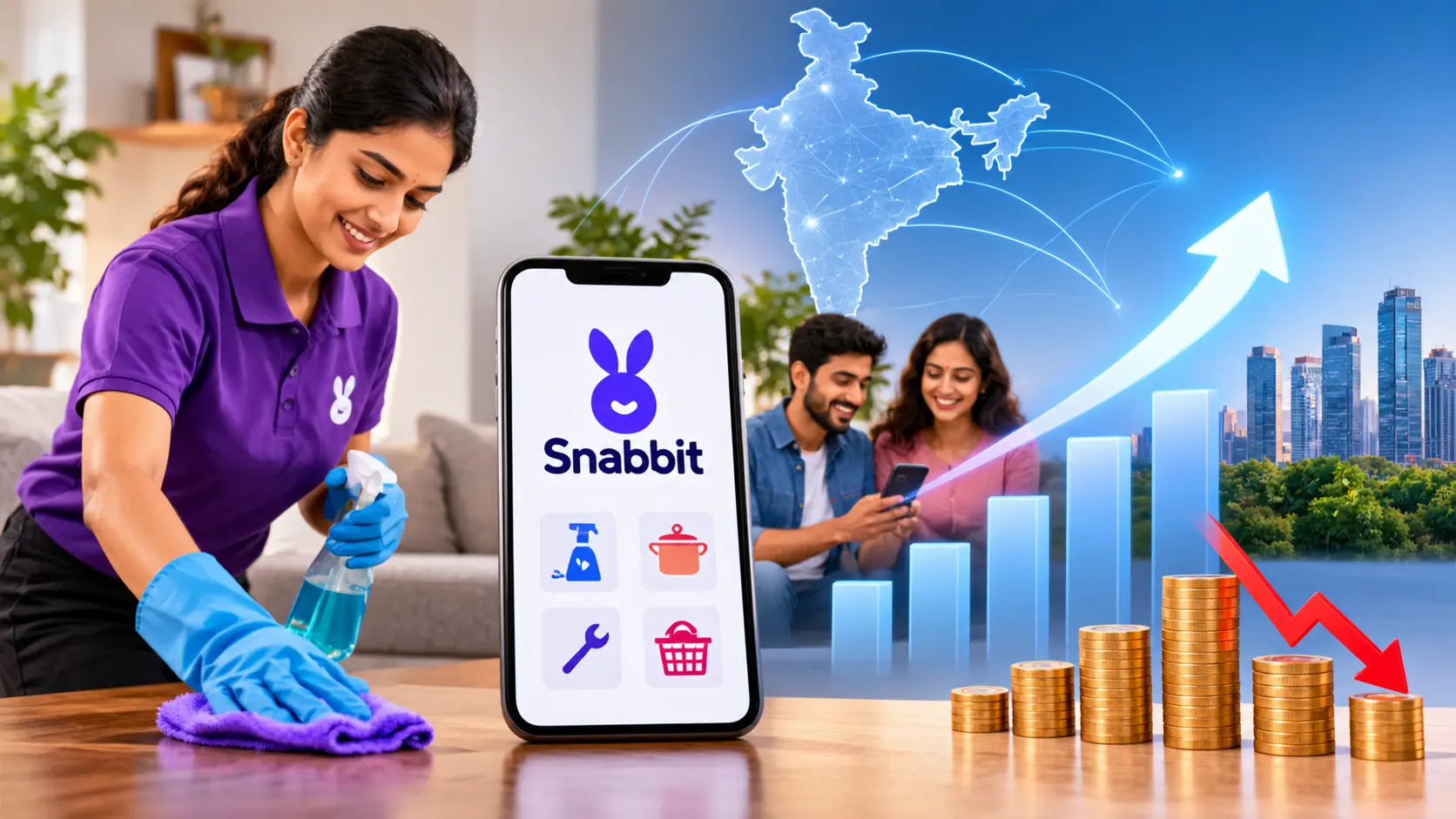
Snabbit, the on-demand home services platform operated by Maestroedge Solutions, reported a net loss of Rs 167.75 crore in the financial year 2025-26 (FY26). The company’s losses increased sharply from Rs 5.70 crore in FY25 as it stepped up spending on service providers, marketing, employees, and business expansion.
According to financial statements filed with the Registrar of Companies, the Mumbai-based startup recorded operating revenue of Rs 12.25 crore in FY26, compared with Rs 26.35 lakh in the previous financial year.
Platform services contributed Rs 10.82 crore to the company’s operating revenue, while sales of uniforms to service providers, whom Snabbit refers to as experts, generated another Rs 1.42 crore. The company also reported Rs 14.77 crore in other income, taking its total income to Rs 27 crore.
Snabbit’s total expenses increased significantly during FY26, reaching Rs 194.76 crore compared with Rs 6.81 crore in FY25.
The cost of engaging service providers was the company’s largest expense, amounting to Rs 63.07 crore, up from Rs 27 lakh a year earlier.
Marketing expenditure climbed nearly 60 times to Rs 48.69 crore as the company invested in attracting more customers and expanding its presence. Employee benefit expenses also rose substantially, increasing from Rs 3.27 crore to Rs 46.02 crore.
Meanwhile, service fulfilment expenses reached Rs 23.83 crore, compared with Rs 48 lakh in the previous financial year.
The sharp increase in expenditure reflects the investments required to expand an on-demand home services business, particularly one that relies on building a reliable network of service professionals and acquiring customers across multiple locations.
Founder and CEO Aayush Agarwal said FY26 was the company’s first full year of operations and that Snabbit deliberately invested ahead of its growth to establish a new category in the home services market.
According to Agarwal, the company began the financial year handling approximately 500 jobs a day across eight micro-markets. By the end of FY26, it had reached a run rate of 35,000 daily jobs across more than 100 micro-markets.
During the year, Snabbit served nearly one million customers and brought more than 20,000 service professionals onto its platform.
Agarwal attributed the company’s losses primarily to investments in geographical expansion, customer and service-provider acquisition, and the development of operational capabilities to support its long-term growth.
Founded in January 2024, Snabbit provides customers with access to domestic help through its digital platform. The company initially focused on household tasks such as cleaning and cooking, allowing customers to book assistance when they need it.
Its business model centres on making everyday household services easier to access through a technology-enabled platform.
As demand grows, the company must continue investing in its service network, customer acquisition, workforce, and operating infrastructure. These investments can increase costs in the short term while helping the business expand its reach.
As of March 31, 2026, Snabbit had 309 employees.
Agarwal, who owns 98.98% of the company's equity shares, received a salary of Rs 60 lakh in FY26, compared with Rs 15.47 lakh in FY25.
Agarwal said the company's FY26 financial results should be viewed in the context of its rapid expansion and the investments needed to establish the category.
He noted that the financial statements did not fully capture the business's underlying economics or its current level of maturity, given the pace at which the company had grown.
According to the founder, Snabbit is beginning to see the benefits of operating leverage, improved unit economics, and greater network density as it scales.
Operating leverage refers to the potential for a company's costs to grow more slowly than its revenue as the business expands. Better unit economics can also help improve the financial contribution of individual jobs, while a denser service network may improve the efficiency of matching customers with available professionals.
Snabbit's FY26 performance highlights the financial challenges involved in scaling an emerging home services platform. Although revenue increased significantly from the previous year, the company continued to spend heavily on building its workforce, expanding into new markets, and attracting customers.
The next stage of its growth will depend on how effectively it converts rising demand into more efficient operations and stronger unit economics.
For Snabbit, the challenge is to maintain its expansion while improving the relationship between revenue and expenditure. Whether its investments translate into a more sustainable business will become clearer as the platform grows and its operating model matures.
โปรด เพื่อแสดงความคิดเห็น
ยังไม่มีความคิดเห็น
ร่วมแสดงความคิดเห็นเป็นคนแรก
@heloix_news
Growth
@heloix_news
Growth

@heloix_news
Growth

ติดตามข้อมูลล่าสุดเกี่ยวกับเทคโนโลยี การเติบโตทางธุรกิจ และการเปลี่ยนผ่านสู่ดิจิทัล