
HN
@heloix_news
Tech
Comment
333
Shamita
The retail landscape is undergoing a permanent technological evolution. Modern consumers expect frictionless checkout experiences, real-time inventory visibility, and seamless omnichannel shopping. For tech entrepreneurs and software founders, addressing these modern demands presents an incredible market opportunity.
Rather than building basic cash registers, forward-thinking entrepreneurs are launching comprehensive retail pos system SaaS platform businesses. If you are aiming to get ready to launch retail pos system products into the market, understanding why this vertical is booming can help guide your go-to-market strategy.
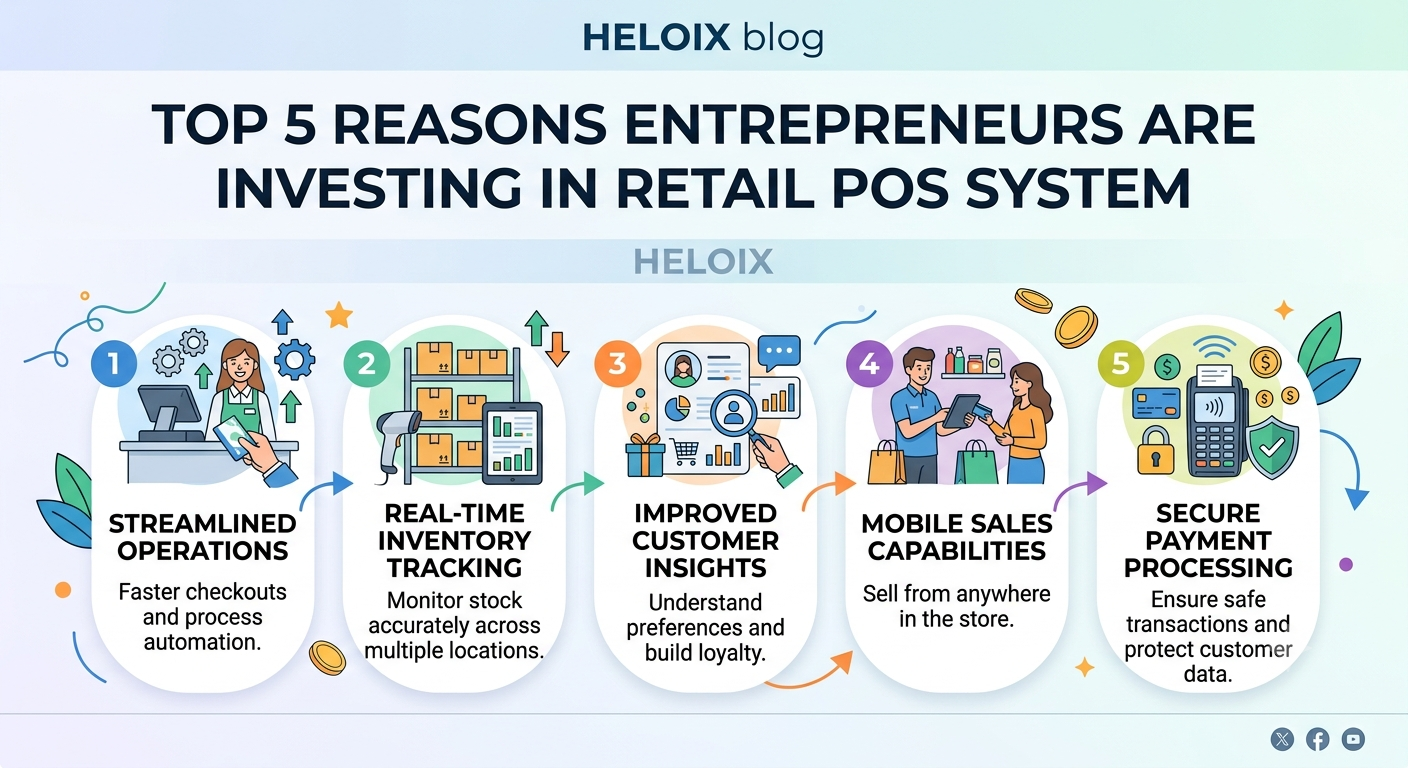
Here are the top 5 reasons entrepreneurs are heavily investing in retail POS systems today.
Traditional point-of-sale systems were isolated hardware tools used solely for processing cash or card payments. Today, retailers require unified commerce platforms that connect physical brick-and-mortar stores, online e-commerce websites, mobile apps, and marketplaces into a single synchronized hub.
Cloud-based POS systems dominate the market because they allow store owners to monitor real-time sales, manage multi-location inventories, and execute automatic updates remotely. Entrepreneurs who provide these robust cloud ecosystems are meeting an urgent, non-negotiable need for modern retailers.
For startup founders and software investors, cash flow predictability is a primary advantage. Modern POS software is predominantly sold on a Software-as-a-Service (SaaS) subscription model, often structured through monthly or annual tiered pricing per terminal or store branch.
Sticky Customer Relationships: Once a retailer integrates a POS system into their daily sales, inventory, and accounting workflows, switching costs are exceptionally high. This results in very low churn and high long-term customer retention.
Scalable Growth: As your merchant clients open new store locations or scale their transaction volume, your SaaS platform naturally scales right alongside them, expanding your lifetime value (LTV) and revenue predictability.
Building an enterprise-grade retail POS software infrastructure from scratch requires complex engineering—including secure payment gateway integrations, offline-sync capabilities, inventory database architecture, and strict PCI-DSS compliance.
This is why many entrepreneurs choose to launch retail pos system products using pre-built, scalable frameworks or white-label solutions. By bypassing years of core software engineering, founders can quickly brand the platform, customize user dashboards for specific retail niches (such as apparel, electronics, or grocery), and begin acquiring merchant clients with a minimized time-to-market.
A modern retail POS platform is much more than a billing interface; it serves as a complete retail command center. This structural versatility allows software founders to generate multiple streams of revenue:
Subscription Tiers: Charging base fees for basic checkout features while offering advanced modules (like AI-driven demand forecasting, employee performance tracking, and advanced CRM analytics) on higher pricing tiers.
Payment Processing Monetization: Earning transaction fees or revenue-sharing percentages on card payments, digital wallets, and contactless NFC transactions processed through the platform.
Hardware & Add-on Integration: Partnering with hardware providers for barcode scanners, receipt printers, and mobile POS terminals, or offering paid integrations with accounting tools like QuickBooks and Xero.
Retailers face intense margin pressures and require deep data insights to stay competitive. Modern POS solutions leverage artificial intelligence and automated analytics to track customer buying behavior, optimize stock availability, and minimize out-of-stock losses.
When your software helps store owners run faster checkout lines, eliminate manual pricing errors, and receive smart recommendations for inventory replenishment, you deliver immediate, measurable ROI. Building a product that directly improves business efficiency creates a powerful value proposition that sells itself.
The shift toward intelligent, cloud-powered retail infrastructure creates a lucrative window for software entrepreneurs. By leveraging flexible SaaS architectures and addressing the market's demand for seamless omnichannel experiences, you can establish a highly profitable and scalable tech enterprise.
If you are ready to launch retail pos system solutions, now is the ideal time to define your target retail niche, secure your technical stack, and capture your share of the booming retail tech economy.
Visual Description: A sleek, modern retail boutique checkout counter. A smiling store clerk is interacting with a compact tablet-based POS terminal, processing a contactless payment for a customer. In the background, a large digital display shows a clean dashboard with real-time inventory and sales analytics. The lighting is bright and inviting, emphasizing a seamless, high-tech retail environment.
Please to post a comment
No comments yet
Be the first to share your thoughts.
@heloix_news
Tech
@heloix_news
Tech

@heloix_news
Tech
Subscribe for the latest on technology, business growth and digital transformation.