
HN
@heloix_news
Launch
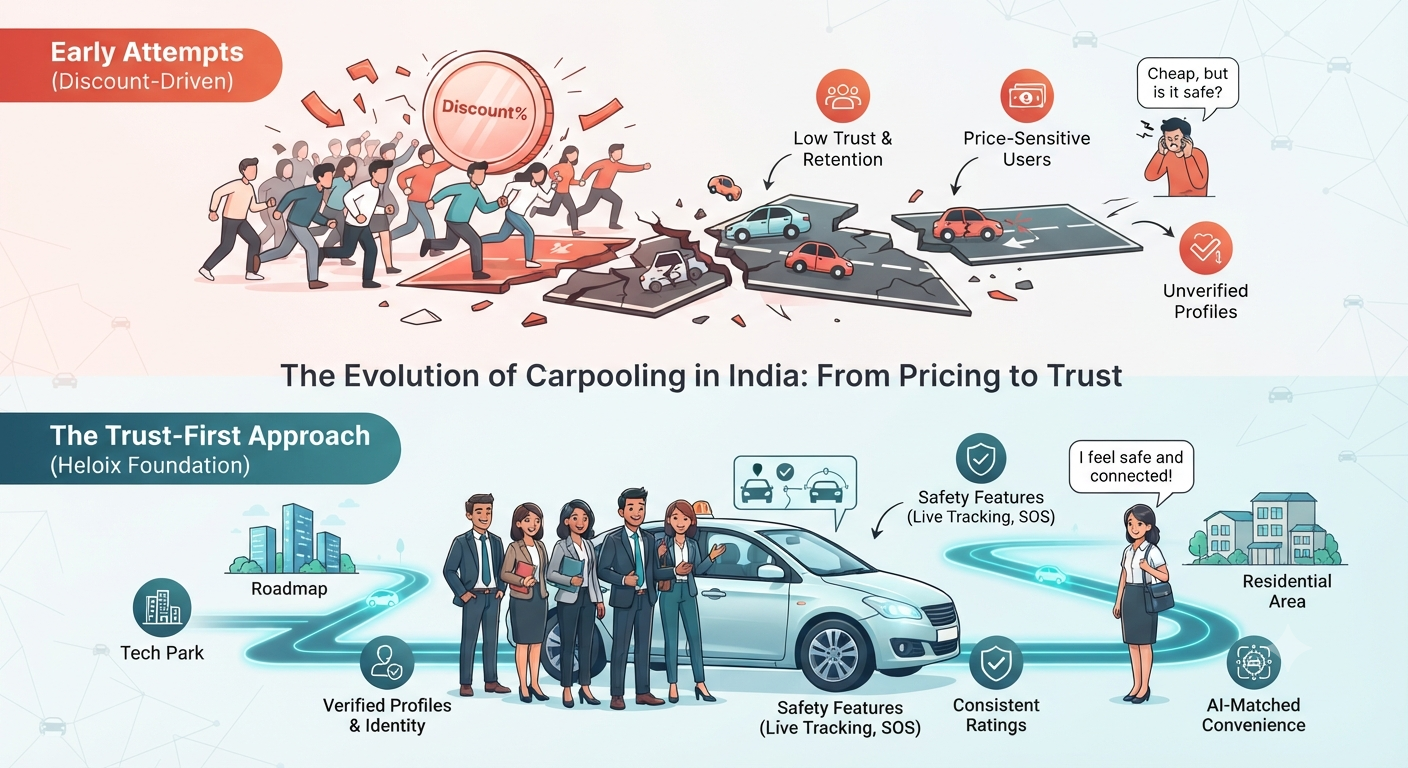
Carpooling Apps Are Making a Real Comeback in India, This Time Built Around Trust Signals, Not Just Discounts
#apps#carpooling
Comment
581

The way people send and receive packages has changed significantly over the past few years. Businesses need faster deliveries, online sellers want reliable shipping partners, and customers expect to track their orders without making repeated phone calls. This growing demand creates an opportunity for entrepreneurs who want to start a courier delivery business.
However, starting a courier service these days involves more than just hiring delivery workers and purchasing automobiles. Customers expect convenient booking, transparent pricing, real-time tracking, digital payments, and timely updates. A mobile app can bring these services together and make daily operations easier to manage.
If you are planning to enter this market, this courier delivery app startup guide will walk you through the essential steps, from choosing a business model to launching your app and attracting your first customers.
Courier services support a wide range of customers, including individuals, small businesses, online retailers, pharmacies, and corporate offices. Each group has different delivery requirements.
For example, an online seller may need regular pickups and affordable shipping rates, while a local business might require same-day delivery within a city. Individuals may simply want to send documents or packages to another location.
Before investing in an app, decide which customers you want to serve.
Some business opportunities worth exploring include:
Local courier services: Deliver documents, parcels, and small packages within a city.
Same-day delivery: Help businesses deliver urgent orders within a limited time.
E-commerce delivery: Work with online sellers that need dependable last-mile delivery.
Business-to-business courier services: Move supplies, samples, and paperwork between offices.
Specialized deliveries: Focus on specific customer requirements, such as temperature-controlled transportation, where you have the necessary infrastructure and compliance arrangements.
You do not need to serve every customer from day one. Starting with a specific market can help you understand demand, build reliable operations, and develop a clear reputation.
Your business model determines how you earn revenue, manage deliveries, and work with delivery partners.
Here are three common approaches.
Own-fleet model: You hire delivery agents and manage your own vehicles. This gives you greater control over service quality, but it also involves expenses such as salaries, fuel, vehicle maintenance, and insurance.
Partner-based model: You collaborate with independent delivery agents or existing courier operators. This approach can reduce the initial investment in vehicles, although you must establish clear service standards and partner agreements.
Courier marketplace model: Your platform connects customers who need deliveries with available delivery providers. You earn through commissions, booking fees, or subscriptions, depending on your business arrangement.
Choose a model based on your budget, local demand, and ability to manage logistics. You can also begin with a small delivery team and expand your network as order volumes increase.
A courier app may offer excellent features and still struggle if there are not enough customers in its service area. You may avoid this issue by conducting market research.
Start by studying the courier companies already operating in your target location. Compare their delivery charges, service areas, estimated delivery times, pickup options, and customer reviews.
Next, speak directly with potential customers. Ask local retailers, online sellers, offices, and individuals about their current delivery problems. Find out whether they need faster service, easier booking, better tracking, or more predictable pricing.
Pay attention to the following questions:
How many potential customers need courier services regularly?
Which delivery areas have limited or unreliable service?
What prices are customers willing to pay?
Which package sizes and delivery times are most common?
What would convince customers to switch from their existing provider?
Use these findings to define your initial service area and pricing strategy. Launching in a smaller area where you can provide dependable service is often more practical than covering an entire city immediately.
The app should make the delivery process easier for customers and your operations team. Numerous features are not required at launch. Focus on the functions that solve real problems.
Customers should be able to register, enter pickup and delivery addresses, provide parcel details, view estimated charges, and place orders.
Other useful features include:
Multiple payment options
Delivery status notifications
Real-time tracking, where supported by your tracking system
Booking history and digital receipts
Delivery instructions and contact details
Customer support and complaint handling
A simple booking process is particularly important. If customers need to complete too many steps to send a package, they may choose another service.
Delivery agents need a separate interface for managing assigned orders and updating delivery progress.
Useful features include job acceptance, pickup and drop-off details, navigation integration, status updates, proof of delivery, and earnings information.
Proof of delivery can include a recipient confirmation, signature, photograph, or one-time password, depending on the delivery process and privacy requirements.
The admin dashboard gives you control over daily operations. It should help you manage customer accounts, delivery agents, bookings, pricing, service areas, payments, and customer complaints.
Reports on completed deliveries, failed attempts, cancellations, and revenue can help you identify operational problems before they become expensive.
Your startup costs will depend on whether you build a custom application, use existing software, or begin with a smaller operational setup.
Common expenses include software development, hosting, maps and tracking services, payment processing, delivery agent compensation, marketing, customer support, insurance, and business registration.
There is no single budget that works for every courier startup. Request quotations based on your required features and expected order volume rather than relying on a generic development estimate.
You should also determine how the company will make money.
Possible revenue sources include:
Per-delivery charges
Additional fees for express or scheduled deliveries
Monthly plans for business customers
Contracts with retailers and e-commerce sellers
Commissions from delivery partners
Calculate the cost of completing an average delivery before setting your prices.
For example, if a customer pays $8 for a delivery but the combined cost of the delivery agent, fuel, payment processing, and operational support is $7, your remaining $1 must still contribute toward fixed expenses and profit.
This calculation helps you avoid growing order volumes while losing money on every delivery.
Building an app from scratch offers flexibility, but the process can require considerable time, technical expertise, testing, and investment. You also need a plan for updates, bug fixes, and ongoing maintenance.
Ready-made software can be a practical alternative for entrepreneurs who want to validate their business idea before committing to a larger development project.
Platforms such as heloix.com offer ready-made, customizable software products that can help businesses get started with a suitable foundation instead of developing every component from the beginning. Before choosing any solution, confirm that its available features, customization options, integrations, and licensing terms match your courier business requirements.
Compare the total cost of ownership, not just the initial price. Ask about scalability, security, data ownership, technical support, and whether the product supports customer, delivery agent, and administrative workflows.
Whichever option you choose, test the complete delivery process before accepting real orders.
Your legal and operational responsibilities depend on the country and region where you plan to operate.
You may need business registration, tax registration, commercial vehicle documentation, insurance, contracts with delivery partners, and appropriate employment arrangements. Certain deliveries, including medicines, hazardous materials, or other regulated goods, may require additional permissions.
You should also establish clear policies for cancellations, refunds, lost packages, damaged goods, customer data, and delivery disputes.
If your app collects names, addresses, phone numbers, location information, or payment-related data, protect that information through appropriate security controls and transparent privacy practices.
Consult local authorities or a qualified professional to confirm the requirements that apply to your business before launch.
Do not wait until your app is publicly available to discover problems with bookings, payments, or delivery assignments.
Run a pilot with a limited number of customers and delivery agents. Test different situations, including successful deliveries, incorrect addresses, cancelled orders, failed payments, delayed pickups, and unavailable delivery agents.
Check whether customers receive accurate updates and whether administrators can resolve problems quickly.
Pay attention to the experience on different devices and internet connections. Make sure the app communicates clearly when an order is delayed or a delivery attempt fails.
Collect feedback from everyone involved. A delivery agent may identify a navigation issue that customers never notice, while a business customer may request a more convenient way to repeat regular bookings.
Fix the most important problems before expanding your service area.
Once your system and delivery operations are ready, begin with a focused launch rather than spending heavily on advertising immediately.
Approach local retailers, small e-commerce businesses, offices, and other organizations that regularly send packages. Business customers can provide recurring orders and help you plan delivery routes more efficiently.
You can also promote your service through a website, local search listings, social media, referral offers, and partnerships with businesses in your delivery area.
Make your service area, pricing, pickup process, and delivery estimates easy to understand. Avoid promising delivery times you cannot consistently meet.
During the first few weeks, monitor completed deliveries, on-time performance, repeat bookings, customer acquisition costs, and complaints. These numbers will help you decide whether to improve your operations, adjust pricing, or expand into another location.
Launching the app is only the beginning. A successful courier business depends on reliable service and continuous improvement.
Track metrics such as:
On-time delivery rate: The percentage of deliveries completed within the promised timeframe.
Delivery success rate: The percentage of orders delivered successfully.
Cost per delivery: The average operating cost of completing an order.
Repeat customer rate: The percentage of customers who place additional orders.
Customer acquisition cost: How much you spend to acquire a customer.
Average revenue per order: The revenue generated by each completed booking.
Review these numbers regularly to understand where your business is performing well and where it needs attention.
Once you have stable operations and consistent demand, consider adding more delivery agents, expanding your service area, introducing business subscriptions, or integrating with e-commerce platforms.
Growth should follow operational readiness. Taking on more orders than your team can handle may damage customer trust and create unnecessary costs.
Starting a courier delivery business in 2026 requires more than a functional mobile app. You need a clear business model, a defined target market, dependable delivery operations, sensible pricing, and a plan for attracting repeat customers.
Use this courier delivery app startup guide to turn your initial idea into a practical business plan. Start with a specific customer group, build only the features you need, test your service on a small scale, and improve it using real customer feedback.
If your goal is to launch courier delivery app services without taking on unnecessary development complexity, evaluate whether existing software can meet your requirements. A ready to launch courier delivery app solution may shorten your path to market, provided it supports your business model and can deliver a reliable customer experience.
The real advantage does not come from launching first. It comes from solving delivery problems consistently enough that customers choose your service again.
Please to post a comment
No comments yet
Be the first to share your thoughts.
@heloix_news
Launch
@heloix_news
Launch
@heloix_news
Launch

Subscribe for the latest on technology, business growth and digital transformation.