
HN
@heloix_news
Launch
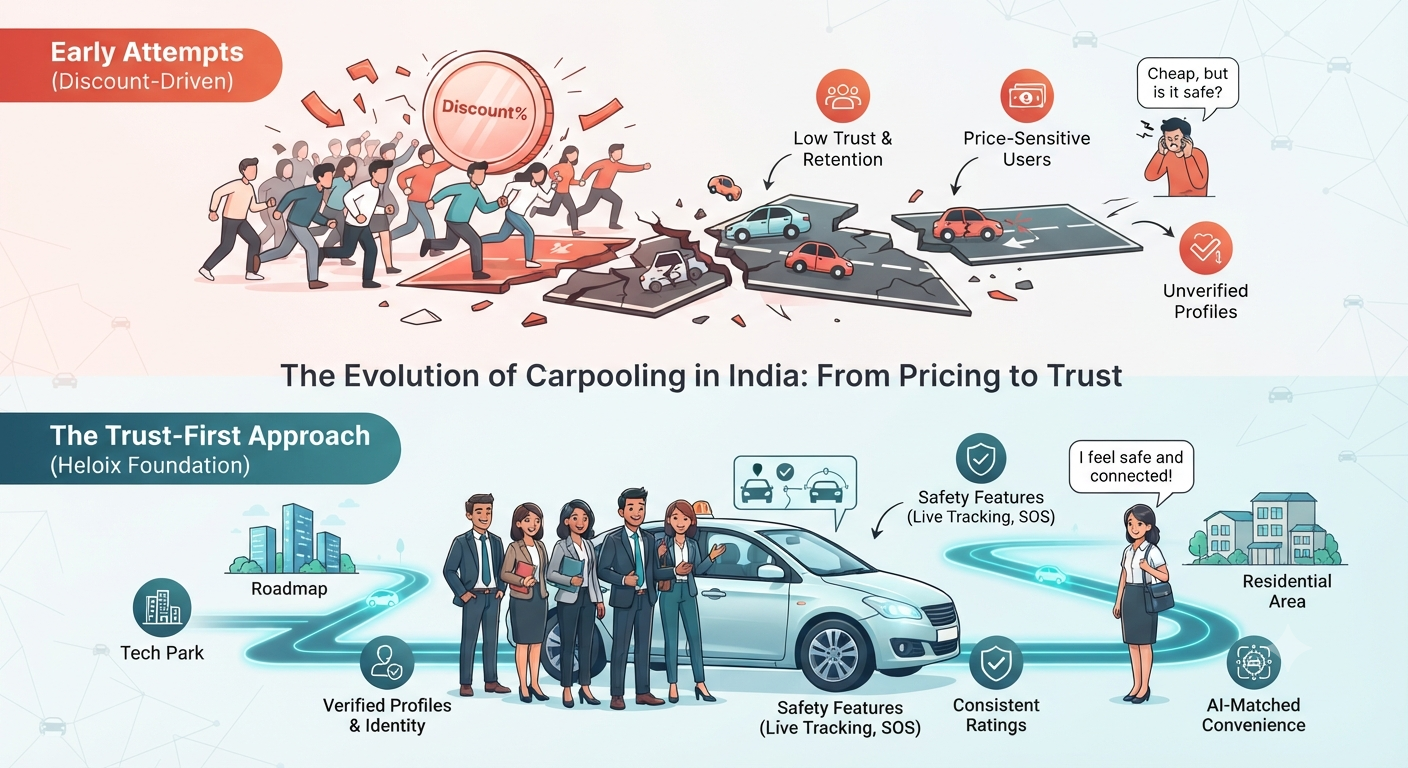
Carpooling Apps Are Making a Real Comeback in India, This Time Built Around Trust Signals, Not Just Discounts
#apps#carpooling
Comentar
882
Mahesh P

Entrepreneurship does not have to begin in a metropolitan city. With the right guidance, technology, and access to local opportunities, young people can turn problems in their communities into viable businesses. This is the idea behind ShuruKar, an initiative launched in Patna to encourage entrepreneurship across India's districts.
Introduced by YourStory's The Bharat Project in partnership with the Department for Promotion of Industry and Internal Trade (DPIIT) and Startup India, ShuruKar aims to help aspiring entrepreneurs move from identifying a local problem to developing a business and acquiring their first customer.
The initiative was launched at Dr. APJ Abdul Kalam Science City in Rajinder Nagar, Patna, on October 10, 2026. The event brought together Bihar's Urban Development and Housing Minister Nitish Mishra, entrepreneurs, students, and aspiring founders from across the state.
For many aspiring entrepreneurs, a lack of access to mentorship, business networks, and practical guidance can make the first step difficult. ShuruKar aims to address these challenges by creating a pathway for people who want to start businesses but are unsure how to turn their ideas into reality.
Shradha Sharma, Founder and CEO of YourStory and Founder of The Bharat Project, explained that the initiative represents a move beyond simply sharing entrepreneurial success stories. It focuses on helping more people become entrepreneurs themselves.
After spending years documenting founders' experiences, Sharma highlighted the need to make entrepreneurial opportunities more accessible. She emphasized that talent and ambition exist throughout India, even in places where the support needed to build a business may be harder to find.
Her message to young people was straightforward: aspiring founders do not need to have every answer before beginning. Taking the first step and learning along the way can help them move closer to building something of their own.
Sharma also pointed to cities such as Patna, Gaya, Darbhanga, and Muzaffarpur as places where India's next generation of entrepreneurs can emerge. Through ShuruKar, the aim is to support these founders as they identify problems, develop solutions, and work towards securing their first customers.
Nitish Mishra, Bihar's Minister for Urban Development and Housing, addressed the challenges entrepreneurs face while building their businesses. He noted that the struggles behind a successful venture often receive less attention than the eventual results.
He encouraged young people not to allow these difficulties to discourage them from pursuing their ambitions.
Mishra also spoke about the gap between public perceptions of Bihar and the changes taking place within the state. According to him, efforts are being made to encourage entrepreneurship and support the development of new businesses.
He urged young people to make use of the opportunities and support available to them and to take a more active role in building businesses.
The message aligns with ShuruKar's broader objective of encouraging enterprise creation in districts that may not receive the same attention as India's established startup centres.
ShuruKar follows a four-stage approach designed to help participants progress from an initial observation to a functioning business.
The process begins by identifying a genuine problem in the participant's district. Rather than starting with a business idea simply because a particular industry is popular, participants are encouraged to look at the challenges faced by people around them.
These problems can provide the starting point for products or services that address local needs.
Once a problem has been identified, participants can use an AI Copilot to refine their ideas and determine the next steps.
The tool is intended to help aspiring founders think through their proposed solutions and develop a clearer direction for their business concepts.
The next stage focuses on mentorship. Experienced founders provide guidance and practical support as participants work to develop their businesses.
The objective is to help aspiring entrepreneurs navigate the early stages of building a venture and progress towards acquiring their first customer.
ShuruKar also aims to connect participants with opportunities within their own districts. Access to local markets, business networks, and potential partners can help founders understand demand and develop relationships that support their growth.
By combining these four stages, the initiative seeks to make entrepreneurship a more practical option for people who want to build businesses in their hometowns.
ShuruKar is designed to operate through existing government structures rather than establish a separate government scheme. The initiative also does not seek government funding, according to the launch announcement.
The launch event also included the announcement of the ShuruKar Challenge, an initiative inviting participants to propose solutions to some of India's pressing problems.
The challenge complements the platform's emphasis on identifying problems at the local level and developing solutions that can become sustainable enterprises.
For aspiring entrepreneurs, this approach offers a way to begin with challenges they understand firsthand. Local knowledge can help founders recognize unmet needs, understand potential customers, and develop solutions suited to their communities.
The launch featured addresses by invited dignitaries, followed by keynote sessions from Amar Dixit, CEO of WOI India, and Johnson Tellis, Co-Founder and CEO of InUnity.
Entrepreneurs also shared their experiences with the audience and answered questions from young people interested in starting their own ventures.
These interactions gave aspiring founders an opportunity to hear about the realities of entrepreneurship directly from people with experience building businesses.
The event concluded with the phrase "Hokar Nidar, ShuruKar," reinforcing the initiative's central message: young people should not limit themselves to searching for employment when they can also explore opportunities to create businesses and jobs.
India's startup ecosystem extends beyond its largest cities, but aspiring founders in smaller towns and districts may need additional guidance to turn their ideas into viable businesses.
ShuruKar aims to address this gap by bringing together AI-based assistance, mentorship, and access to local business opportunities within a structured process.
Its emphasis on district-level problem-solving also encourages entrepreneurs to look at the needs of their immediate communities rather than assuming that a successful business must begin in a major urban centre.
The initiative's impact will ultimately depend on how effectively participants can turn their ideas into sustainable ventures and gain access to the customers and networks they need.
Still, its underlying approach offers an important message for aspiring founders: a business opportunity may already exist in the community they know best.
By encouraging young Indians to recognize local challenges, develop practical solutions, and take their first steps towards entrepreneurship, ShuruKar aims to make business creation more accessible across the country.
Por favor, para publicar un comentario
Aún no hay comentarios
Sé el primero en compartir tu opinión.
@heloix_news
Launch
@heloix_news
Launch
@heloix_news
Launch

Suscríbete para estar al tanto de tecnología, crecimiento empresarial y transformación digital.