
HN
@heloix_news
EdTech
Comment
277
Mahesh P

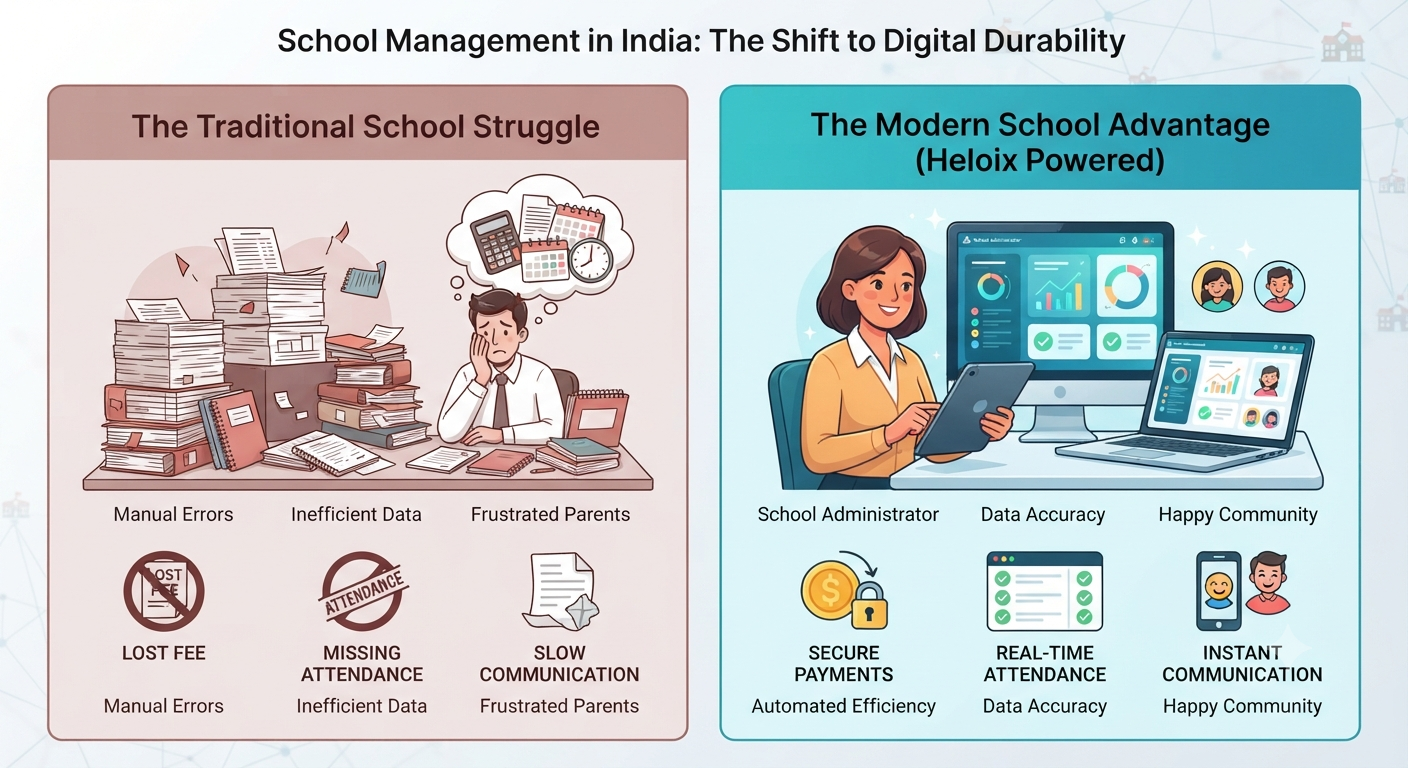
Schools today handle a large amount of information every day. Student records, attendance, fees, exams, teacher schedules, communication, assignments, and administrative tasks all need to be managed properly.
Doing all of this manually can take a lot of time. Spreadsheets and separate software tools may help with individual tasks, but they can also leave information scattered across different systems.
This is where school management software comes in.
For entrepreneurs, this creates an opportunity to build a software business that solves a real problem for schools. You do not necessarily need to create an entirely new type of software. The goal is to offer a useful platform that makes everyday school operations easier.
If you are considering this market in 2026, this guide explains the basics of the school management software business model, what you need to launch school management software, and how to prepare it for the market.
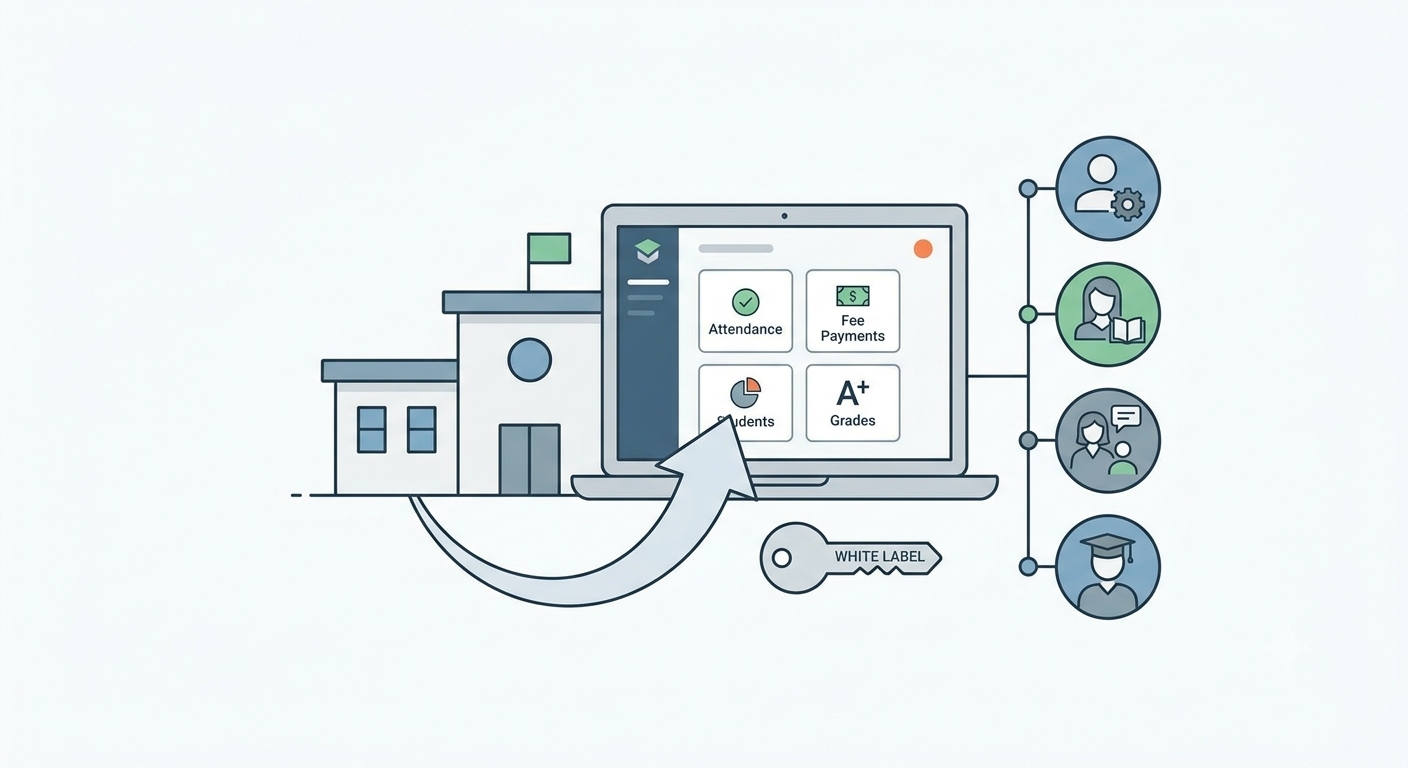
School management software is a digital platform designed to help schools manage their administrative and academic activities from one place.
Depending on the product, it can include features such as:
Student registration and profiles
Attendance management
Fee collection and payment records
Examination and result management
Class and timetable management
Teacher and staff management
Parent communication
Homework and assignments
Notifications
Reports and analytics
The exact features depend on the needs of the target schools.
A small private school may need a simpler system focused on attendance, fees, student records, and communication. A larger school may need more advanced features and support for multiple departments or campuses.
That difference is important when planning your product.
Schools are becoming more comfortable with digital tools for routine administrative work. Teachers, administrators, parents, and students may all interact with technology during the school day.
This does not mean every school needs a complicated platform.
In fact, simplicity can be an advantage.
School administrators often want software that is easy to understand, reliable, and practical. If a system takes too long to learn or requires unnecessary steps for simple tasks, staff may be reluctant to use it.
This gives entrepreneurs room to create products around specific school requirements.
You can also choose a particular market instead of trying to serve every type of educational institution. For example, you could focus on private schools, small schools, coaching institutions, or schools with multiple branches.
Before building your product, you need to decide how the business will make money.
A subscription-based model is one common approach. Schools pay a monthly or annual fee to use the software. Pricing can depend on factors such as the number of students, users, features, or campuses.
Another approach is to offer different plans.
For example, you could have a basic plan for smaller schools and higher-priced plans with additional features, reports, integrations, or support.
You could also offer a setup fee for onboarding and customization.
The right school management software business model depends on your target customers and operating costs. It is worth considering expenses such as hosting, customer support, maintenance, payment processing, marketing, and future development before deciding on pricing.
Do not build your pricing around competitors alone. First understand what your customers actually need and what it will cost you to operate the service.
One of the first practical steps is choosing your target customer.
Trying to build software for every school from the beginning can make the product unnecessarily complicated.
Ask questions such as:
What type of schools will use the platform?
How many students do they typically have?
Who will purchase the software?
Who will use it every day?
What problems do administrators currently face?
Which features are essential?
What budget might the school have?
The person buying the software may not be the person using every feature.
A school owner or administrator might make the purchasing decision, while teachers, accountants, office staff, students, and parents may use different parts of the system.
Understanding these users can help you decide which features deserve attention first.
A school management platform can contain many features, but you do not need to include everything immediately.
A practical starting product could include student management, attendance, fees, examinations, communication, and reporting.
Student management can provide a central place for storing student information.
Attendance tools can allow teachers or administrators to record attendance and generate reports.
Fee management can help schools track payments, outstanding amounts, receipts, and related records.
Examination features can help manage schedules, marks, grades, and report cards.
Communication features can allow schools to send announcements or updates to parents and students.
Reporting can bring information from different parts of the system together so administrators can understand what is happening across the school.
The important point is to build features around actual workflows rather than simply creating a long feature list.
Once you understand your audience and product requirements, you can begin preparing the software for launch.
Start by defining the minimum version that schools can actually use. This is often better than spending months building advanced features that customers may never need.
The development process normally involves interface design, backend development, database setup, authentication, testing, security, payment integration, hosting, and deployment.
You also need to think about data protection from the beginning. School software can contain sensitive information about students, parents, teachers, and staff. Access controls, secure authentication, backups, and appropriate data-handling practices should therefore be part of your planning.
Testing is another important stage.
Test the platform from different user perspectives. A teacher may need a quick way to mark attendance, while an administrator may need detailed reports. Parents may care more about receiving notifications and checking information.
A system can technically work while still being frustrating to use, so real-world testing matters.
Building software from scratch is not the only option.
If your goal is to start the business rather than spend all your time developing the underlying technology, a ready-made platform can reduce the amount of development work involved.
Products from platforms such as heloix.com can provide ready-made or customizable software that businesses can use as a starting point instead of developing an entire system from scratch.
This can be useful when you want to focus more on branding, customer acquisition, customization, sales, and support.
However, you should still evaluate the product carefully before choosing it. Check its features, customization options, source-code availability if required, scalability, technical support, security, and licensing terms.
A ready-made product saves development time only when it fits your business requirements.
Your software needs more than technical features.
Create a clear brand that tells schools what the product does. Your website should explain the main benefits in simple language instead of filling every page with technical terminology.
Your pricing page should also be easy to understand.
You could offer plans based on student count, school size, features, or usage. If you provide customization or onboarding services, explain what is included.
Consider offering a product demonstration or trial where appropriate. School administrators may want to see how the system works before committing to a subscription.
Getting the first customers can be harder than creating the software.
Start with direct research.
Speak with school administrators, teachers, and education service providers. Ask about the problems they face with their current processes. Their answers can help you improve the product and your sales message.
You can also use content marketing to reach school owners and administrators searching for solutions online.
Useful topics might include school attendance management, digital fee collection, student information systems, online examination management, and ways to reduce administrative work.
Local networking and direct outreach can also help, particularly if you are targeting schools in a specific region.
Your first customers can provide valuable feedback that helps shape future versions of the product.
Before making the software available to customers, go through a final checklist.
Make sure the main features work correctly and user accounts have appropriate permissions. Check the payment process, notifications, reports, backups, and mobile experience.
You should also prepare customer support.
Create basic documentation explaining how users can perform common tasks. Decide how customers can contact you when they have a problem.
Finally, make sure your website clearly explains who the product is for, what it does, how much it costs, and how interested schools can get started.
Starting a school management software business in 2026 can involve both technical and business decisions. The software needs to solve genuine problems, but the business also needs a clear target market, pricing strategy, customer support plan, and way to attract schools.
You do not have to build the most feature-heavy platform from the beginning.
A focused product that handles common school tasks well can be easier to launch, test, and improve.
Whether you build the software yourself or use an existing platform as a starting point, spend time understanding your customers before making major product decisions. A clear understanding of their daily problems can help you create a school management solution that is useful beyond its initial launch.
Please to post a comment
No comments yet
Be the first to share your thoughts.
@heloix_news
EdTech
@heloix_news
EdTech
@heloix_news
EdTech

Subscribe for the latest on technology, business growth and digital transformation.