HN
@heloix_news
AI/ML

Komentar
1.2K
Mahesh P
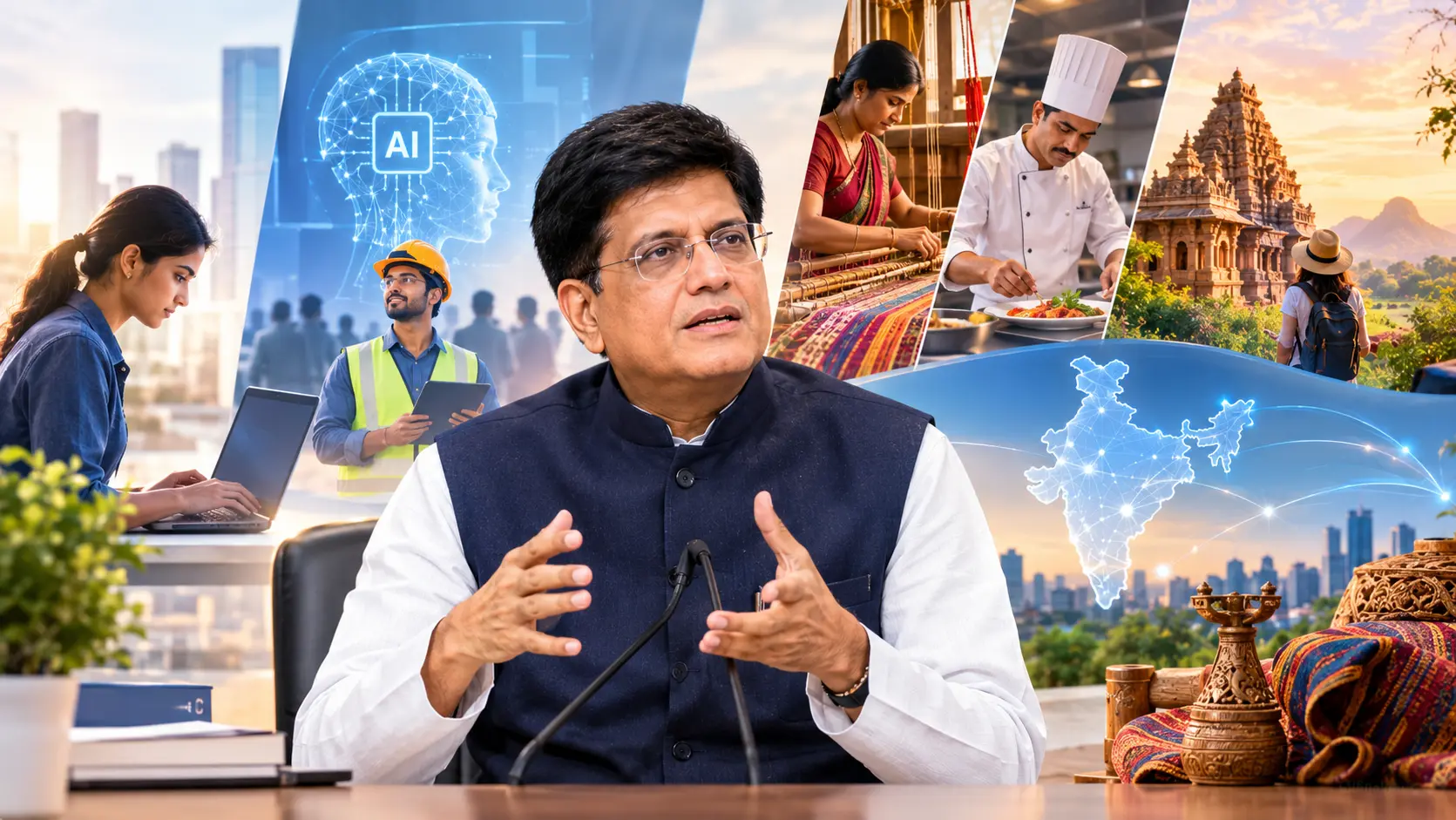
The Commerce Ministry is working to identify professions that are less vulnerable to artificial intelligence (AI), as India looks to prepare its workforce for technological change and strengthen its position in the global economy, Union Commerce and Industry Minister Piyush Goyal said.
The initiative aims to identify areas where AI can improve productivity and efficiency without necessarily replacing human workers. It will also focus on making better use of India's skilled workforce, young population and traditional expertise.
Speaking to Indian researchers and students in Germany on Friday, October 23, Goyal said he had asked his ministry to begin examining professions that could remain relevant as AI transforms industries and employment.
He said India needed to plan for the future of millions of people by understanding which sectors could benefit from AI while continuing to rely on human skills and expertise.
Goyal identified handicrafts, handlooms, culinary arts and tourism as areas where India could establish a stronger position in global markets.
According to the minister, these sectors draw on traditional knowledge, craftsmanship and human creativity—qualities that are difficult for AI to replicate completely.
He said India should concentrate on developing industries where the country already has distinctive strengths, using its talent pool and cultural heritage to create new economic opportunities.
The broader objective, Goyal noted, is to ensure that the country's population of around 1.4 billion benefits from future technological and economic growth.
When asked whether the government would introduce incentives to support these sectors, Goyal said assistance would depend on individual requirements and available opportunities.
He explained that the approach would involve a combination of initiatives led by the government, private businesses, communities and other stakeholders.
Rather than relying exclusively on financial support or government programmes, the focus would be on identifying practical ways to strengthen sectors with long-term growth potential.
During his interaction in Germany, Goyal also discussed efforts to encourage Indian researchers, engineers and scientists working overseas to return and contribute to the country's development.
He said he had invited researchers and students to share what would make them consider returning to India and what kind of support they would need to pursue their careers there.
Goyal observed that financial incentives alone might not be enough to attract skilled professionals. A supportive research environment, access to resources and a strong professional ecosystem would also be important.
He said he planned to discuss these issues with government and private educational institutions, universities, research organisations and industry representatives to explore stronger partnerships between academia and businesses.
Such collaboration, he indicated, could help India make better use of its scientific and technical talent while encouraging innovation.
Goyal also highlighted a growing interest among some Indian students in Germany in returning home after completing their studies.
According to figures cited during the visit, Germany has approximately 330,000 people of Indian origin and around 60,000–70,000 Indian students.
The minister said many students were increasingly interested in applying their international education and experience to India's development rather than pursuing careers abroad indefinitely.
He was visiting Germany to discuss ways to strengthen trade, investment and industrial cooperation between India and Germany.
As AI continues to reshape workplaces and industries, the government's effort to identify AI-resistant professions reflects a broader push to combine technological adoption with employment opportunities, traditional expertise and a stronger domestic research ecosystem.
Silakan untuk mengirim komentar
Belum ada komentar
Jadilah yang pertama menuliskan pendapat.
Berlangganan untuk info terbaru tentang teknologi, pertumbuhan bisnis, dan transformasi digital.