
HN
@heloix_news
EdTech
Top 5 Reasons Entrepreneurs Are Investing in School Management Software
#Edtech#school#technology
Comment
527
Shamita
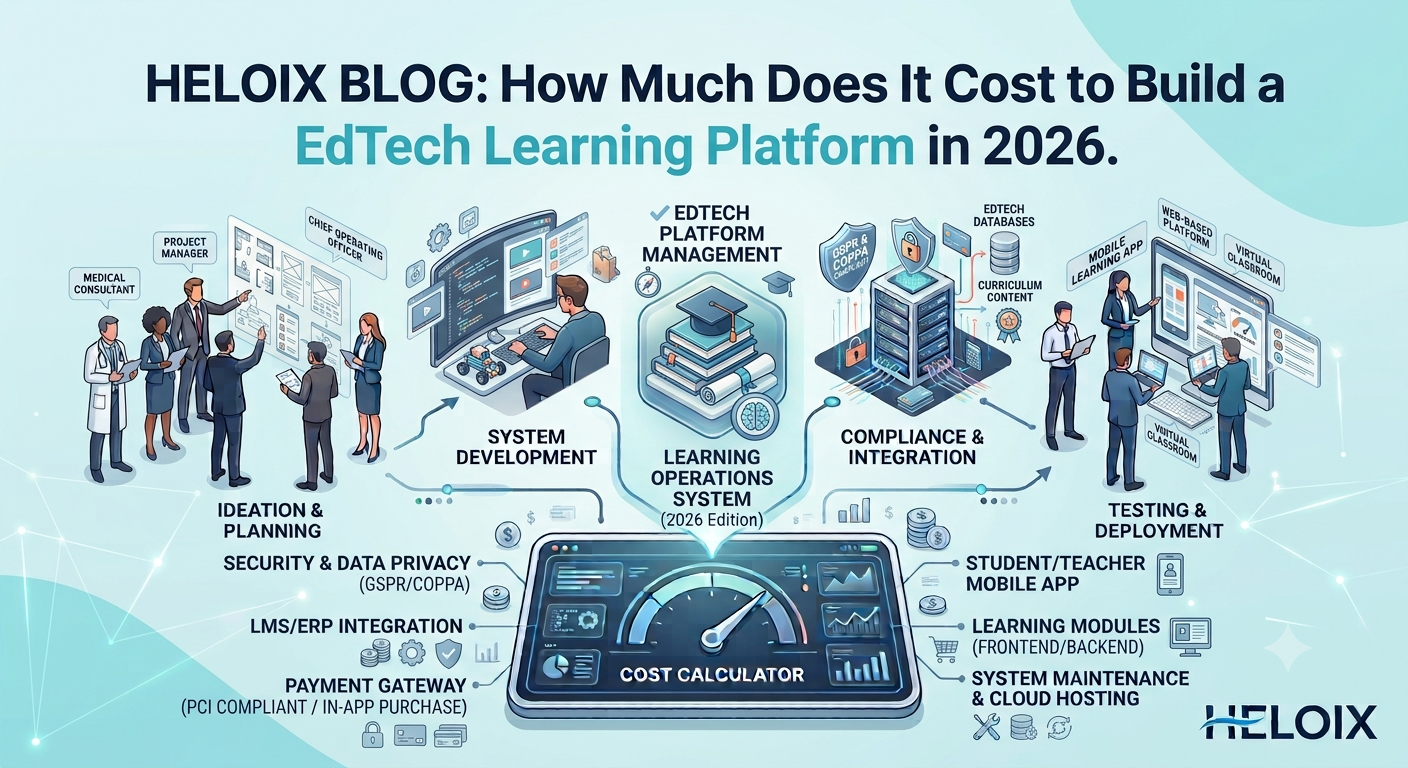
The global education technology market has evolved far beyond static video players and basic PDF downloads. Today’s digital learning ecosystems incorporate generative AI tutors, live interactive virtual classrooms, gamified learning paths, automated assessment engines, DRM content protection, and multi-tier subscription models.
Understanding the total financial requirement to launch an EdTech platform depends on your build path: renting software on SaaS monthly plans (like Teachable or Kajabi), building proprietary software from scratch, or deploying a ready-to-launch white-label solution with full source code access. Below is a detailed cost analysis, operational expense guide, startup business models, and a step-by-step launch framework.
The cost of developing an EdTech platform depends primarily on user role requirements (Student, Instructor, Admin, Parent), real-time streaming infrastructure, AI personalization features, and native mobile application builds (iOS & Android).
  ┌──────────────────────────────────────────────────────────┐
  │ 1. Core LMS / Course Marketplace: $3,000 – $8,000        │
  │    (₹1,50,000 – ₹6,00,000 in India)                      │
  └─────────────────────────────┬────────────────────────────┘
                                │
                                ▼
  ┌──────────────────────────────────────────────────────────┐
  │ 2. Interactive / Live Streaming App: $10,000 – $25,000   │
  │    (₹8,00,000 – ₹20,00,000 in India)                     │
  └─────────────────────────────┬────────────────────────────┘
                                │
                                ▼
  ┌──────────────────────────────────────────────────────────┐
  │ 3. Enterprise AI & Multi-Tenant Platform: $30,000 – $80,000+│
  │    (₹25,00,000 – ₹65,00,000+ in India)                   │
  └─────────────────────────────┴────────────────────────────┘
| System Scope | Core Included Modules & Capabilities | Global Cost (USD) | Cost in India (INR) |
| Core LMS / Course Marketplace | Course authoring, video-on-demand (VOD), quizzes, payment gateway checkout, student dashboards, completion certificates. | $3,000 – $8,000 | ₹1,50,000 – ₹6,00,000 |
| Interactive Live App / Tutoring Hub | 1-on-1 / group live video classes (SDK integration), calendar scheduling, doubt clearing forums, parent tracking portals, gamified rewards. | $10,000 – $25,000 | ₹8,00,000 – ₹20,00,000 |
| Enterprise AI & Multi-Tenant Platform | AI learning assistant/tutor, adaptive testing, DRM video security (anti-piracy), offline viewing mode, enterprise B2B licensing. | $30,00,000 – $80,000+ | ₹25,00,000 – ₹65,00,000+ |
Video Streaming Architecture & Bandwidth: Video hosting requires dedicated streaming infrastructure (AWS CloudFront, Cloudflare Stream, Vimeo OTT) to deliver low-latency video without server crashes.
Digital Rights Management (DRM) & Piracy Protection: Preventing screen recording and unauthorized video downloading requires DRM encryption pipelines (Google Widevine, Apple FairPlay).
Interactive Features & AI Personalization: Integrating real-time video SDKs (Zoom, ZegoCloud), gamification engines, or AI chatbots for instant homework assistance adds API and database logic.
Cross-Platform Mobile Apps: Building dedicated native iOS and Android mobile applications alongside a responsive web portal increases development and testing hours.
Building the platform is only the baseline; long-term budget planning must account for ongoing operational expenses:
Video Hosting & CDN Bandwidth: Storage and streaming bandwidth fees scale based on active student viewing hours ($50 to $500+/month).
Payment Processing & Commission Fees: Merchant checkout fees (1.5% to 3.5%) charged by gateways (Stripe, Razorpay, PayPal).
Transactional Communication APIs: Per-message charges for automated WhatsApp/SMS notifications for class schedules, OTPs, and subscription billing receipts.
Maintenance & Security Audits: Regular server patches, OS compatibility updates, and database back-ups run 10% to 15% of the initial software value annually.
When launching an EdTech platform, select a monetization model that aligns with your audience:
B2C Course Marketplace (Udemy/Coursera Model): Individual creators or expert instructors list paid courses; the platform takes a 15%–40% revenue commission split per sale.
Subscription Pass (Skillshare Model): Students pay a recurring monthly/annual membership fee for unlimited access to the entire content library.
B2B Enterprise Corporate LMS: Licensing course libraries to corporate HR departments for internal employee training on a per-seat annual contract basis.
Live Micro-Tutoring Platform: Pay-per-session or hourly booking tokens for live 1-on-1 virtual tutoring and exam prep sessions.
Building a custom EdTech platform from scratch requires hiring specialized full-stack engineers, video delivery architects, and UI/UX designers, taking 4 to 9 months of development.
Utilizing a ready-to-launch white-label EdTech learning platform provides a faster, highly cost-effective alternative:
Instant Market Launch: Deploy a production-ready, custom-branded EdTech web and mobile app ecosystem under your own brand in days instead of months.
Zero Transaction Revenue Share: Buy wholesale or license the source code once, eliminating ongoing revenue-share penalties or per-student platform fees.
Pre-Built Core Modules: Pre-configured out of the box with course authoring, video security, live class integration, quiz engines, certificates, and multi-currency checkouts.
Full Source Code Ownership: Platform providers like Heloix offer white-label business frameworks with full source code ownership included. This eliminates long-term vendor lock-in and gives you complete freedom to host, rebrand, and customize your software technology stack.
  ┌──────────────────────────────────────────────────────────┐
  │ 1. Define Target Educational Niche & Curriculum          │
  └─────────────────────────────┬────────────────────────────┘
                                │
                                ▼
  ┌──────────────────────────────────────────────────────────┐
  │ 2. Deploy Turnkey White-Label Software Infrastructure    │
  └─────────────────────────────┬────────────────────────────┘
                                │
                                ▼
  ┌──────────────────────────────────────────────────────────┐
  │ 3. Upload Course Content & Set Up DRM Security            │
  └─────────────────────────────┬────────────────────────────┘
                                │
                                ▼
  ┌──────────────────────────────────────────────────────────┐
  │ 4. Integrate Payment Gateways & Video SDKs               │
  └─────────────────────────────┬────────────────────────────┘
                                │
                                ▼
  ┌──────────────────────────────────────────────────────────┐
  │ 5. Execute Student Marketing & Content Promotion         │
  └─────────────────────────────┬────────────────────────────┘
                                │
                                ▼
  ┌──────────────────────────────────────────────────────────┐
  │ 6. Build Student Community & Scale Learning Offerings    │
  └─────────────────────────────┴────────────────────────────┘
Avoid attempting to build a general "everything for everyone" platform on day one. Target a high-demand vertical:
Test Preparation & Professional Certifications (IT, Finance, Medical)
K-12 Supplemental Learning & STEM Skills
Corporate Skill Upskilling (Data Science, AI, Design, Marketing)
Creative & Hobby Skills (Music, Cooking, Language Learning)
Acquire a production-ready white-label EdTech software suite. Apply your visual brand guidelines, map custom web SSL domains, structure user role permissions (Admin, Instructor, Student, Parent), and configure cross-platform applications for release on the Apple App Store and Google Play Store.
Upload high-definition video lessons, structured downloadable PDF resources, interactive quizzes, and assignments. Configure video security parameters (such as dynamic watermarking and encrypted playback) to protect your intellectual property from piracy.
Connect regional and global payment options:
Integrate automated checkout gateways (Stripe, Razorpay, PayPal, Apple In-App Purchase) supporting one-time course sales, multi-installment plans, or recurring monthly subscriptions.
Connect transactional SMS/WhatsApp notification channels to send instant class reminders, enrollment confirmations, and quiz progress updates.
Drive student enrollments through targeted acquisition channels:
Content Marketing & SEO: Publish structured course previews, study guides, and educational articles to attract search traffic.
Social & Creator Partnerships: Partner with educator influencers on YouTube, Instagram, and LinkedIn to co-launch specialized masterclasses.
Free Trial Lead Magnets: Offer free introductory course modules or live workshops to capture prospective student email addresses.
Drive platform retention through student community features:
Implement discussion forums, live Q&A sessions, and peer review groups.
Track completion rates, quiz scores, and drop-off points using student analytics dashboards.
Introduce gamified badges, certificates, and referral discounts to encourage word-of-mouth growth.
Please to post a comment
No comments yet
Be the first to share your thoughts.
@heloix_news
EdTech
@heloix_news
EdTech
@heloix_news
EdTech

Subscribe for the latest on technology, business growth and digital transformation.