
HN
@heloix_news
Tech

How to Launch a NFT Marketplace in Just 3 Days
#NFTMarketplace#NFTs#DigitalAssets
Comment
663
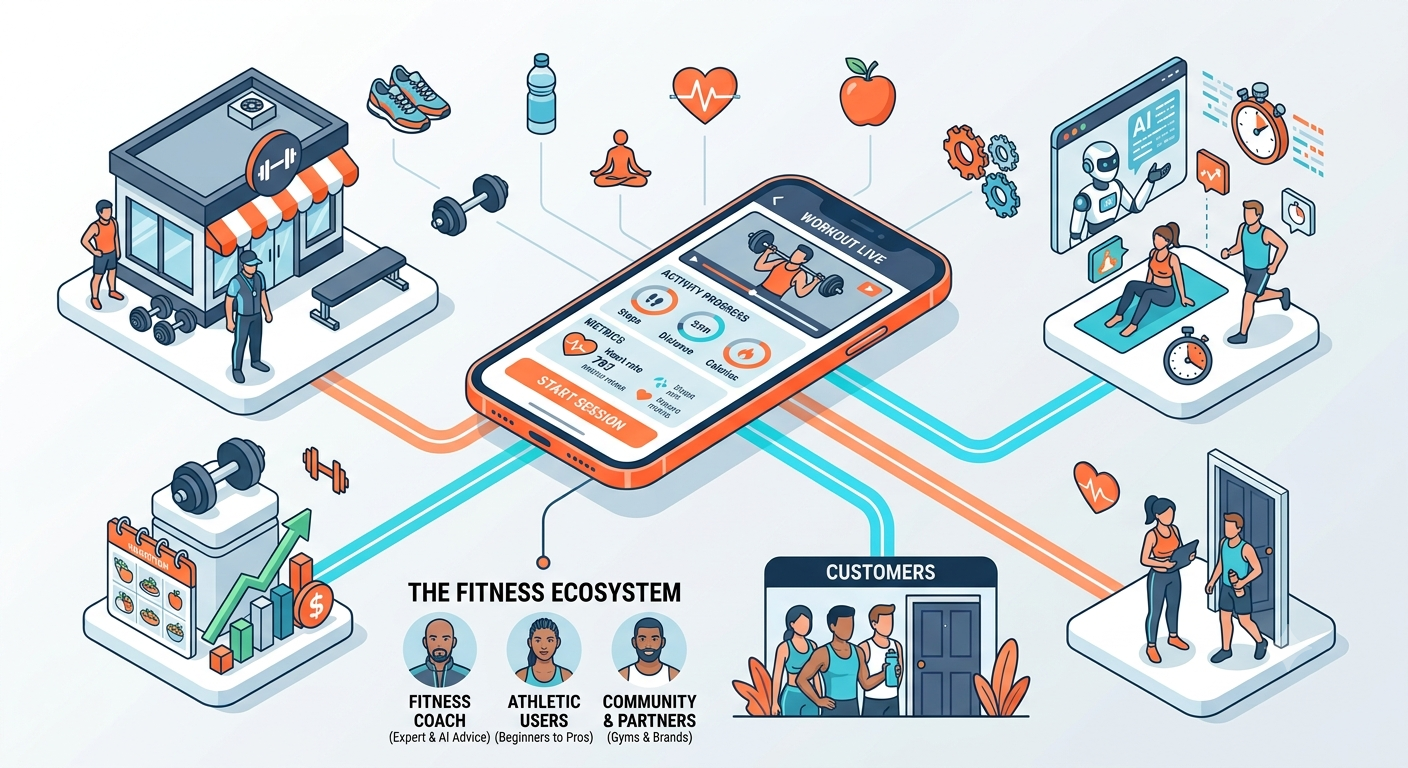
The global health and digital wellness industry is undergoing an unprecedented expansion. Driven by wearable technology, home fitness trends, micro-coaching, and AI-driven personalization, millions of users now rely on mobile devices to achieve their fitness, nutrition, and lifestyle goals. At the heart of this thriving sector is the fitness app business model.
For modern tech entrepreneurs, fitness creators, and gym owners, launching a digital health and fitness platform presents an ideal avenue to build a high-margin, scalable enterprise. In this comprehensive guide, we will break down how the fitness app business model operates, explore primary monetization streams, examine how ready-to-launch software solutions enable fast deployment, and present a step-by-step launch framework.
A fitness app business model is a digital platform strategy that delivers fitness training programs, real-time activity tracking, custom nutrition plans, or direct trainer coaching to end users via iOS, Android, and web applications.
Instead of relying on brick-and-mortar physical gym space with local geographical limits, a fitness app acts as a scalable digital ecosystem. It allows one brand or trainer to serve thousands of active members simultaneously across the globe with minimal marginal cost per new subscriber.
┌──────────────────────────────────────────────────────────┐
│              Fitness App Platform Engine                 │
│    (AI Workouts, Tracking Metrics, Video & Content)     │
└───────────────┬──────────────────────────────┬───────────┘
                │                              │
                ▼                              ▼
  ┌──────────────────────────┐   ┌──────────────────────────┐
  │ Personal Trainers /      │   │     App Subscribers /    │
  │ Content Creators / AI    │   │   End Users / Athletes   │
  └──────────────────────────┘   └──────────────────────────┘
Workout Tracking & Activity Apps: Focuses on logging daily exercises, calorie expenditure, GPS running routes, or smartwatch metrics (e.g., Strava, MyFitnessPal).
On-Demand & Live Video Streaming Apps: Delivers pre-recorded class video libraries or live interactive workout streams (e.g., Peloton, Les Mills).
AI Personal Coaching Apps: Leverages artificial intelligence and computer vision to generate customized workout routines, count exercise reps, and analyze movement form.
Hybrid Marketplace / Trainer Platforms: Connects certified human personal trainers or nutritionists with clients seeking personalized 1-on-1 virtual coaching.
Fitness platforms leverage multiple complementary revenue streams to achieve recurring growth:
| Revenue Stream | Description & Mechanism |
| Freemium Subscriptions | Core app functionality is free (e.g., basic exercise library), while advanced features (e.g., tailored meal plans, offline access, personalized AI coaching) are locked behind recurring monthly or annual VIP passes. |
| In-App Commerce & Gear Sales | Selling digital training guides, branded apparel, nutritional supplements, resistance bands, or workout hardware directly inside the app storefront. |
| 1-on-1 Virtual Coaching Retainers | Charging higher monthly fees for direct access to personal human coaches who review workout logs and conduct virtual check-in calls. |
| Corporate Wellness Programs | B2B enterprise licensing selling bulk app access to corporate HR teams as part of employee health and wellness benefit packages. |
| In-App Advertising & Sponsorships | Displaying banner ads or running sponsored workout challenges in partnership with sports footwear, supplement, or activewear brands. |
To deliver a smooth experience for both users and administrators, a modern fitness platform requires three distinct modules:
User App (iOS, Android & Web): Workout video player, habit tracker, interactive workout logs, AI rep counters, step counters, integrated Apple Health/Google Fit syncing, and community social feeds.
Trainer / Coach Portal: Interface allowing personal trainers or nutritionists to create customized workout plans, review client progress photos, and send direct chat or video messages.
Super Admin Dashboard: Central management system for monitoring user subscriptions, recurring revenue analytics, app push notification broadcasts, and content uploading.
Building a feature-rich fitness app completely from scratch—with native iOS/Android code, backend cloud servers, video streaming networks, and wearable integrations—can take 6 to 12 months and cost $25,000 to $80,000+ in custom software engineering.
Utilizing a ready-to-launch white-label fitness app platform provides a faster, cost-effective alternative:
Rapid Launch Timeline: Turn key software features into a live, fully branded app in days or weeks instead of months.
Pre-Built Integrations: Built-in video streaming players, automated payment processing gateways (Stripe, Apple In-App Purchases, Google Pay), and analytics dashboards come pre-configured.
Complete Source Code Ownership: Solutions like those offered by Heloix provide production-ready software frameworks with optional full source code ownership. This eliminates long-term developer lock-in and gives you total control to rebrand, customize, and scale your tech stack.
  ┌──────────────────────────────────────────────────────────┐
  │ 1. Define Your Specific Target Niche & Value             │
  └─────────────────────────────┬────────────────────────────┘
                                │
                                ▼
  ┌──────────────────────────────────────────────────────────┐
  │ 2. Deploy Your Turnkey Ready-to-Launch Platform          │
  └─────────────────────────────┬────────────────────────────┘
                                │
                                ▼
  ┌──────────────────────────────────────────────────────────┐
  │ 3. Upload High-Quality Workout & Nutrition Content       │
  └─────────────────────────────┬────────────────────────────┘
                                │
                                ▼
  ┌──────────────────────────────────────────────────────────┐
  │ 4. Configure Payment Tiers & Free Trial Funnels         │
  └─────────────────────────────┬────────────────────────────┘
                                │
                                ▼
  ┌──────────────────────────────────────────────────────────┐
  │ 5. Execute Social Media & Influencer Marketing           │
  └─────────────────────────────┬────────────────────────────┘
                                │
                                ▼
  ┌──────────────────────────────────────────────────────────┐
  │ 6. Drive Retention Through Gamification & Community      │
  └─────────────────────────────┴────────────────────────────┘
A general "workout app for everyone" is hard to market. Instead, focus on a clear, passionate target niche, such as:
High-Intensity Interval Training (HIIT) for busy professionals
Postpartum recovery and strength programs for new mothers
Bodyweight calisthenics for home workout enthusiasts
Sport-specific athletic conditioning (e.g., runners, cyclists, golfers)
Acquire a pre-built fitness application framework. Upload your custom brand logo, configure your brand color schemes, set up your custom web domain, and prepare application builds for submission to the Apple App Store and Google Play Store.
High content quality drives user retention. Upload high-resolution video tutorials, guided voiceover workouts, macro-friendly meal plans, and step-by-step exercise instruction guides. Organize videos cleanly into structured 30-day or 60-day progressive fitness challenges.
Set up seamless, secure payment processing gateways supporting Apple Pay, Google Pay, and credit card checkout. Implement a 7-day or 14-day free trial funnel—allowing prospective users to sample workouts risk-free before converting into paid monthly or annual subscribers.
Acquire early users through targeted acquisition strategies:
Micro-Influencer Marketing: Partner with niche social media fitness influencers to host exclusive 30-day fitness challenges inside your app.
Short-Form Content Marketing: Publish workout clips, nutrition tips, and transformation stories on TikTok, Instagram Reels, and YouTube Shorts linking to your app download page.
App Store Optimization (ASO): Target high-intent keywords in app titles and descriptions to rank higher in app store search results.
Drive long-term subscriber retention by incorporating engaging platform features:
Implement streak counters, achievement badges, and workout milestone rewards.
Add community leaderboards and social feed boards where members can share workout completion selfies and encouragement.
Send personalized automated push notifications reminding users when it's time for their scheduled workout.
Please to post a comment
No comments yet
Be the first to share your thoughts.
@heloix_news
Tech
@heloix_news
Tech

@heloix_news
Tech

Subscribe for the latest on technology, business growth and digital transformation.