
HN
@heloix_news
Funding
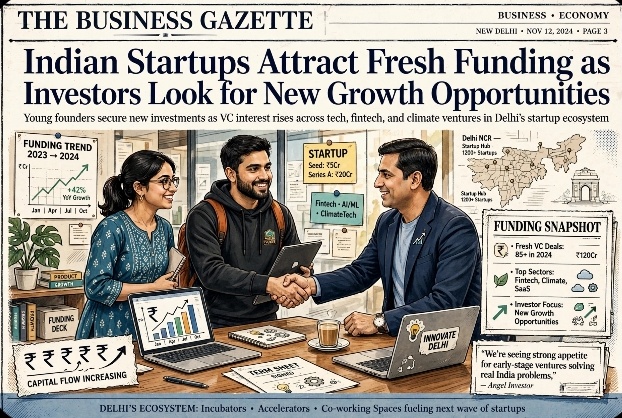
Indian Startups Attract Fresh Funding as Investors Look for New Growth Opportunities
#Startup#Funding#Investment#India#Business#Entrepreneurship
Yorum Yap
1.2K
Shreya
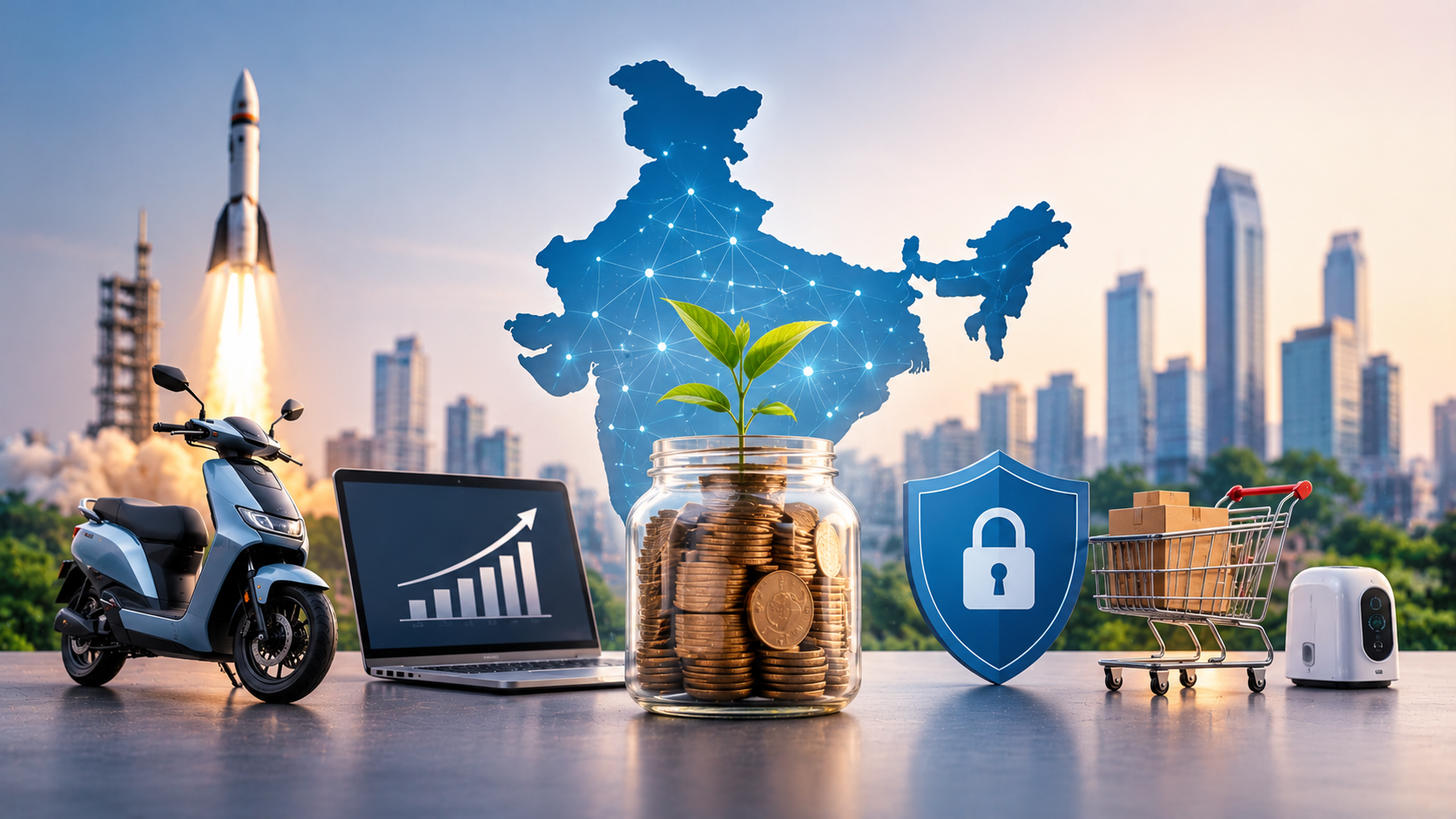
India’s deeptech ecosystem is gaining momentum, but securing early-stage capital remains a major challenge for founders working on ambitious technologies. While homegrown companies have demonstrated their ability to build complex products, investors are still cautious about backing ideas that require years of research and development before becoming commercially viable.
This funding challenge is among the key themes in this week’s startup roundup. The edition also covers the latest funding activity, electric two-wheeler sales, allegations of kickbacks at Flipkart, cybersecurity concerns surrounding eMudhra, movements in startup stocks and upliance.ai’s potential Series A round.
### India’s Deeptech Ambitions Face a Funding Challenge
The success of companies such as Skyroot has shown that Indian startups can develop sophisticated technologies, including rockets. However, building these products is only one part of the challenge. Finding investors willing to support long development cycles and uncertain commercial outcomes remains difficult.
A recent debate around the Indian venture capital ecosystem has brought this issue back into focus. Several founders have criticised investors for lengthy due diligence processes, expectations of early commercial traction and an excessive focus on a founder’s background or credentials.
Their concern is that many venture capital firms are reluctant to take genuine technological risks. Instead, funding tends to go to a relatively small group of startups that have already demonstrated technical progress or commercial validation.
Funding data reflects some of these concerns. Deeptech investments in India rose 176% year-on-year in Q3 2026, but the number of deals saw little movement. Much of the capital went to a limited number of companies, with Bengaluru attracting a significant share of the activity.
This suggests that while investment volumes are increasing, early-stage founders working on unproven scientific ideas are still finding it difficult to secure their first round of institutional funding.
**Why are investors cautious?**
Deeptech businesses typically require more time and capital to reach the market than conventional software startups. They also involve specialised technical due diligence, uncertain exit opportunities and the possibility of several additional funding rounds before generating meaningful revenue.
Venture capital funds, meanwhile, operate under pressure from their limited partners to deliver returns and liquidity within specific timeframes. These expectations can make long-term scientific investments less attractive.
However, the funding landscape is gradually evolving. Founder-led investment vehicles and specialised funds are emerging to support ambitious technology ventures. Government initiatives, including the ₹1 lakh crore Research, Development and Innovation (RDI) Fund, are also expected to improve access to capital.
Still, funding alone will not be enough. India's deeptech startups need patient investors, reliable follow-on capital and corporate customers willing to test and purchase early-stage products.
The larger question is whether India's venture capital ecosystem can move beyond backing proven business models and become more comfortable financing technologies that could take years to mature.
### Indian Startups Raise $130.2 Mn in Weekly Funding
Indian startups collectively raised $130.2 Mn during the week, a 29% decline from the $184 Mn secured in the previous week.
Despite the lower funding value, deal activity picked up considerably. The number of funding deals increased 88% week-on-week to 32.
Cent and Simplismart attracted the largest investments, raising $15 Mn and $14 Mn, respectively.
Ecommerce was the most-funded sector, attracting $33 Mn across nine deals. AI startups followed with $30 Mn raised through five transactions.
Among investors, Blume Ventures and Antler were particularly active, backing three startups each during the week.
The figures indicate that although the total capital deployed declined, investor participation and deal activity remained strong.
### Electric Two-Wheeler Sales Rise 2.9% in October
Electric two-wheeler registrations in India increased 2.9% month-on-month to approximately 2.1 lakh units in October. Compared with the same month last year, registrations were up 48%, from around 1.4 lakh units.
Established manufacturers TVS Motor and Hero MotoCorp strengthened their positions during the month.
TVS Motor's market share rose to 27.2%, while Hero MotoCorp's share increased to 13.4%. Bajaj Auto, on the other hand, saw its market share decline to 21.7% from 23.4% in September.
The month was more challenging for newer electric vehicle manufacturers.
Ather Energy's registrations fell 1.8% month-on-month to 30,380 units, compared with 30,942 units in September. Its market share also slipped to 14.2%.
Ola Electric recorded a sharper decline, with sales dropping 13.7% month-on-month to 11,614 units.
The latest numbers show that while India's electric two-wheeler market continues to expand annually, competition is intensifying. Established manufacturers are gaining ground, while newer players are facing pressure to maintain sales momentum.
### Walmart Investigates Alleged ₹150 Cr Kickbacks at Flipkart
Walmart has reportedly launched an investigation into allegations that employees at its ecommerce subsidiary Flipkart received more than ₹150 Cr in kickbacks from vendors.
The complaints reportedly involve employees working in Flipkart's smartphones and luggage and travel accessories categories.
According to the allegations, certain employees accepted payments and other benefits from vendors in exchange for preferential treatment on the platform. This allegedly included better product visibility, which could help vendors increase sales.
This is reportedly Walmart's third investigation into suspected financial misconduct at Flipkart in the past three years.
A previous investigation led to the dismissal of three employees around two-and-a-half years ago. Another probe reportedly identified employee misconduct just six months ago.
The latest development puts the spotlight on vendor relationships, internal controls and governance practices at large ecommerce platforms.
### eMudhra's Exit From Global TLS Business Raises Cybersecurity Concerns
Cybersecurity company eMudhra faced scrutiny after researchers reportedly discovered weaknesses in its private keys that could allow them to be recovered in less than a second.
The controversy eventually led the company to withdraw from the global Transport Layer Security (TLS) certificate business.
The episode has raised questions about accountability in India's digital security ecosystem.
In this case, global browser companies played a key role in holding the company accountable, rather than domestic regulators. This has prompted concerns about who would investigate and prevent similar incidents involving critical digital infrastructure in India.
Experts have also warned that eMudhra's exit could increase Indian websites' dependence on foreign certificate authorities for digital trust.
Such dependence could have implications for India's digital sovereignty and its efforts to develop a domestic public-key infrastructure ecosystem.
The incident highlights the importance of strong cybersecurity standards, independent oversight and accountability for companies that provide essential digital trust services.
### Startup Stocks End the Week on a Positive Note
Indian new-age technology stocks largely moved higher during the week, supported by quarterly earnings and company-specific developments.
Of the 69 startup stocks tracked by Inc42, 40 recorded gains ranging from 0.2% to 26.8%. The remaining 29 stocks declined, with losses reaching as much as 22.3%.
Ather Energy and Zetwerk were among the biggest gainers, while CarTrade and AceVector recorded some of the steepest declines.
The combined market capitalisation of the 69 companies increased 5.7% to $160.9 Bn, compared with $152.3 Bn a week earlier.
Looking ahead, investors are expected to monitor several global and domestic developments, including the US midterm elections, Brent crude oil prices, geopolitical developments and upcoming quarterly earnings.
These factors could influence market sentiment and drive further movements in startup stocks.
### upliance.ai in Talks to Raise $3 Mn-$4 Mn in Series A
Direct-to-consumer home appliance startup upliance.ai is reportedly in advanced discussions to raise between $3 Mn and $4 Mn in a Series A funding round.
The upcoming round is expected to include a new investor, while existing backers, including Khosla Ventures, may also increase their investment.
Founded in 2021, upliance.ai develops AI-powered kitchen appliances, including food processors and air fryers. Its products aim to make everyday cooking more automated and convenient.
The startup last raised ₹34 Cr in a seed funding round led by Khosla Ventures in 2024, at a valuation of ₹143 Cr.
The potential fundraise comes as India's smart kitchen appliance market attracts growing interest. Rising disposable incomes and increasing demand for automated home products are supporting the category's expansion.
The market is projected to become a $3 Bn opportunity by 2032, creating room for companies developing connected and intelligent kitchen appliances.
### What These Developments Mean for India's Startup Ecosystem
This week's developments highlight several trends shaping India's technology and startup landscape.
Deeptech funding remains a major concern, even as investment volumes rise. The electric two-wheeler market is becoming more competitive, established manufacturers are strengthening their positions, and cybersecurity governance is receiving greater attention.
At the same time, ecommerce platforms face increasing scrutiny over internal practices, while public-market performance continues to reflect the impact of company earnings and broader economic factors.
For India's startup ecosystem, the next phase of growth will depend not only on raising capital but also on building sustainable businesses, strengthening governance and developing technologies that can compete at scale.
Yorum yapabilmek için lütfen yapın
Henüz yorum yapılmamış
İlk yorumu siz yapın.
@heloix_news
Funding
@heloix_news
Funding

@heloix_news
Funding
Teknoloji, iş büyütme ve dijital dönüşümle ilgili en güncel gelişmeler için abone olun.