
HN
@heloix_news
Tech

How to Launch a NFT Marketplace in Just 3 Days
#NFTMarketplace#NFTs#DigitalAssets
Comment
654
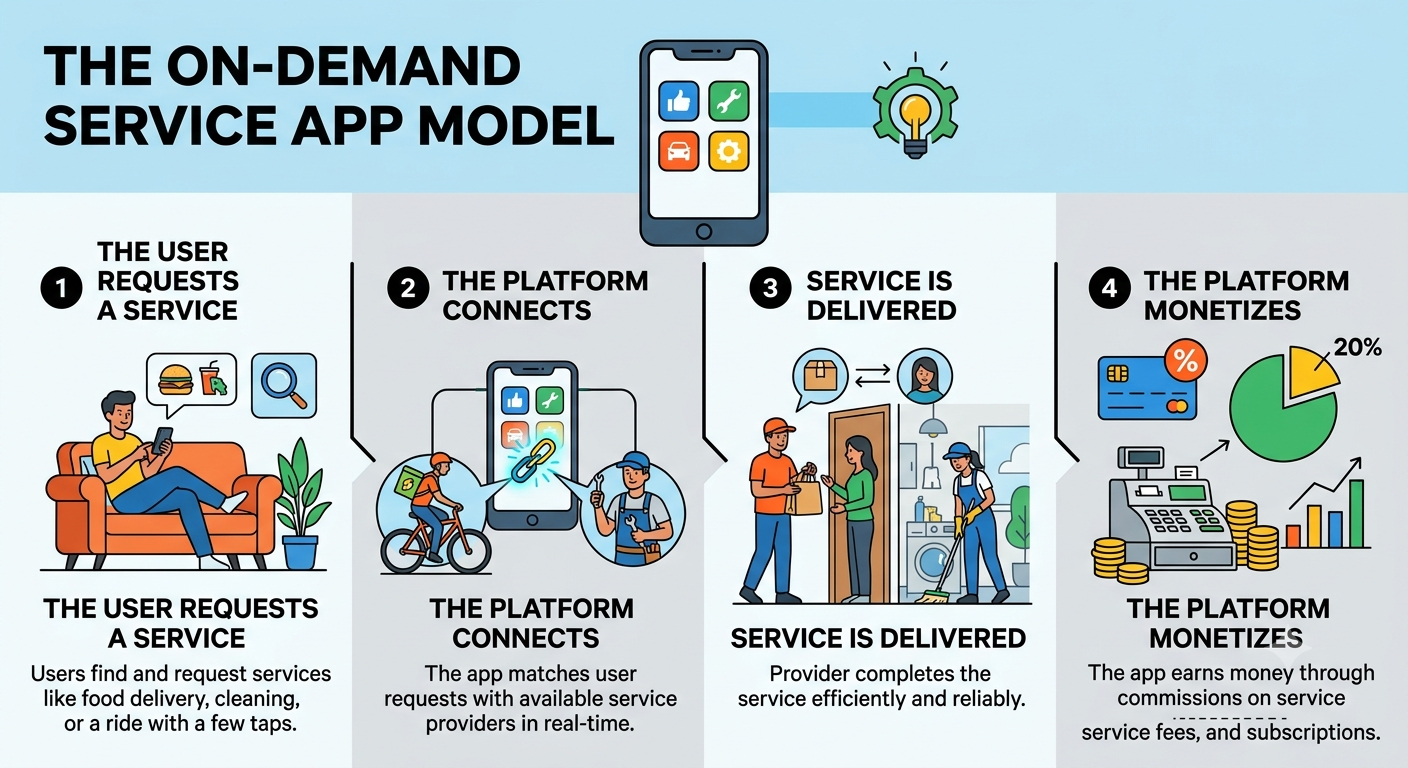
In our fast-paced modern world, convenience is the ultimate currency. From hailing a ride and ordering food to scheduling home cleaning, car detailing, or salon services, consumers expect instant solutions at the touch of a button. At the center of this cultural shift is the on-demand service app business model.
Popularized by tech giants like Uber, DoorDash, and TaskRabbit, the on-demand economy has transformed traditional service delivery. For aspiring entrepreneurs, launching an on-demand service app presents an incredible opportunity to build a scalable, multi-sided digital enterprise. In this comprehensive guide, we will break down how the on-demand app model operates, explore its main monetization channels, highlight the power of ready-to-launch reseller solutions, and provide a practical step-by-step roadmap to get your app off the ground.
An on-demand service app is a digital platform that connects customers who need a specific real-time service with independent service providers or fulfillment agents who can perform that service.
Instead of keeping dedicated staff on a traditional payroll or forcing customers to book appointments days in advance, the on-demand app platform acts as a smart marketplace engine. It uses location technology, algorithmic matching, and automated dispatch to fulfill requests almost instantly.
┌──────────────────────────────────────────────────────────┐
│              On-Demand App Platform Engine              │
│      (Smart Dispatch, Geolocation & Payment Routing)     │
└───────────────┬──────────────────────────────┬───────────┘
                │                              │
                ▼                              ▼
  ┌──────────────────────────┐   ┌──────────────────────────┐
  │   Customers / Clients    │   │    Service Providers     │
  │  (Requesting & Paying)   │   │ (Accepting & Fulfilling) │
  └──────────────────────────┘   └──────────────────────────┘
The platform owner manages brand acquisition, platform tech, customer dispute resolution, and payment gateways, taking a fee for every service order completed.
One of the biggest strengths of an on-demand app business is the diversity of its monetization streams:
Commissions per Transaction: The primary revenue source. The platform deducts a percentage (typically 15% to 30%) from the total booking fee paid by the customer before releasing payouts to the service provider.
Surge / Peak Pricing: During periods of high demand or limited worker availability, prices dynamically increase. The platform collects a share of this increased fee.
Delivery / Service Convenience Fees: Flat booking or convenience fees charged directly to end customers for using the platform.
Provider Subscription & Priority Listing: Charging service providers a monthly fee for premium profile visibility, lower commission rates, or priority job assignments.
In-App Advertising: Allowing local businesses or featured service providers to pay for sponsored banners and top placement in search results.
To run an on-demand service business smoothly, your software architecture must consist of three distinct, interacting applications:
| Application | Primary User | Core Capabilities & Features |
| Customer App | End-User / Client | Live GPS map tracking, instant booking, secure in-app payments, service ratings/reviews, push notifications. |
| Provider App | Freelancer / Technician | Job notification alerts, toggle online/offline availability, in-app navigation, earnings dashboard, job acceptance controls. |
| Super Admin Panel | Business Owner / Admin | Master system control, real-time dispatch management, commission setup, payout approvals, analytics, user verification. |
Building a fully custom on-demand app ecosystem from scratch—including iOS, Android, and web admin applications—can cost anywhere from $30,000 to over $100,000 and take 6 to 12 months of intensive development.
For startup founders, utilizing a ready-to-launch reseller or white-label solution eliminates these technical barriers.
Rapid Time-to-Market: Deploy your branded on-demand apps in days or weeks rather than spending months in development cycles.
Fraction of the Cost: Avoid massive upfront software development costs and allocate your capital toward marketing, provider acquisition, and local scaling.
Battle-Tested Features: Reseller frameworks come standard with built-in geolocation tracking, automated dispatch, payment processing, push notifications, and multi-language support.
Full Source Code Ownership: Platforms like Heloix offer complete white-label software business frameworks and source code solutions, allowing you to rebrand, customize, and scale your tech stack without long-term developer lock-in.
  ┌──────────────────────────────────────────────────────────┐
  │ 1. Select a Specific Niche & Target Market               │
  └─────────────────────────────┬────────────────────────────┘
                                │
                                ▼
  ┌──────────────────────────────────────────────────────────┐
  │ 2. Deploy a White-Label Reseller Solution                │
  └─────────────────────────────┬────────────────────────────┘
                                │
                                ▼
  ┌──────────────────────────────────────────────────────────┐
  │ 3. Setup Payment Gateways & Commission Structures        │
  └─────────────────────────────┬────────────────────────────┘
                                │
                                ▼
  ┌──────────────────────────────────────────────────────────┐
  │ 4. Recruit & Onboard Initial Service Providers           │
  └─────────────────────────────┬────────────────────────────┘
                                │
                                ▼
  ┌──────────────────────────────────────────────────────────┐
  │ 5. Execute Localized Customer Marketing Campaigns        │
  └─────────────────────────────┬────────────────────────────┘
                                │
                                ▼
  ┌──────────────────────────────────────────────────────────┐
  │ 6. Track Platform Metrics & Expand Geographically        │
  └─────────────────────────────┴────────────────────────────┘
Instead of launching a generic "do-everything" app, focus on a specific, high-demand service vertical in a targeted geographic location. Examples include:
Mobile car washing and detailing
Home repair, plumbing, and handyman services
On-demand pet grooming
Specialized healthcare or wellness treatments at home
Lawn care and snow removal
Acquire a reliable white-label on-demand app framework. Configure your custom brand identity, upload your logos, map your domain names, and set up your core app navigation and service categories.
Set up secure automated payment pipelines (such as Stripe Connect) to manage customer charging and provider payouts seamlessly. Define default platform commissions, cancellation policy fees, and payout schedules.
A service app is nothing without quality providers. Before launching to end customers, recruit your first cohort of technicians or freelancers:
Run targeted recruiter campaigns on local job platforms and social channels.
Implement verification checks (e.g., ID verification, background checks, or skill certifications) to build customer trust.
Offer early incentives, such as reduced commission rates or signup bonuses for completing initial jobs.
Once your supply side (providers) is active, launch marketing campaigns to capture demand:
Local SEO & Google Maps Marketing: Optimize local search presence for keywords like "on-demand plumber near me."
Targeted Social Advertising: Run visual video ads demonstrating the speed and convenience of booking services through your app.
Referral Programs: Give first-time users discounts for sharing referral codes with friends and neighbors.
Monitor key operational metrics including job completion rate, average arrival time, customer satisfaction scores, and provider retention rates. Use real user feedback to polish the app experience and expand into neighboring cities or adjacent service categories.
Please to post a comment
No comments yet
Be the first to share your thoughts.
@heloix_news
Tech
@heloix_news
Tech

@heloix_news
Tech

Subscribe for the latest on technology, business growth and digital transformation.