
HN
@heloix_news
AI/ML
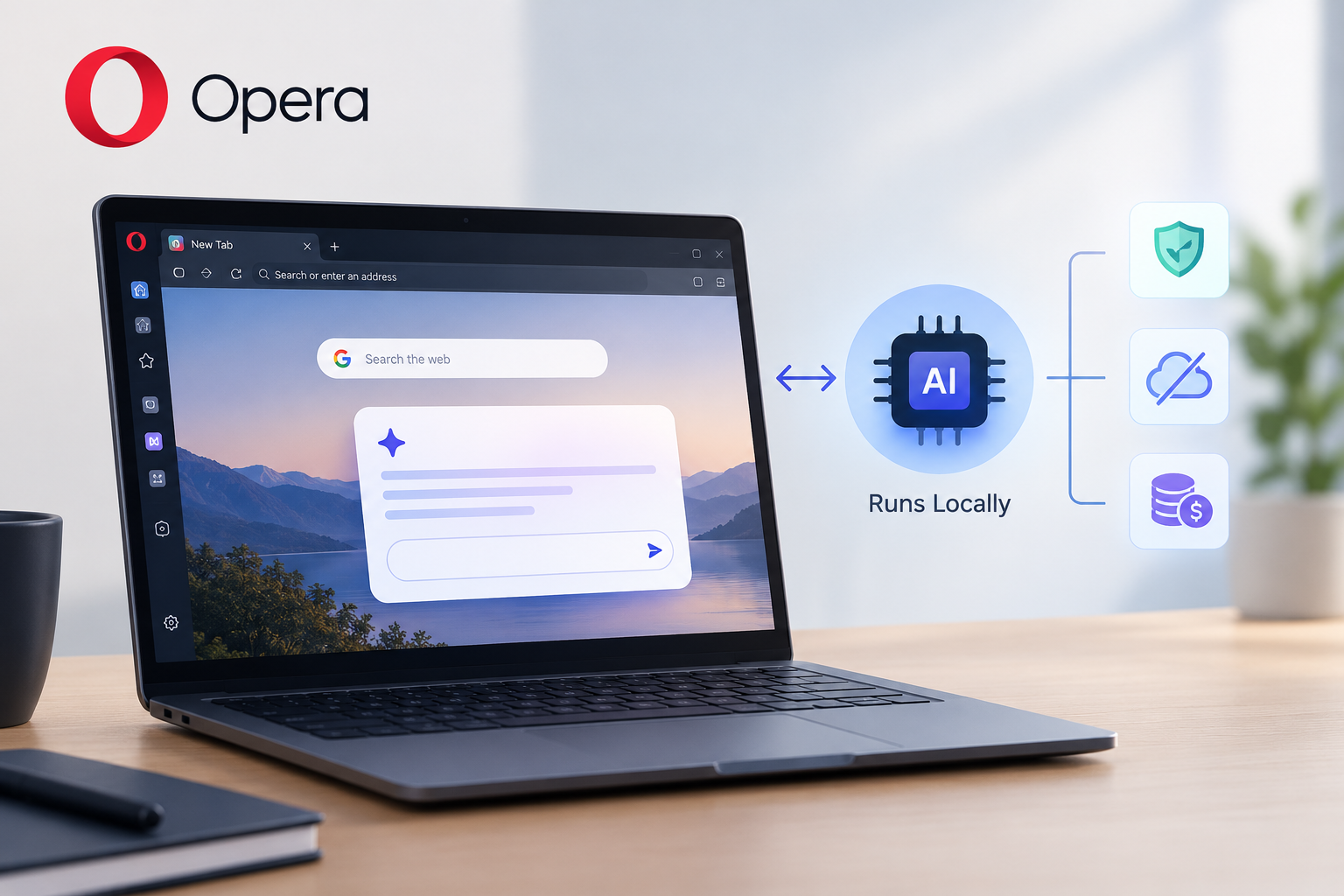
Opera Introduces WebAI to Run AI Models Locally in Your Browser, Improving Privacy and Reducing Cloud Dependence
#Opera#WebAI#ArtificialIntelligence
Yorum Yap
2.7K
Mahesh P

Artificial intelligence (AI) could dramatically increase individual productivity, allowing one employee to handle work that once required a team of ten. However, this shift could also disrupt jobs and force businesses and workers to adapt to a changing economic landscape, warns Zoho co-founder Sridhar Vembu.
In a post on X, Vembu acknowledged that the transition would be difficult for many people. He said the economy would have to adjust to the changes brought about by AI, adding that preparing for this shift would be essential.
Vembu’s comments do not suggest that 90% of people working in computer-based roles will lose their jobs. Instead, his argument centres on how AI could reduce the number of employees needed to complete existing tasks while making specialised services more affordable for businesses.
The key challenge is whether the new opportunities created by lower costs and increased productivity will be enough to compensate for jobs affected by automation. Another concern is whether workers whose roles change or disappear will have the skills and resources needed to move into emerging opportunities.
Zoho’s recent product announcement offers an example of how AI is changing the way knowledge-based work gets done.
The company has upgraded its analytics platform by bringing together six specialised AI agents. These agents can perform several tasks, including analysing data, preparing it for use, generating SQL queries, building models and creating visualisations.
Zoho’s Ask Zia system can coordinate these capabilities through a single conversational request. It can also help initiate automated workflows, allowing users to manage multiple connected tasks through one interface.
Traditionally, these activities might have required contributions from different professionals, such as data engineers, analysts and report developers. By combining several capabilities in one AI-powered system, Zoho aims to simplify workflows that would otherwise involve multiple stages and teams.
The platform also incorporates semantic and ontology layers. These help define business terminology and explain the relationships between different business entities, enabling AI agents to interpret company-specific information more accurately.
Although this development does not establish that Zoho will eliminate a particular number of jobs, it illustrates how AI tools are beginning to bring previously separate tasks together.
Zoho is not alone in developing AI systems capable of handling more complex workflows.
In October, Google Cloud announced its Gemini agent, designed to manage multi-step knowledge work, write code and coordinate specialised agents. Salesforce has also expanded its Agentforce portfolio, introducing AI agents for activities across sales, customer service and back-office operations.
These developments reflect a broader shift in the AI industry. Rather than simply assisting people with individual tasks, newer systems are increasingly designed to manage connected processes and complete several stages of work with less human intervention.
However, product announcements and demonstrations should not be treated as definitive evidence of how many jobs these technologies will replace. Their actual impact will depend on how businesses adopt them, the reliability of the systems and the extent to which human oversight remains necessary.
Vembu’s argument also highlights a potential benefit of AI-driven productivity gains.
As the cost of specialised work falls, smaller businesses may gain access to services that were previously too expensive for them. Advanced data analytics, software development and digital marketing, for example, could become more accessible to companies with limited budgets.
This could allow more businesses to improve their operations, develop new products and expand into new markets. Such growth may generate additional demand for workers and create opportunities in areas that are currently underserved.
The outcome, however, is far from certain. Whether new business activity creates enough jobs to offset the roles affected by automation will depend on how quickly demand expands and how effectively workers can transition into new positions.
The International Labour Organization’s 2025 assessment provides further context for the debate.
According to the assessment, approximately one in four workers worldwide is employed in an occupation with some degree of exposure to generative AI. However, the ILO concluded that most jobs are more likely to undergo changes than disappear entirely.
Exposure to AI does not necessarily mean that an entire occupation can be automated. In many cases, the technology may take over selected tasks while employees continue to handle responsibilities that require judgement, collaboration, accountability or other human capabilities.
The ILO also stressed the importance of managing the transition through dialogue involving employers, workers and other stakeholders.
As AI systems become capable of handling increasingly complex work, businesses will need to reconsider how they organise teams, measure productivity and develop employee skills. Workers, meanwhile, may need to adapt to changing job requirements and learn to work alongside AI tools.
The broader question raised by Vembu’s warning is not simply how much work AI can perform, but how the economic benefits of higher productivity will be distributed. While automation may reduce the need for people in certain roles, it could also lower operating costs and open up new markets.
Whether these developments ultimately create more opportunities than they displace will depend on how businesses, workers and policymakers respond to the transition.
Yorum yapabilmek için lütfen yapın
Henüz yorum yapılmamış
İlk yorumu siz yapın.
@heloix_news
AI/ML
@heloix_news
AI/ML
@heloix_news
AI/ML

Teknoloji, iş büyütme ve dijital dönüşümle ilgili en güncel gelişmeler için abone olun.